.svg&w=384&q=75 "logo")
Morocco–Spain Tensions Over 2030 World Cup Final Venue
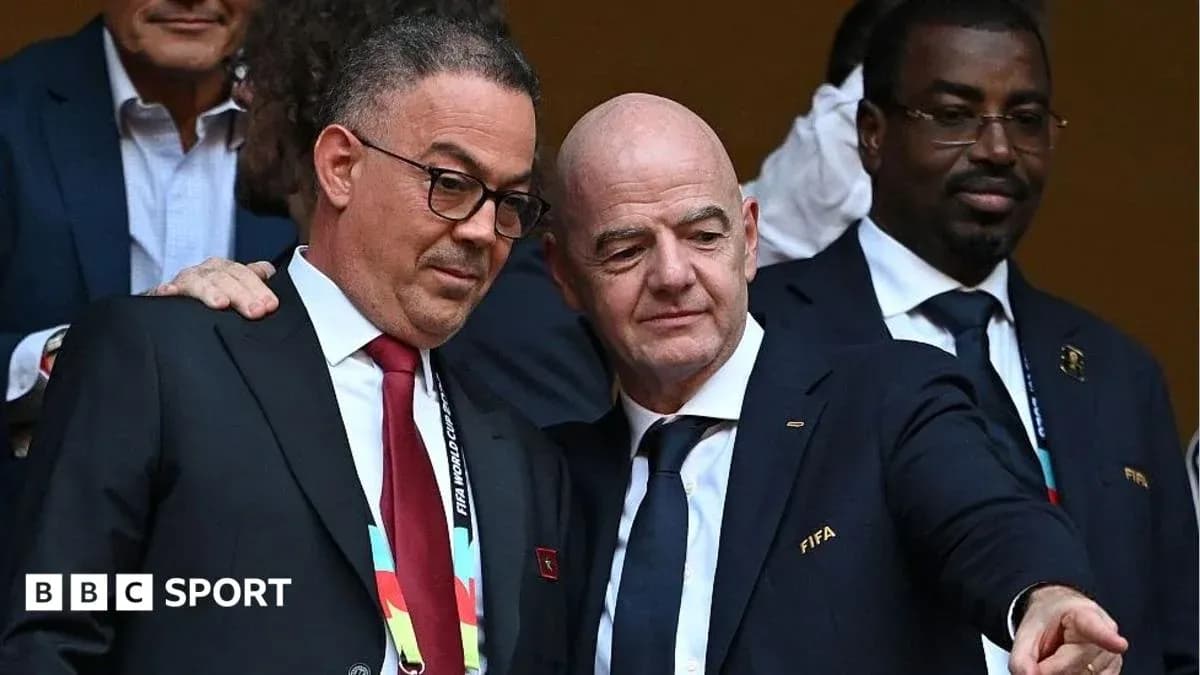
The battle for the 2030 World Cup final has started long before a ball is kicked – and it is being fought in meeting halls and political rallies rather than on the pitch.
Morocco’s prime minister Aziz Akhannouch has publicly rebuked the head of the country’s football federation, ordering him to stop making grand promises that Casablanca will host the showpiece game, just as Spain steps up its own claim to stage the final.
The tournament, to be co-hosted by Morocco, Spain and Portugal, already has a unique structure. The opening three matches will be played in Uruguay, Argentina and Paraguay to mark the centenary of the World Cup. Beyond that, though, the key details remain unresolved: the final list of host stadiums and, crucially, the venue for the final itself.
Into that vacuum stepped Fouzi Lekjaa, president of the Moroccan football federation (RMFF). Speaking at a political party event, he told supporters Casablanca would have the “honour” of hosting the final. It was a bold, crowd-pleasing line. It was also premature.
Fifa quickly cooled the temperature, stressing that “a decision will be made in due course”. No promises. No guarantees. No favourites named.
Akhannouch then went further, using a rally to call out Lekjaa directly and to remind him – and everyone listening – that this is not just a footballing question but a diplomatic one.
“Do not offer to host the big final game in Morocco while we still have not discussed the matter with our allies, Spain and Portugal,” he said, in a pointed intervention that cut through the noise.
“There should be some respect, brothers. Stop using electoral promises to pull the rug out from under us. These are huge matters. Deciding where the final will be held is a major issue.”
The message was unmistakable: domestic political capital must not be built on a prize that has not yet been won, and certainly not without consulting co-hosts.
Spain, meanwhile, has not been shy about staking its own claim. Rafael Louzan, president of the Spanish football federation (RFEF), has already made it clear where he believes the World Cup should reach its climax – on Spanish soil.
“Even though no decision has been taken, I believe Spain is the place because it cannot be any other way,” he told Cadena SER. “As you know, we are currently world champions.
“I believe Spain’s organisational capacity for major events is beyond question and that is why reality dictates that the grand final cannot and must not be held anywhere other than in Spain.”
Spain’s argument is built on pedigree and infrastructure. The country, which beat Argentina to win this year’s World Cup in July, sees its recent success as a powerful lever. The United States example also looms in the background: New Jersey was only confirmed as the host for the 2026 final in February 2024, two years out from the tournament. That delay underlines how long Fifa can afford to wait – and how speculative all current claims really are.
The stadium arms race only sharpens the debate. Morocco is pushing ahead with a proposed 115,000-seat arena, which would become the largest football stadium in the world if completed as planned. It is a statement of intent, a concrete symbol of a country that wants not just to co-host but to sit at the very centre of the global show.
Spain counters with history and renovation. Real Madrid’s Santiago Bernabeu has been transformed and now holds 83,000, a gleaming, modernised cathedral of the game. Barcelona’s Spotify Camp Nou, once its upgrade is finished, will boast a capacity of 105,000 – another heavyweight contender for the biggest night in football.
So the picture is clear: a political warning in Rabat, a confident push from Madrid, and Fifa sitting above it all, refusing to be rushed.
The World Cup final remains up for grabs. The question now is not just who can build the biggest or newest stadium, but which of the co-hosts can turn ambition, diplomacy and infrastructure into the right to stage the game everyone wants.