.svg&w=384&q=75 "logo")
Mikel Arteta's Unconventional Methods to Prepare Arsenal for Chaos
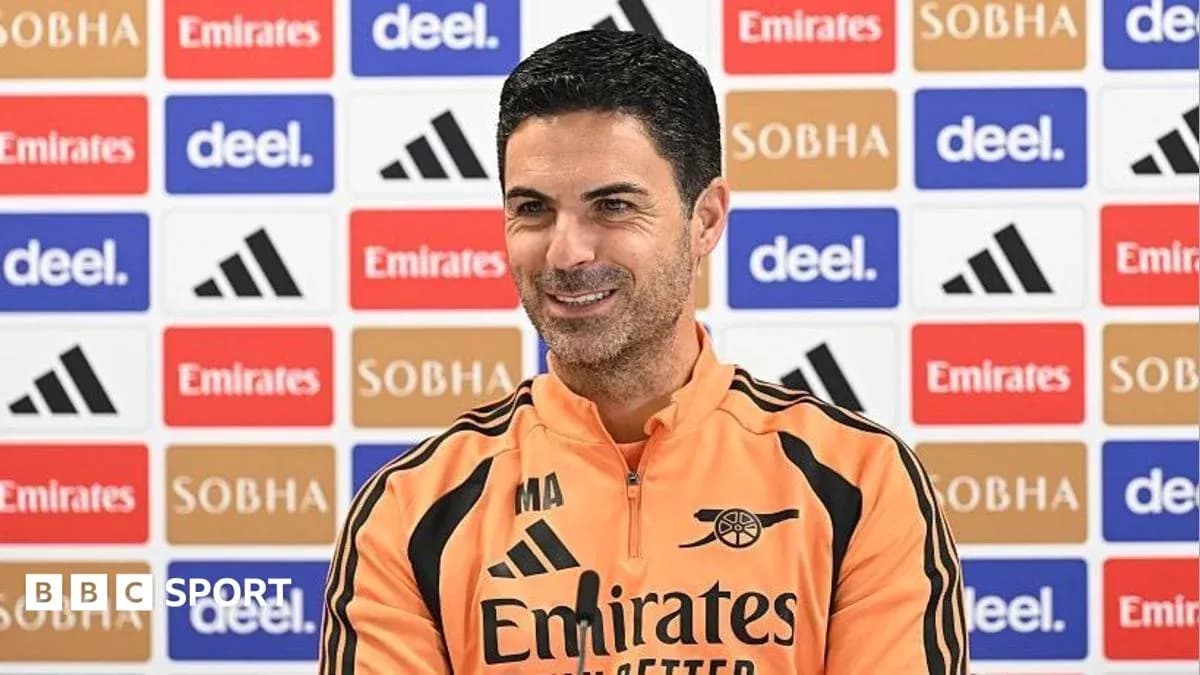
Mikel Arteta had seen this coming long before Arsenal’s plane sat motionless on the tarmac.
When the Premier League champions were left stranded by air traffic control issues on their way to face Napoli in the Champions League on Wednesday, their schedule was shredded. They landed in Italy three hours late, the kind of disruption that can rattle even the most seasoned squad.
Arteta’s players barely blinked.
This, he insisted, was the point.
“I love those challenges, I try to create them in pre-season,” he said on Friday, ahead of Arsenal’s Premier League trip to Sunderland on Saturday night. “So when they happen, we have already experienced them and we are ready.”
Training for chaos
Where most managers chase control, Arteta actively injects chaos. He tampers with routines, scrambles timetables, and forces his squad to live in the uncomfortable spaces most teams try to avoid.
“Get to the stadium very late, change the routine so the players have to do something else,” he explained. Flights cancelled. Trains delayed. Traffic jams. He wants his players to have lived it all before the real thing hits.
The logic is simple: if disruption becomes normal, panic never takes hold.
“When that happens, adapt to it,” he said. “We have two or three hours on the plane – can we use it? Play together, spend some time together, sleep. But don’t complain or use it as an excuse because it’s not helpful at all.”
So while the delay to Naples might have unnerved others, Arsenal treated it as another exercise in problem-solving. Another scenario they had rehearsed in the shadows of pre-season, when the stakes were lower but the lessons just as sharp.
Delayed dinners, hot dressing rooms, different roads
Arteta’s methods stretch far beyond the odd late arrival.
He will delay meals or transport on purpose. He will change the route to a stadium on matchday. He will have the dressing room heated up, made more uncomfortable than usual, just to see how his players respond when the environment turns hostile.
The aim is not gimmickry. It is to strip away surprise.
By the time a real disruption arrives – a broken-down coach, a traffic snarl around a ground, a kick-off routine thrown out of sync – the players are not encountering it for the first time. They are running through a scenario they have already lived.
Arteta believes that reduces stress, and on nights like Naples, it shows.
A catalogue of unconventional ideas
This is not a new side of the Spaniard. His tenure at Arsenal has been dotted with unconventional psychological tools, each one designed to hit a different nerve.
He once walked into the dressing room carrying a light bulb, asking his players to be energetic and shine. The message was blunt, visual, impossible to miss.
On another occasion, he went even further. Professional pickpockets were hired to attend a team dinner. They slipped phones and wallets from players without them noticing, only to reveal the trick later. The lesson was stark: stay alert, on and off the pitch.
In 2023, he brought a dog named Win into the training ground. Win became a symbol, padding around the facilities as a living reminder of togetherness and identity, representing the team as a family.
To some, these ideas might seem theatrical. To Arteta, they are tools – ways of hard-wiring mindset and behaviour into a group competing at the very top.
Ready for whatever comes next
So when Arsenal’s Champions League build-up was shredded by a three-hour delay, the manager did not see a problem. He saw a test he had already set.
No excuses. No complaints. Use the time, lean on the work already done, and walk into the stadium as if this was exactly how the script was written.
Sunderland await next, under the lights on Saturday. The journey there will probably be smooth, the schedule likely to run on time.
Arteta will not be relying on that.