.svg&w=384&q=75 "logo")
Kylian Mbappé's Controversial Self-Description Sparks Division in France Team
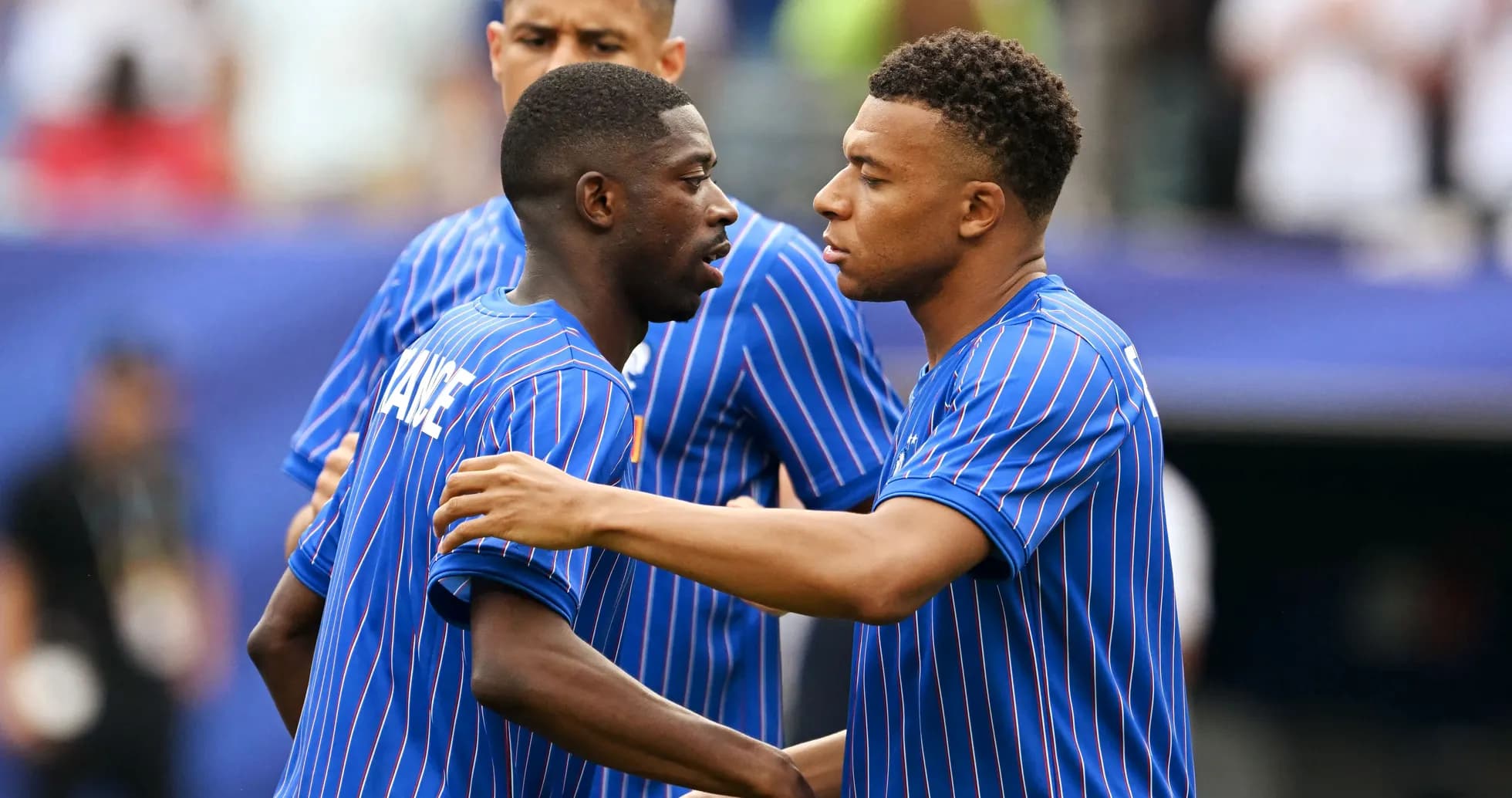
Kylian Mbappé’s latest interview was supposed to be another step in the carefully managed life of a global superstar. Instead, one phrase detonated across France.
“The chosen one.”
Those three words, used by the France captain to describe himself, have not gone down well in every corner of the national-team dressing room. According to French daily L’Équipe, Ousmane Dembélé and people close to him bristled at the tone, unhappy with the way Mbappé framed his own status.
Seeing Mbappé as a frontrunner for the Ballon d’Or is nothing new. He has lived in that conversation for years. The issue this time is not the claim, but the manner: a self-portrait of a player who already sees himself on a different plane.
The reaction in France has been fierce, and split.
Rothen cries “betrayal”
On RMC Sport, former international Jérôme Rothen went in hard. He spoke of a kind of “betrayal” from Mbappé and hinted at a fracture inside the France camp, suggesting the captain’s words had opened up two distinct groups in the squad.
The idea of a divided dressing room around its biggest star is dynamite in a country still haunted by past implosions. Rothen’s comments fed straight into that anxiety: a France team pulled between egos, cliques and competing visions of what a leader should sound like.
Dugarry hits back
Christophe Dugarry was having none of it.
Also speaking on RMC Sport, the 1998 World Cup winner tore into Rothen’s claims and demanded proof, not innuendo.
“Jérôme, regarding what you are saying, I want names,” Dugarry snapped. “You are telling me there are two groups within the team. I don’t believe this nonsense!”
He then turned the spotlight directly onto Dembélé. “What is bothering you, Ousmane? He has won the Champions League twice and won the Ballon d’Or,” Dugarry said, leaning on the idea that Dembélé’s supposed grievance did not match his own résumé or profile.
For Dugarry, the entire storm around Mbappé’s comments looks wildly overblown, especially given the length and history of the friendship between the two Paris Saint-Germain teammates.
“You two have known each other since you were 15 years old,” he reminded. “Are you going to be upset by an interview in which Kylian spends all his time talking about himself? He didn’t say anything bad about Dembélé.”
In Dugarry’s eyes, there is ego, there is self-promotion, but there is no insult.
“Two visions of football”
Dugarry then pushed his defence of Mbappé further, framing the situation as a clash of personalities rather than the start of a civil war in the national team.
“What Kylian said is the truth,” he insisted.
He went back to Dembélé’s Barcelona days to draw a sharp contrast. “I remember when Dembélé was at Barcelona, he couldn’t get up in the morning to go to training because he was playing PlayStation. Come on!”
For Dugarry, that story is not an attack, but a symbol. “Dembélé is the anti-star, and he shines because of that. He has the mentality of the anti-star. These are two visions of football. Two different footballing styles clashing. Two different personalities.”
In other words, Mbappé is the self-declared main character, the man who embraces the spotlight and speaks openly about his destiny. Dembélé is the opposite: low-key, almost allergic to attention, thriving on a quieter, collective identity.
A difference like that, Dugarry argued, does not automatically equal a crisis. It can simply be the reality of a modern dressing room packed with elite talent and strong characters.
What is Dembélé really upset about?
From Dugarry’s vantage point, there is no clear reason for Dembélé to feel wounded by Mbappé’s words. The winger has built his entire public image around being reserved, shy and team-oriented, a player who prefers to stay in the shadows rather than on billboards.
“I don’t understand what shocks Ousmane Dembélé,” Dugarry said. “He has always presented himself as a reserved, shy person, somewhat introverted, with a high team spirit. He built his career this way, and won this way. He understands this footballing philosophy. Mbappé is the complete opposite of that.”
The former striker then drew a hard line on the question of friendship.
“Excuse me, but if their friendship cannot get past this matter, then it means it was never strong in the first place.”
The message is clear: if a few bold sentences in an interview can rupture a relationship forged in adolescence and tested at the highest level, the problem runs deeper than a headline-grabbing phrase.
Mbappé’s voice, Mbappé’s power
Dugarry did not offer Mbappé a free pass on everything. He admitted that aspects of the forward’s rhetoric grate on him.
“There are things that bother me, such as Kylian’s excessive confidence in his comments,” he explained. “I find it strange that he speaks at length in the first person, and presents himself in this way… in a team sport, where he hasn’t achieved a great deal despite having a lot to win.”
That criticism cuts to the heart of the debate. How far can a captain lean into “I” in a sport built on “we”? How much self-belief is inspiring, and when does it tip into alienating?
What is not in doubt, at least in Dugarry’s mind, is Mbappé’s right to speak as he pleases.
“Right now, Mbappé is his own source of strength today!”
The France captain controls his image, his message and, increasingly, the narrative around him. The question now is whether the rest of the dressing room will continue to see that as fuel for collective ambition—or as a spotlight that burns a little too bright for comfort.