.svg&w=384&q=75 "logo")
Manchester United's Grim Pattern: Losses to 10-Man Teams
For the third time in less than 10 months, Manchester United have contrived to lose to a side reduced to 10 men before half-time. That is not misfortune. That is a pattern.
The latest chapter came in a 1-0 home defeat to Manchester City, a derby decided by Erling Haaland’s winner and overshadowed by an apology from Pro Ref, who admitted an “error of judgement” over the decisive moment. The noise around the decision will rage for days. Inside Carrington, the conversation will be far more uncomfortable.
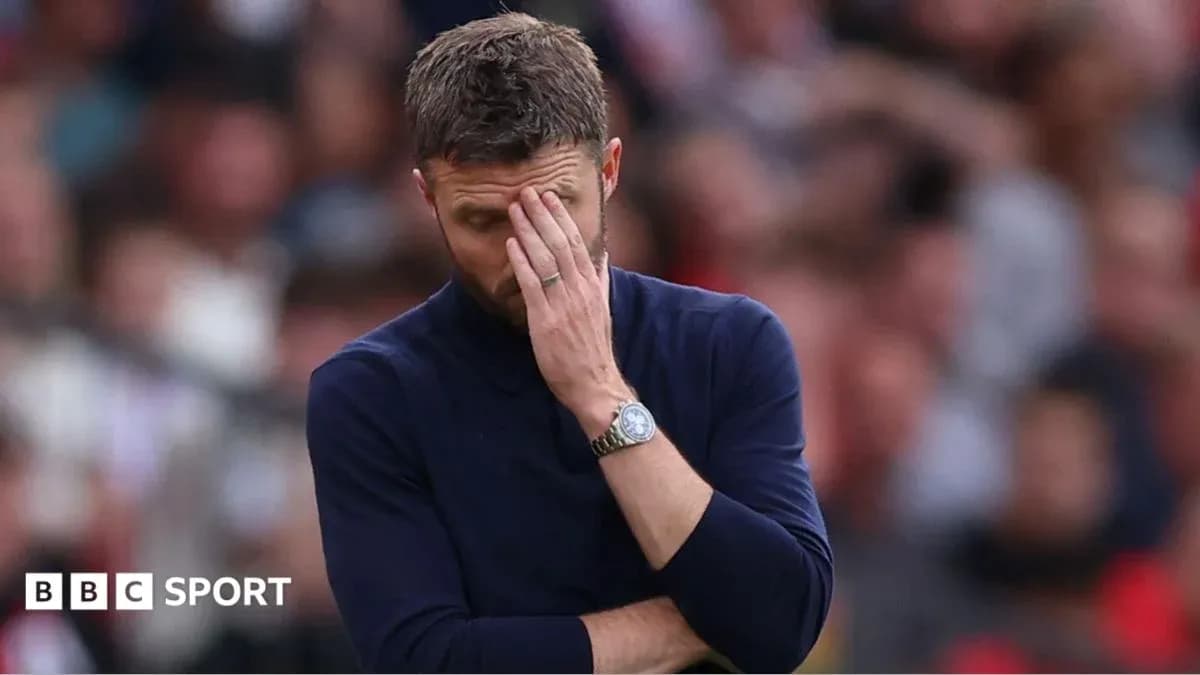
Michael Carrick spent last weekend at Everton arguing that four points from three games was not a disastrous start. After this, he did not even try to dress it up. Four points from four games is nowhere near the level Manchester United believe they should be operating at.
One win, at home to newly-promoted Ipswich, is the only league victory on the board. Everything else is now up for debate: recruitment, team selection, substitutions, tactical identity – and Carrick himself. A “huge week” is how those close to the club are describing it. They are not exaggerating.
“We don't need a break or a restart,” Carrick insisted. “We've just got to move on and get winning again.”
The words were defiant. The reality is that United are stumbling into a critical stretch of the season.
A Style That Still Doesn’t Fit
United face Brighton in the Carabao Cup on 16 September, then travel to Fulham four days later. Two games that, on paper, they should control. Two games that, on current evidence, could expose the same old flaws.
If Carrick needs anything, it is for his team to perform well enough to silence the storm that will otherwise fill the looming three-week international break. Give the critics nothing to feed on, or they will feast on everything.
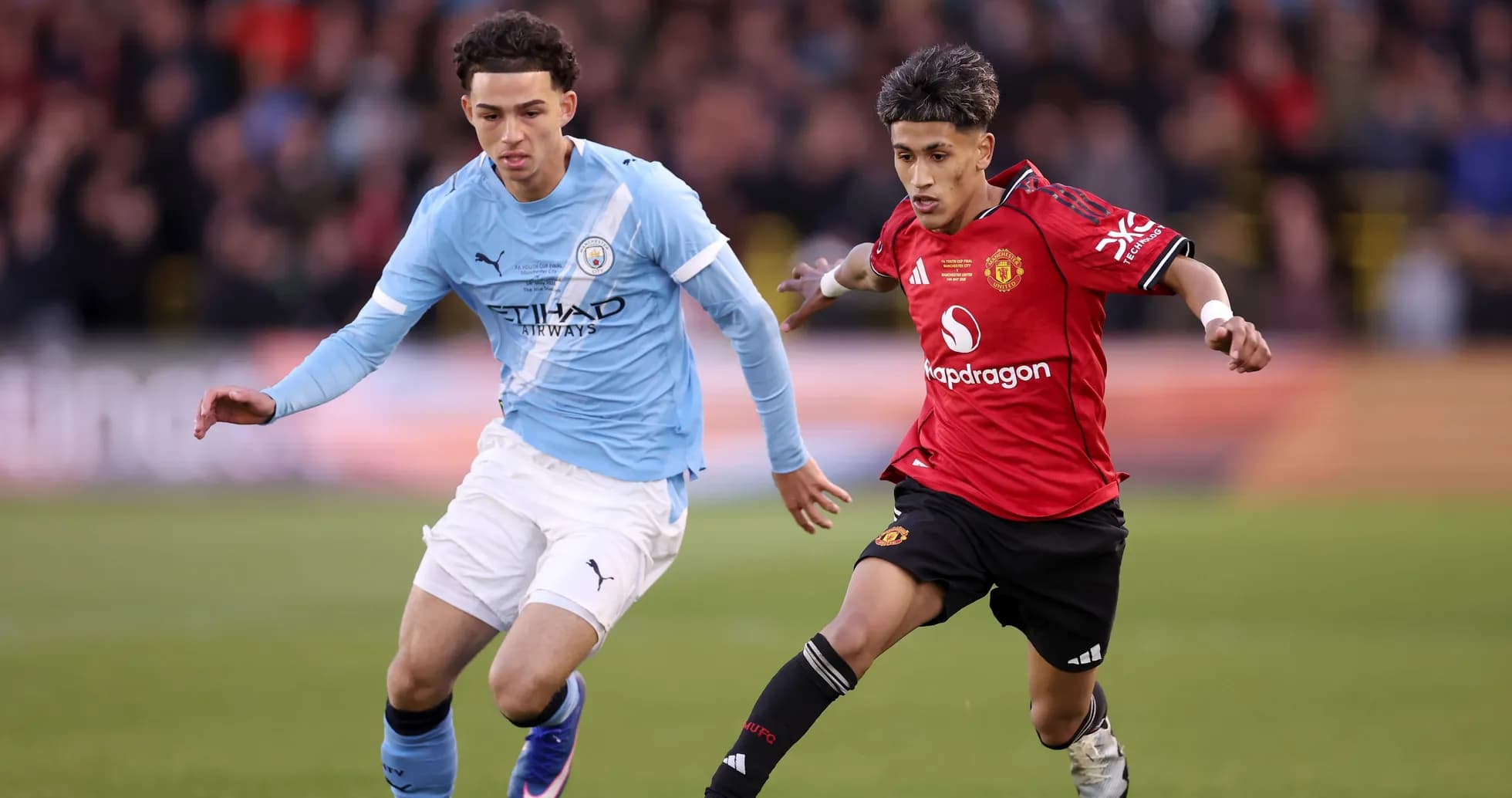
Across the city, Enzo Maresca was honest enough to admit Phil Foden’s red card made City’s task harder. Down to 10 men in a derby at Old Trafford is usually an invitation to suffer. Maresca saw something else.
“They are a team that loves transitions and space in behind,” he said. So City simply dropped off. They waited. They refused to give United what United crave.
“With 10 players, we just dropped and waited for them, so we didn't concede any transitions and didn't concede any space in behind. That is why the game became more difficult for us and for them."
The logic cut through the post-match noise. United’s most dangerous version of themselves is still the one that sits, springs, and races into open grass. That has been true since Jose Mourinho arrived more than a decade ago. Ole Gunnar Solskjaer tried to turn them into a front-foot, possession-heavy side. He never fully made the jump.
Erik ten Hag and Ruben Amorim, both hired after dominating domestic leagues with teams that had the ball, ran into the same wall. Carrick, as a player, was the embodiment of control – take the ball, keep it, dictate. It is safe to assume that is the football he wants to see.
Wanting it and delivering it are two very different things.
Keeping the ball is one test. Breaking down a compact, disciplined block that has no interest in vacating its shape is something else entirely. United are still failing that exam.
A £155m Midfield That Hasn’t Taken Hold
The club’s summer plan revolved around the midfield. On paper, it made sense. In practice, the impact of a £155m outlay has barely been felt.
Youri Tielemans has yet to find anything close to his best form. Carlos Baleba is still waiting to make his debut. Andrey Santos started at Hull on the opening day, then disappeared from the picture against City, dropped to the bench and not used at all.
This was meant to be the engine room that changed United’s rhythm. At the moment, it looks like an expensive work in progress.
At the back, another fault line. Luke Shaw’s run of 41 consecutive Premier League starts finally ended, and with it came a reminder of a summer gamble. Most observers expected fresh cover at left-back. It never arrived. Now United are exposed in a position where they have known the risk for months.
The bench told its own story. Seven minutes from time, with United chasing the game, Carrick turned to Joshua Zirkzee. The Dutch forward, available for transfer all summer, replaced Marcus Rashford as one of only two substitutes used. On a day when United needed ideas, they looked short of them. The message was clear: this squad does not yet have the depth a club of this size demands.
Fernandes Carrying Too Much Weight
Last season, Bruno Fernandes dragged United through games. He finished with nine goals and a Premier League record 22 assists, collecting both the PFA and Football Writers’ Player of the Year awards. He was everywhere, all the time, and he made it look sustainable.
This season, the numbers tell a different story. Three goals and one assist is a respectable return on paper. The problem is not the raw output. It is the feeling that his influence on games has dipped.
Against City, some observers thought he looked tired. Not just physically, but in his decision-making, in the sharpness of his passing, in the way he tried to force things that used to come more naturally. That perception throws a harsh light back on Carrick’s choices in midweek.
United’s Champions League return, away to Azerbaijan champions Sabah FK, should have been a relatively gentle reintroduction to the elite stage. Sabah’s ranking is low, the gulf in resources vast. United went 3-0 up by half-time. The job was done.
With City looming three days later, it felt like the perfect moment to protect key legs. Carrick used all five substitutes. He did not take off his captain.
Fernandes stayed on for the full 90 minutes in a game that was already won, then looked short of his usual spark in the one that really mattered. With the midfielder now into the final year of his contract – albeit with a club option to extend to 2028 – the reliance on him is starting to look less like leadership and more like overuse.
United cannot keep asking the same player to carry the creative burden, especially when the rest of the structure is still under construction.
The numbers, the patterns, the decisions – they are all pointing in the same direction. The question now is whether Carrick and this squad can change that direction before the season starts to run away from them.