.svg&w=384&q=75 "logo")
Manchester United's Left-Back Dilemma: A Risky Gamble
As the clock nudged past 23:00 BST on 1 September and the transfer window finally slammed shut, the same question flickered across Manchester United message boards and living rooms alike.
What about a left-back?
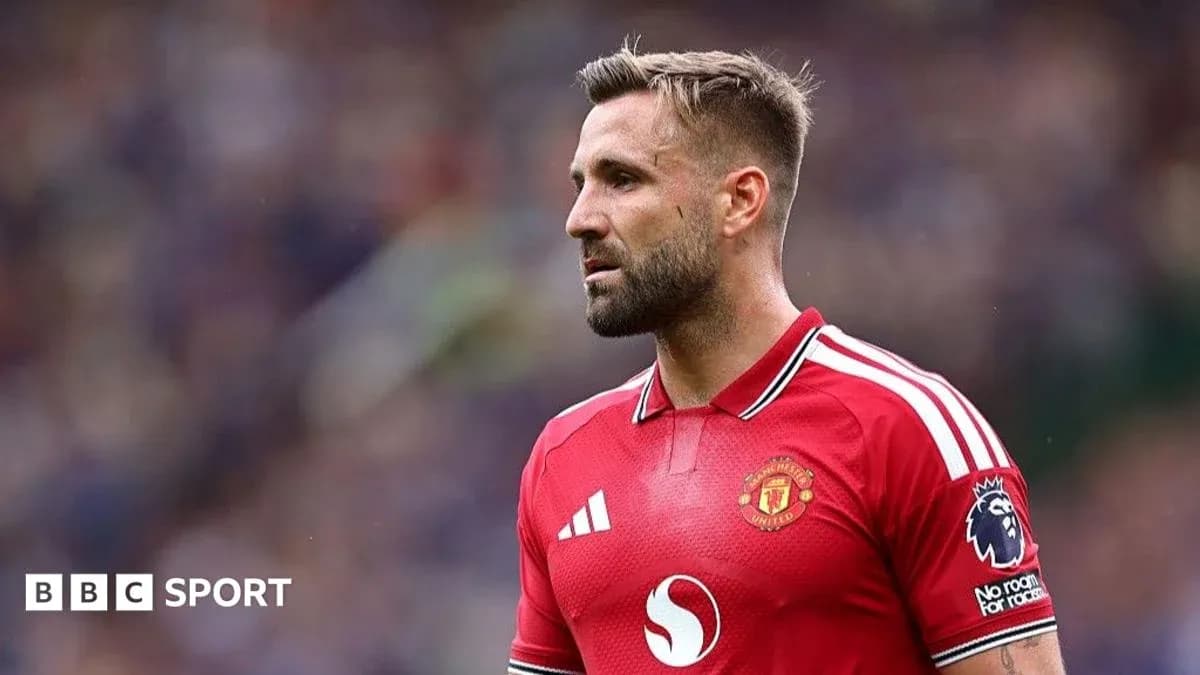
All summer, as arguments raged over Michael Carrick’s priorities and the shape of his evolving squad, one weakness seemed so obvious it barely needed stating. Luke Shaw, 31 this season, is the only senior, natural left-back on the books. He started all 38 Premier League games last term – an astonishing return given his history – but no one inside the club believes that kind of workload is sustainable in a campaign that could stretch beyond 60 matches.
Tyrell Malacia’s departure at the end of June, when his contract expired, only sharpened the concern. With the Dutchman allowed to walk away, the assumption was simple: United would move decisively for cover. Instead, the window closed with Shaw still standing alone.
This was not for lack of scouting or options. United drew up a clear list of targets. Lewis Hall at Newcastle. Alejandro Balde at Barcelona. Jorge Salinas at Racing Santander. As the days ran down, the search narrowed to one bold, politically charged move – an attempt to prise Rayan Ait-Nouri across the city from Manchester City on loan.
City refused. Talks never moved beyond the point where United would have had to accept an obligation to buy at a later date. United walked away, choosing patience over panic, determined to keep their powder dry for what they regard as first-choice, long-term solutions.
The deadline passed. The gamble became real.
Hall admired, budget spent
Inside Old Trafford, there is no ambiguity about Lewis Hall. They rate him. Highly.
Had Newcastle been willing to do business at a sensible price, Hall would likely be in a United shirt already. But a club stripped of key players by Premier League rivals this summer was never going to sell one of its most promising 22-year-olds cheaply. As discussions developed, it became clear the fee would be enormous.
United’s budget was not.
Carrick and the hierarchy had already ring-fenced funds for what they saw as the true priority: midfield. That conviction ended with a £70m commitment to bring Carlos Baleba from Brighton, a deal that effectively closed the door on any big-money left-back this summer.
The conclusion was stark. Hall is one they are prepared to wait for. Next year, not this one.
Balde represented a different problem. United would have taken him on loan; Barcelona would only consider a permanent sale. Salinas, with his relatively low release clause, looked accessible on paper, but Atletico Madrid always led that race. By the time United pivoted to Argentina defender Nicolas Tagliafico, they were too late – and missed out anyway.
At that point, the club circled back to an earlier proposal, first floated by an agent: Ait-Nouri. Their decision to seriously revisit that idea late in the window was a quiet admission of doubt, a recognition that the path they had chosen might yet prove too thin.
Shaw, makeshift cover and a curious talent
The plan, for now, is brutally simple.
Shaw remains first choice. Behind him, Noussair Mazraoui is pencilled in as the primary alternative, a role he knows from international duty with Morocco. Diogo Dalot can shuffle across if needed, having done so before. And then there is Harry Amass.
The Amass situation is one of the more puzzling subplots at United.
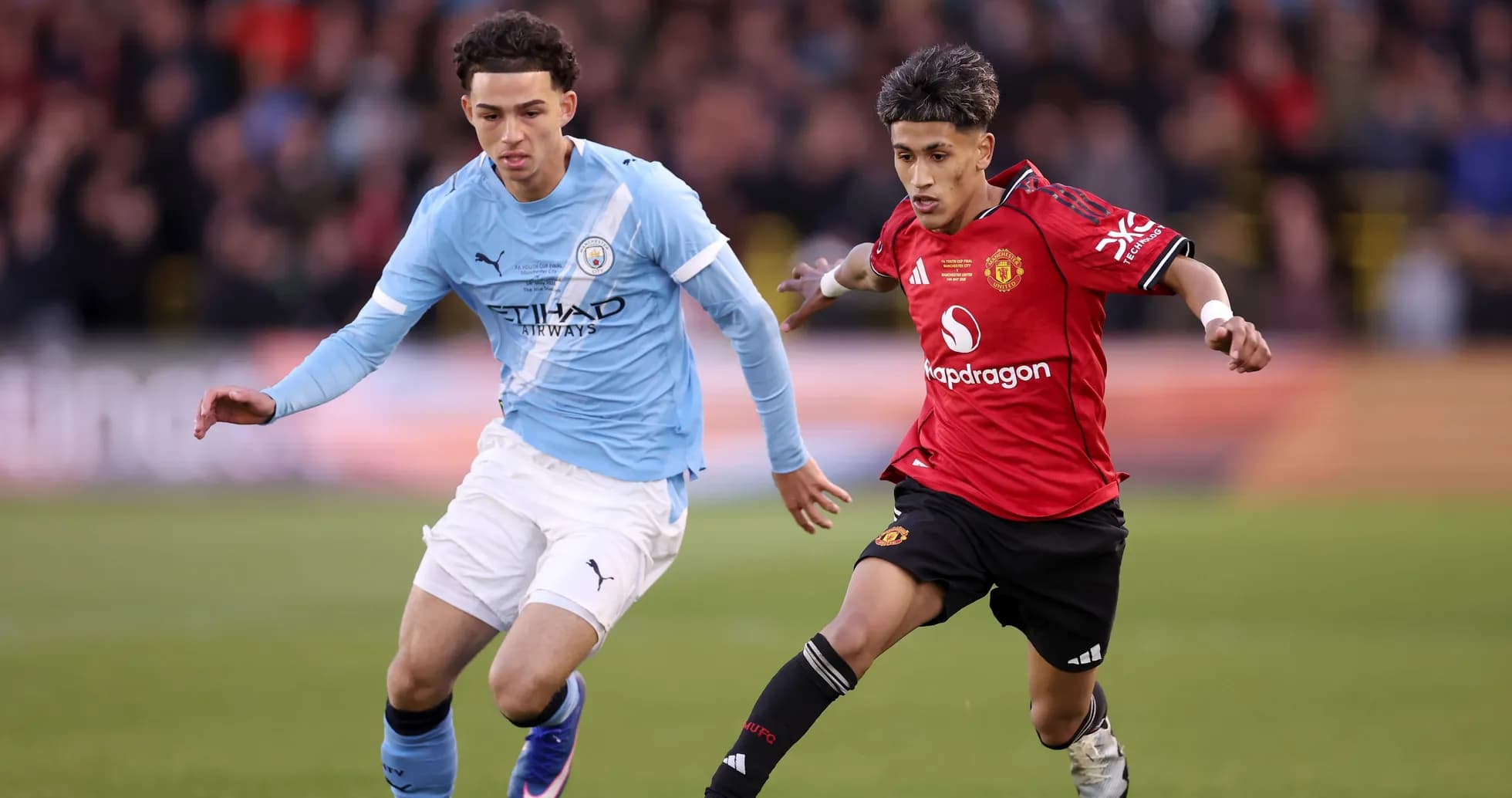
A natural left-back in the academy, he impressed during a loan spell at Sheffield Wednesday last season before injury struck soon after a winter switch to Norwich. Back at United this summer, the 19-year-old caught the eye in pre-season, often shadowing Shaw and looking comfortable in that company.
Yet United were, for a long time, prepared to let him go.
Two years ago, in the summer of 2024, Erik ten Hag left him out of the Community Shield squad, despite the teenager having held his own against Mo Salah in a pre-season game in the United States just a week earlier. Ten Hag felt Amass was not physically ready for the demands of senior football.
Time should have solved that. Two years on, he is older, stronger, more battle-hardened. Interest in him has been consistent, with multiple clubs enquiring. As deadline day approached, his absence from the Premier League 2 game against Leicester on Monday only fuelled the belief that a loan move was imminent.
It never came. Amass stayed. His place in Carrick’s hierarchy, though, remains unclear.
Yoro’s switch and the Gvardiol template
United’s willingness to treat Mazraoui as a genuine left-back option has been shaped by another positional experiment: Leny Yoro’s move to right-back.
Signed from Lille in 2024 for £52m as a central defender, Yoro spent most of this pre-season operating on the flank. Against Ipswich on Sunday, Carrick again used him there, sending him on at right-back for Dalot, at the same time as Mazraoui replaced Shaw on the opposite side.
Yoro is only 20. The nuances of full-back play – body shape, wide defensive angles, timing of overlaps – will take time. But he has the raw materials: pace, strength, composure on the ball. United fans need only glance across town at how Josko Gvardiol has reinvented himself at Manchester City to see how a centre-back can grow into an elite full-back.
United are betting that similar adaptability can underpin their defensive structure. Yoro on one flank, Mazraoui able to flip sides, Dalot as the utility man, Shaw as the anchor. It is a web of contingencies rather than a clean, specialist solution.
A calculated risk, in every sense.
Scar tissue from past mistakes
One thing is clear: United were determined not to repeat old errors.
This summer, they drew a hard line on valuations. No chasing lost causes. No overpaying just to say they had “done something”. The scars of previous stop-gap signings are still visible at Old Trafford.
Alex Telles. Matteo Darmian. Sergio Reguilon. All arrived with varying degrees of hope attached. None were truly at the level United required. All became symbols of short-term thinking and muddled planning.
That is the trap the club refused to fall into again. Better, in their view, to ride the season with Shaw, Mazraoui, Dalot and a reshaped Yoro, than to drop another eight-figure fee on a player they did not fully believe in.
On paper, it makes sense. In the cool light of a balance sheet and a long-term squad plan, it is probably the right call.
But football does not live on paper. It lives in the noise and heat of matchdays, in the groans when Shaw pulls up holding a hamstring, in the scrutiny that will descend the first time a makeshift full-back is exposed at the back post.
United have chosen their risk. The season will decide whether it was bravery or folly.