.svg&w=384&q=75 "logo")
Manchester United Faces Crisis Over JJ Gabriel's Future
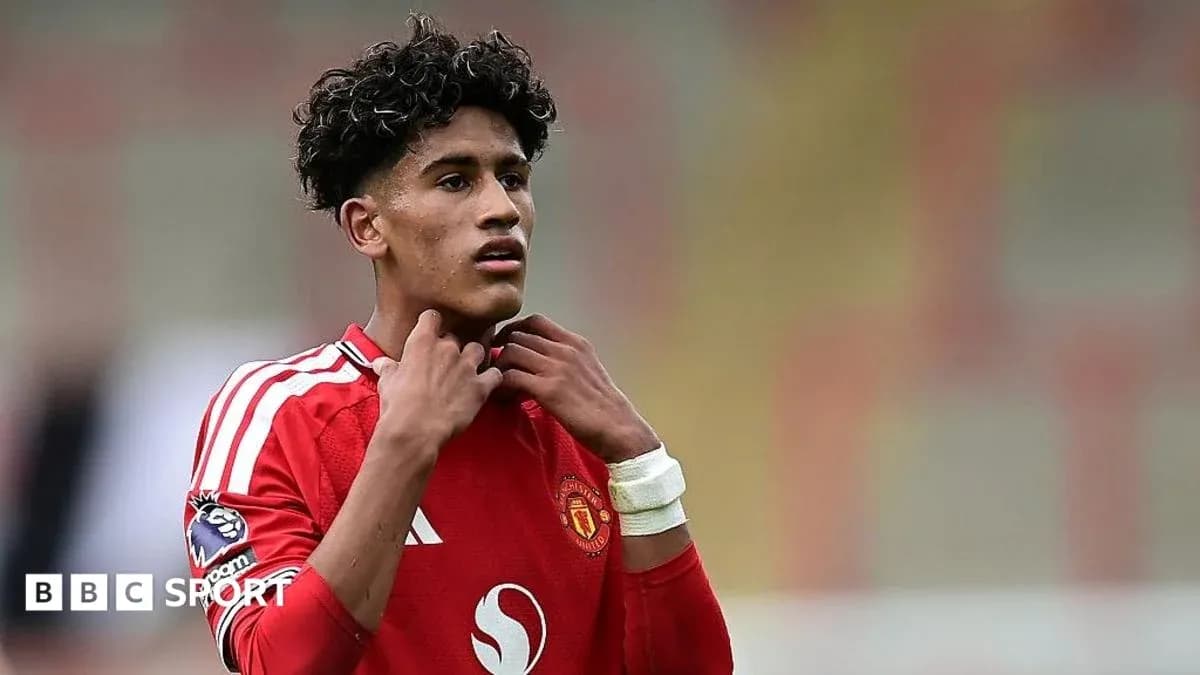
On a night that was supposed to celebrate the future, Manchester United are staring at the possibility of losing it.
Before Old Trafford could even begin to savour the idea of history being made in the Carabao Cup against Brighton, the club found itself wrestling with a stark reality: JJ Gabriel, the brightest light in their academy, wants to leave.
Inside United, the mood is raw. A week ago, Gabriel’s hat-trick on his Uefa Youth League debut at Leigh felt like the opening act to a story that would see him become the youngest player in the club’s history. Now, instead of preparing his debut, United’s hierarchy are locked in damage-limitation talks.
Chief executive Omar Berrada and director of football Jason Wilcox are directly involved, trying to convince a 15-year-old to tear up his exit plan and trust the club again. Those close to the situation sense they are fighting a losing battle.
A prodigy who outgrew his age group
Gabriel’s potential is no secret. It has been paraded in front of every major club in England over the past year.
He was named Under-18 Premier League Player of the Year last season, despite being only 14 when the campaign kicked off. He scored 23 goals in the Premier League Under-18 competition, added three more in the FA Youth Cup, and dragged United to both the Premier League Under-18 Cup final and the FA Youth Cup final. He then completed the clean sweep by taking United’s own Under-18 Player of the Year award.
Those numbers only tell part of the story. Coaches rave about his balance, his pace, his tight control, his shot that thuds rather than pings off the boot. This season he has added a harder edge, showing a readiness to press and tackle, not just decorate games.
“The best 15-year-old in Europe,” is how one United source recently described him.
Adam Lawrence, United’s Under-21s coach, summed up the responsibility that comes with that kind of talent after Gabriel’s demolition of Sabah FK in the Youth League.
“The first thing in my job is not to ruin him,” Lawrence said. “When you have a talented player like JJ, you obviously don't want to stifle their freedom and their creativity.”
That kind of talk travels quickly. Real Madrid, Barcelona and Paris St-Germain have all taken notice. These are clubs that build departments around identifying elite teenagers. Gabriel is exactly the profile they hunt.
Broken promises and broken trust
This is where the story turns.
United’s initial reaction to the swirl of speculation was to brief privately that they would try to convince Gabriel his future is best served in Manchester. They also pointed out that his registration runs until the end of the season.
That might help if the threat came only from Premier League rivals. It is far less reassuring when the sharks circling are on the continent.
Gabriel holds an EU passport. His mother has Greek-Cypriot heritage, his father played twice for the Republic of Ireland. That matters.
In 2016, the Court of Arbitration for Sport rejected an appeal by Velez Sarsfield, who tried to stop one of their 16-year-olds moving to Manchester City. The player was a dual Argentine-Italian national, and CAS ruled that as an EU national he could move freely within the European Union, even from a non-EU club.
United know the precedent. They also know the story of Louie Barry. West Brom received nothing when Barry, then 16, left for Barcelona in 2019, after Fifa decided the club had not formally offered him a scholarship. West Brom had claimed €130,000 in training compensation. Six months later, Barry left Barca for Aston Villa for just under £1m.
United’s nightmare scenario is simple. Gabriel turns 16 on 6 October, walks away, and the club that has nurtured him sees no compensation for a player whose market value is already measured in millions.
This is not the first time a gifted teenager has found himself at odds with a club over his pathway.
Jadon Sancho was 17 when he stopped training at City to force through a £10m move to Borussia Dortmund, convinced he would play more in Germany than under Pep Guardiola. Morgan Rogers, a team-mate of Barry’s in the West Brom side that reached the FA Youth Cup semi-final in 2019, left for City on his 17th birthday.
Those around Gabriel feel something similar has happened at United. They believe that in meetings last summer, when Gabriel committed his short-term future to the club, assurances were made about his progression that have not been honoured.
The debut that never came
There were early signs of a plan. Gabriel started to appear in senior training sessions, first under Ruben Amorim and then Michael Carrick. Talk of a first-team debut in the FA Cup grew louder.
Then it cooled.
Darren Fletcher, then Under-18s coach and by that stage interim first-team manager after Amorim’s dismissal, decided it was too early. The brakes went on.
The expectation remained that this autumn, probably in the EFL Cup, Gabriel would finally cross the white line for the senior side and become the youngest player in United’s history.
Pre-season should have been his launchpad. Instead, it became a source of frustration.
He missed the trip to Helsinki to face Wrexham on 18 July, with his absence put down to the date he returned for pre-season training. After that, he was named in every squad, but hardly touched the pitch. Eight minutes against Atletico Madrid in Stockholm. That was it.
The pattern continued. Gabriel travelled to Trondheim for a friendly with Rosenborg on 24 July. Carrick used 11 substitutes. Gabriel was one of only two players who stayed on the bench. Five of those who did come on have since left the club, either permanently or on loan.
Then came the moment that really raised eyebrows inside the Gabriel camp. At Croke Park, 18-year-old Tynan Thompson, who had joined from Tottenham only three weeks earlier, was handed a 45-minute senior debut against Leeds United. Gabriel travelled, again, but did not feature.
One youngster fast-tracked. Another, the club’s own prodigy, left waiting.
A registration call that fuels the fire
Even with all that, there was still a sense Gabriel’s time would come quickly. The Carabao Cup offered one route. The Champions League, oddly, offered another.
United’s group handed them Azerbaijani champions Sabah, who on paper looked the softest home assignment of the season. On the night, United led 3-0 at half-time. By the 72nd minute, Carrick had used all five substitutes.
Gabriel was not among them. He could not be.
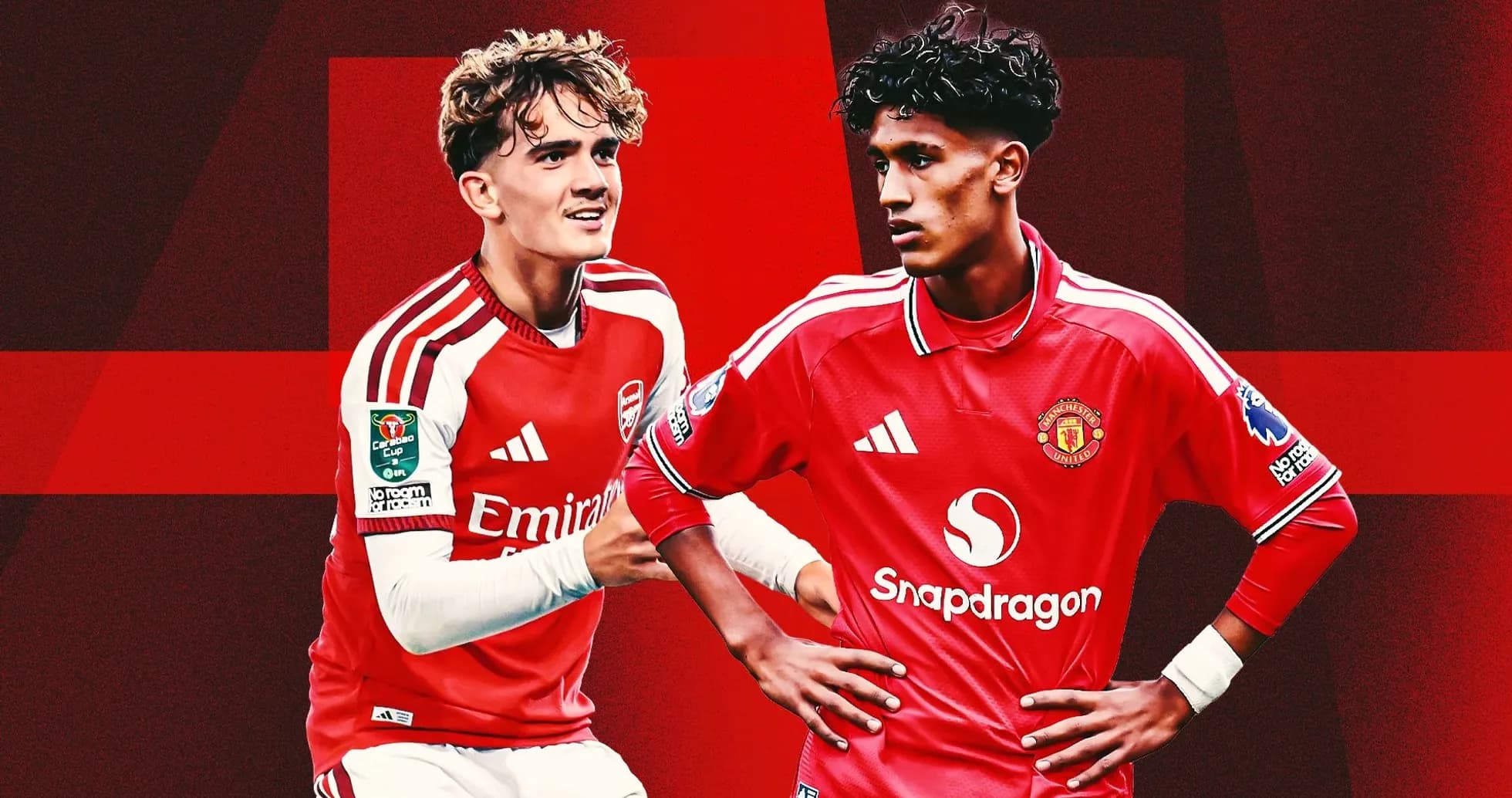
As with Max Dowman at Arsenal last season, Uefa rules meant that, at 15, Gabriel could only play if he was on United’s A list of registered players. He was not. United filled their 25-man quota, but included Manuel Ugarte, who is out with a knee injury until at least January, and Thompson, the summer arrival.
Why Gabriel was left off remains unclear. Inside the club, some coaches have suggested he is not yet at the physical level required for senior football. Those close to the player reject that idea outright.
They look at Arsenal, who gave Dowman his debut at 15. They look at Bayern Munich, who trusted Lennart Karl at 17. They look at the path being offered elsewhere and ask a blunt question: why not at United?
For now, Old Trafford waits. A club that has built its identity on youth finds itself trying to convince the most gifted 15-year-old in its system that the pathway still exists.
If they fail, the fallout will not just be the loss of a prodigy. It will be a brutal verdict on what Manchester United’s promise to their young players really means in 2024.