.svg&w=384&q=75 "logo")
Manchester United's Battle for 15-Year-Old Talent Gabriel
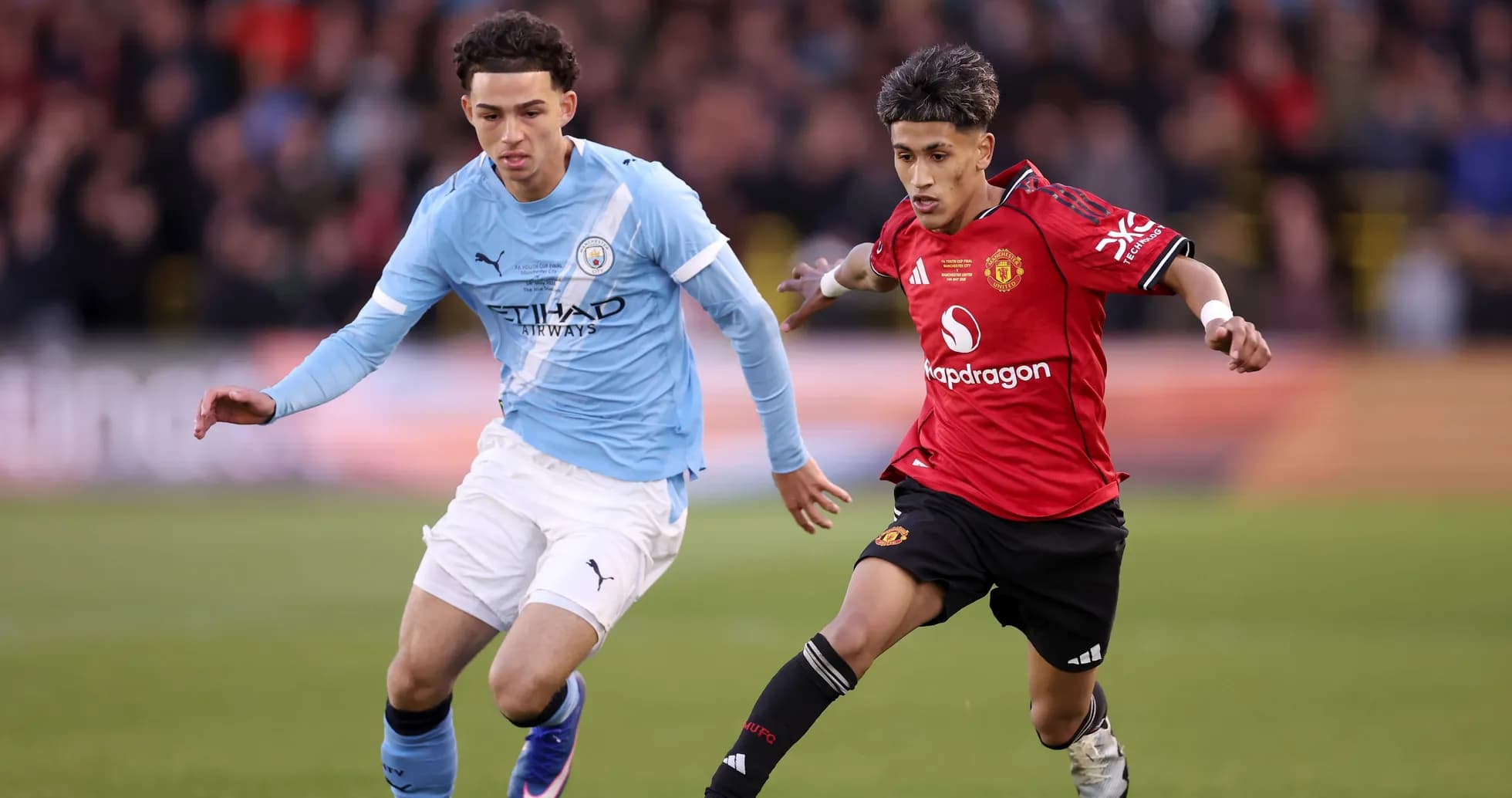
Manchester United are locked in a fight they cannot afford to lose – and it is not for a marquee striker or a Champions League place. It is for a 15-year-old who has not kicked a ball for the first team.
Gabriel, the jewel of United’s academy, is being courted by Real Madrid, Barcelona, Paris Saint-Germain and Bayern Munich. The European super-club circuit has lit up around him. United, though, are digging their heels in.
They have told anyone who will listen: he is not for sale.
A generational talent at a crossroads
Inside Carrington, the mood has shifted from excitement to concern. Gabriel is under contract until next summer, but he is not a full-time scholar and not tied into the club’s long-term model. Under current rules, if he holds a European passport, he will technically be free to leave when he turns 16 on October 16.
United are scrambling to understand exactly what that means.
His father, Joe O’Cearuill, played twice for Ireland. His mother is of Greek Cypriot heritage. Under post-Brexit regulations, that dual-nationality route could allow him to move to an EU club before he turns 18. That possibility is precisely what has the continent’s giants circling.
United fended off Manchester City to keep Gabriel last year. This time, the ground feels less stable. His behaviour suggests the battle may already be tilting away from Old Trafford.
He was due to train with the first team on Saturday. He did not turn up. He has not been seen at Carrington all week.
Michael Carrick had planned to include him in the squad for Wednesday night’s Carabao Cup third-round tie against Brighton at Old Trafford. Had he stepped onto the pitch, Gabriel would have become the youngest player ever to appear for United’s senior side. That dream has been shelved. His involvement is now off the table.
United’s great hope – and growing headache
For a club still waiting for the academy to produce another Marcus Rashford-level superstar, Gabriel has been the beacon. He joined United at 11. Since then, the whispers have grown louder with every age group he has skipped.
He is a two-footed forward, light on his feet, slippery in tight spaces, and ruthless when the goal opens up. Coaches talk about his agility, his balance, the way he glides past defenders who tower over him.
Lazy comparisons to Lionel Messi do him no favours. Stylistically, he looks closer to Neymar – one of the Barcelona legend’s former team-mates – all quick feet, sharp angles and sudden bursts of improvisation. He even wears the same model of Nike boots as the Brazilian, having signed a lucrative extension with the sportswear giant in March 2025.
The numbers back up the hype. At 14, he broke into United’s Under-18s – another record – and scored 20 goals in 21 league matches. He swept up the inaugural Premier League U18s Player of the Year award and became the youngest winner of United’s Jimmy Murphy Young Player of the Year prize.
This season, he jumped again. In August, he stepped into the U21s and lit up his debut against Ipswich: two assists and a delicate chip in a 5-0 win. A week later, he scored again as United hammered Leicester City 4-1.
This is not a normal development curve. This is a teenager operating two, maybe three years ahead of schedule. No wonder the calls for Carrick to “just play him” have grown louder, especially with United short of inspiration in the final third and Max Dowman tearing up records at Arsenal.
The Dowman effect – and the danger of shortcuts
The Premier League has seen this movie before. In September 2022, Ethan Nwaneri became the youngest player in league history at 15 years and 181 days when he came on for Arsenal at Brentford. His path has not been linear – loans to Marseille and Borussia Dortmund, dips and surges – but he now has more than 50 appearances for the Gunners at 19. The ceiling remains high.
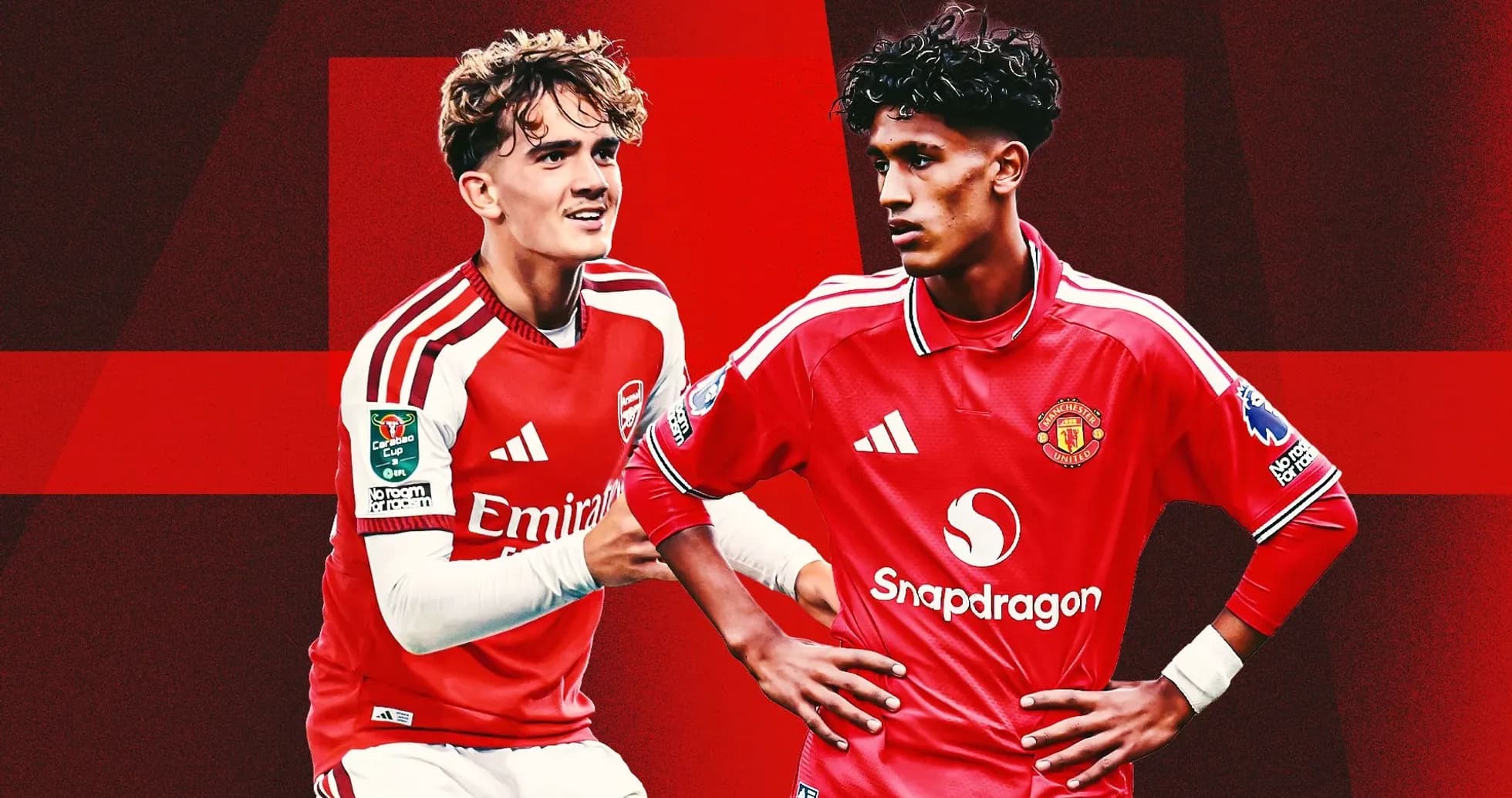
Arsenal have doubled down on the “if you’re good enough, you’re old enough” mantra with Dowman. Mikel Arteta threw him on against Leeds United in August 2025, making him the second-youngest Premier League player. In March, Dowman broke James Vaughan’s record as the league’s youngest goalscorer, finishing a superb solo run against Everton at 16 years and 139 days.
By May, he was the youngest title-winner in Premier League history. This week, he matched Wayne Rooney’s feat as only the second 16-year-old to score a brace for a Premier League club in a major competition, leading Arsenal to a 4-2 Carabao Cup win over Ipswich.
Fourteen senior games already. Flair, strength, maturity. Arteta cannot ignore him, but he refuses to indulge him.
“We have to look after him. He’s 16 years old. You don’t see that in this league,” Arteta said after the Ipswich tie. “In this league, with the demands that the league [has], the players and everything put on you, we really need to make sure every time we throw him in, he’s in the right context with the right preparation. That’s what we are trying to do.”
That is the crucial difference. Dowman’s body is ready. Gabriel’s is not.
He is slight, often the smallest on the pitch. His courage and determination close part of that gap, but not all of it. Throwing him into Premier League combat too soon could hurt him, not just physically but mentally – particularly if he explodes onto the scene.
If he starts brilliantly, Carrick will face relentless pressure to pick him every week. That is a huge burden for a teenager still 18 months away from his GCSEs. Arteta can drop Dowman in and out because Arsenal are stacked. He can rotate, rest, and still win.
United cannot. Their form lurches. Their squad is thinner. If Carrick eases Gabriel out after a dip, he will be branded too cautious. If Gabriel struggles from the start, the same voices will call him overrated.
For now, Carrick’s restraint looks calculated rather than fearful.
Inside the academy perspective
Danny Simpson knows what it means to come through United when the club is functioning at its peak. The former defender, who broke into the first team under Sir Alex Ferguson, believes context is everything.
Speaking to GOAL courtesy of Free Bets, he drew a sharp contrast between his own experience, Dowman’s situation and Gabriel’s reality.
“You’ve seen Arsenal do it, haven’t you, with Max Dowman. He’s come in, then he takes him out, then we don’t know about him for a bit, then he might come back in. I think it’s easier for Dowman,” Simpson said.
“I came through United and United were great. I could come on for 10 minutes because most of the time we were 2-0 up, 3-0 up. I would play, I’d get my debut or a second game and I’d be playing with the second XI who could win the Premier League! I think that’s Max Dowman. He’s coming into a team that’s flying in confidence, full of top, top talent, winning games.
“People in the second XI, a bit like United back in the day, just as good. It’s easy to come on and have an impact and play well. I think maybe United at the minute is a bit different. I will say that. I know we all want to see Gabriel play and it’s exciting, but it’s just a very different situation to Max Dowman at Arsenal.
“I just think that Michael Carrick will know what to do and when to. We’ve seen it a little bit with Shea Lacey. I’ve trained with Shea and I’ve been around him and I’ll say he’s a top talent. Just let him [Gabriel] train and be around the team and his time will come.”
Simpson’s point cuts through the noise: timing and environment matter as much as talent.
The lure of Spain – and the risk of being lost
Holding back ambitious teenagers, though, is never simple. Gabriel does not live in a bubble. He can see Dowman thriving. He can see another prodigy, Lamine Yamal, already a star at Barcelona.
Yamal was similarly slight when he made his Barca debut in 2023 at 15 years, nine months and 16 days. In La Liga, where the game leans more on possession and tactical control than relentless transitions, his speed of thought and movement allowed him to dodge the more brutal side of senior football.
The Premier League is less forgiving. Time on the ball is scarce. Challenges bite harder. It is not hard to imagine that Yamal’s rise would have been slower had he started in England.
Gabriel may look at Barcelona or Real Madrid and see a fast-track to stardom. On the surface, it makes sense. The reality is more complicated.
When Yamal broke through, Barca were heading towards the La Liga title under Xavi but had crashed out of the Champions League in the group stage. The forward line was in flux. Raphinha, Ousmane Dembele and Ferran Torres were not at their current levels. There was room for disruption.
Now, Barcelona’s attack is loaded: Yamal, a peak Raphinha, Anthony Gordon, Karim Adeyemi, Gabriel Jesus. In Madrid, Jose Mourinho can call on Kylian Mbappe, Vinicius Junior, Jude Bellingham and Yan Diomande. At PSG and Bayern, the competition is no less brutal.
Where, exactly, does a 16-year-old from Manchester slot into that?
Wherever he goes, Gabriel will need patience. In truth, the clearest route to regular senior football still runs through Old Trafford. Walking away in search of instant gratification could end up delaying, not accelerating, his career.
United, Ratcliffe and the line in the sand
That does not mean United should bow to every demand. Sir Jim Ratcliffe, already under fire from supporters after a series of unpopular calls since taking charge of football operations, knows what is at stake. Letting a “once-in-a-generation” academy talent slip away on his watch would haunt him.
But there is a line.
United cannot be held hostage by a teenager who has not yet finished school. The club’s history is built on youth, yes, but also on standards. George Best, Sir Bobby Charlton, Ryan Giggs, David Beckham, Paul Scholes, Gary Neville – none of them were handed anything. They earned it, day after day, under the harshest glare.
Ruben Amorim, the much-criticised former United manager, saw a cultural problem brewing before he was sacked in January.
“There is a feeling of entitlement we have in our club,” he said in one of his final press conferences. “Sometimes, difficult moments is not a bad thing for the kids. We don’t always need accolades in everything. We are not helping.
“Nowadays, they [players] speak and go against the club because they feel entitled. Let’s stay. Let’s fight. Let’s overcome. That is the way we can solve things.”
He got plenty wrong. On this, he was right.
Right now, Gabriel’s stance reflects that entitlement. The sense that he can dictate terms to a club still trying to drag itself out of a slump. If that attitude hardens, it will not matter how talented he is. He will not change United’s future in any meaningful way.
United’s task is clear. Convince him that his path runs through patience and hard work in Manchester. Show him there is a plan, a timeline, a place for him in the first team when he is ready.
If he cannot accept that, if the lure of instant status elsewhere proves too strong, then the club may have to make the coldest call of all: let him go, protect the dressing room, and trust that the next Gabriel is already lacing up his boots somewhere in the academy.