.svg&w=384&q=75 "logo")
Manchester Derby VAR Controversy: Speed vs Accuracy
“Quick, quick, quick, quick! Go, go, go, go, go!”
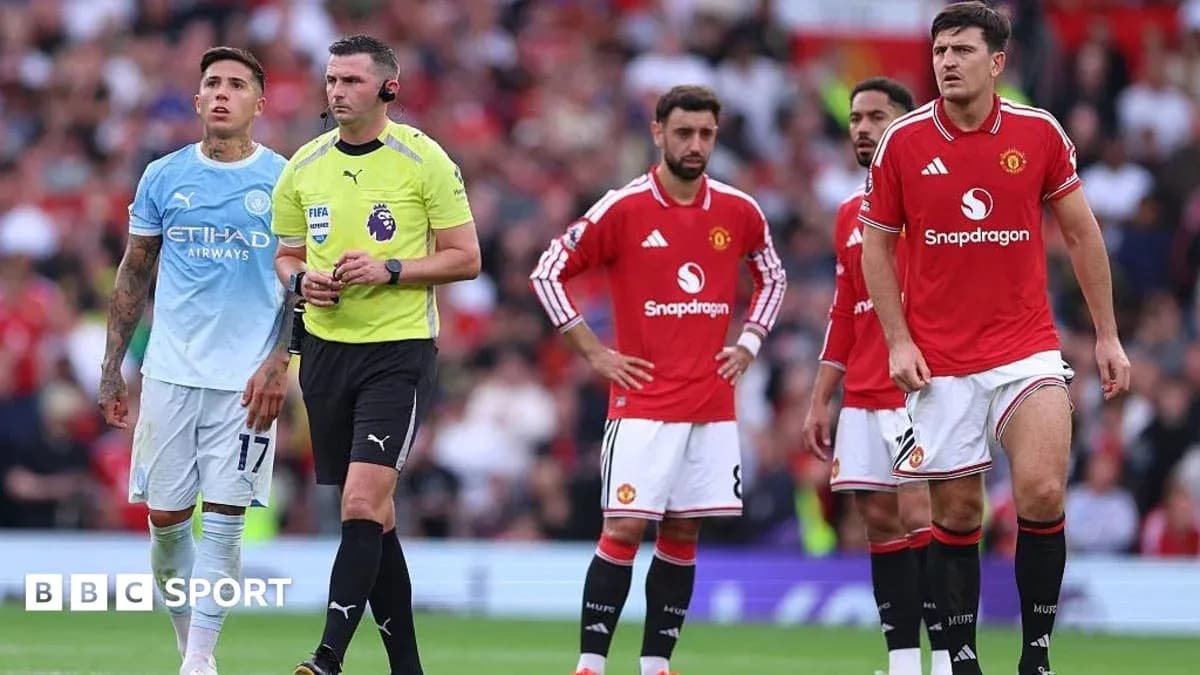
In the heat of the Manchester derby, those words from video assistant referee Matt Donohue were meant to signal efficiency. Instead, they became the soundtrack to one of the most glaring VAR failures the Premier League has witnessed.
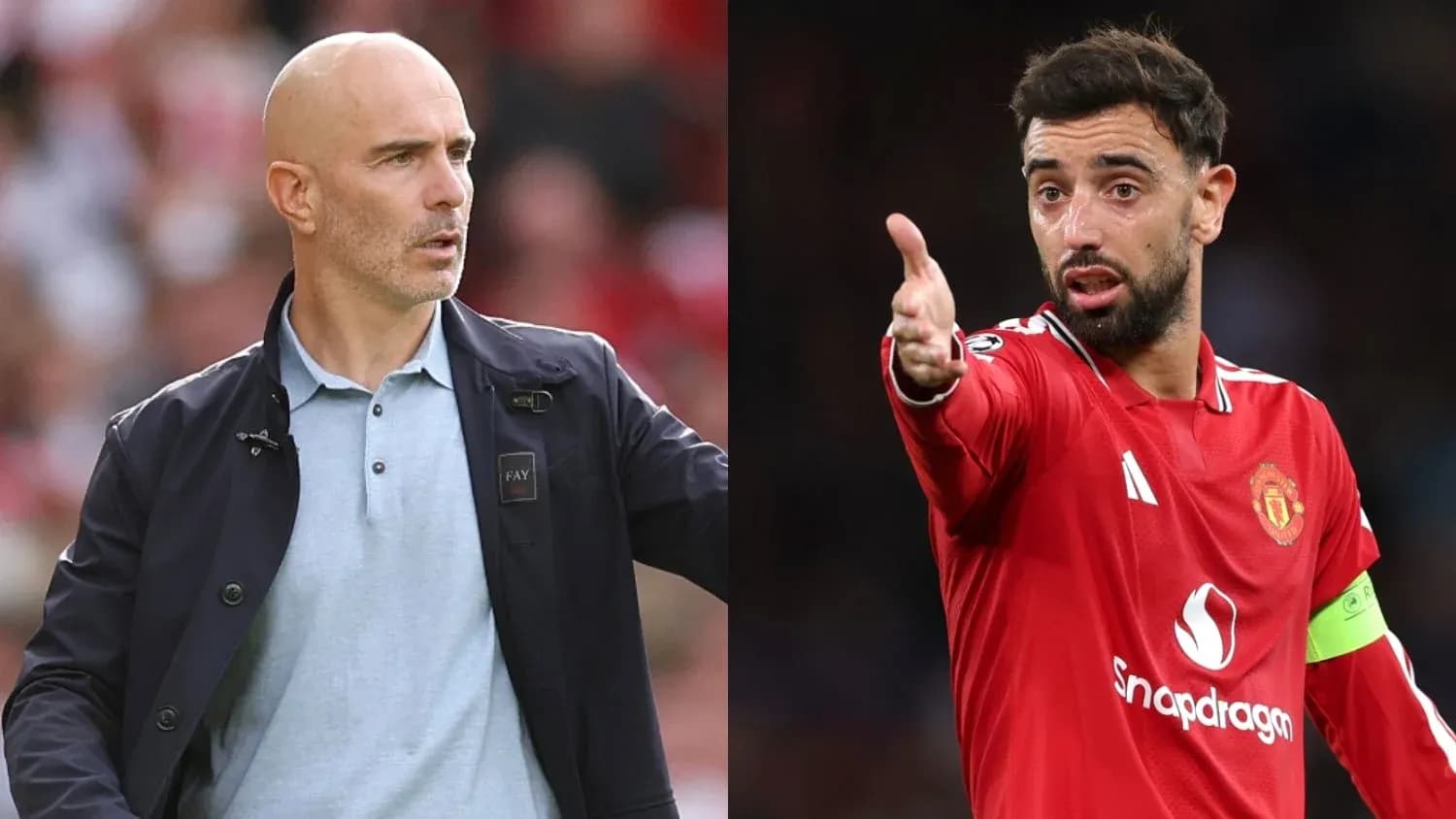
Seconds later, Erling Haaland’s winner stood. Manchester City 1, Manchester United 0. And Enzo Fernandez, standing three yards offside in the build-up, somehow invisible to a room full of officials and a bank of cameras.
This was not just an error. It was a collapse of process.
Speed, pressure and a system on edge
Refereeing has always lived under the floodlights of scrutiny. VAR only intensified it. Every angle, every freeze-frame, every decision dissected in real time and again in slow motion.
The Premier League, responding to that pressure, set a clear principle for this season: make VAR quicker, trim the delays, keep the game flowing. Stakeholders’ surveys – managers, coaches, supporters – hammered home the same demand. Decisions had to come faster.
So they did. On paper, the numbers look good. Average VAR delays, including the referee’s announcement to the crowd, have dropped from 46 seconds per game to 36. Ten seconds shaved off the waiting time. A cleaner experience, supposedly.
But football doesn’t live on spreadsheets.
The only other acknowledged VAR mistake this season, the failure to award Arsenal a penalty at Aston Villa, also came from an incident that was cleared too quickly. Sunday’s derby took that tension between speed and accuracy and blew it wide open.
“Let’s go, let’s go, let’s go” – and the moment it all went wrong
The audio tells its own story. Donohue’s voice is urgent, insistent.
“Let’s go, let’s go, let’s go, let’s go!”
This was not the calm, layered check the technology demands. It sounded rushed, almost frantic. The replay operator scrambled to keep up. The whole exchange felt like a team racing a clock rather than interrogating an incident.
The critical mistake came early.
Donohue asked the replay operator to stop the footage on the first replay at the moment Josko Gvardiol played the ball across goal. From there, he jumped straight into the semi-automated offside technology.
That shortcut should never have happened.
The VAR team needed to see the full picture: from Gvardiol’s cross, through the crowded penalty area, all the way to Haaland’s header. Only by watching that entire sequence would they have seen Fernandez’s position and movement, and understood his impact on the phase.
They didn’t. The events inside the box were effectively ignored until the attacking phase was broken down later. By then, the focus had narrowed to a single question: did Fernandez touch the ball? If he had, it would have started a new phase and left Haaland offside.
In that tunnel vision, the obvious offside was lost.
Where was the safety net?
Much of the anger has landed on Donohue, but the role of his assistant VAR, Blake Antrobus, is just as important in this story.
The AVAR exists to provide checks and balances, to see what the main VAR might miss, to challenge, to slow things down if needed. On Sunday, that safeguard barely flickered.
Antrobus’ entire audible contribution to the review was a brief “no, yeah” on the question of a potential touch by Fernandez. One second later, Donohue declared: “final decision is goal, check complete”.
That was it. No wider intervention. No insistence on watching the full sequence. No pause.
The irony is stark. Earlier this season, the only truly lengthy VAR delay came in Brentford v Sunderland, when a Dan Ballard goal was ruled out for a subjective offside against Kevin Danso. That check took more than four minutes. Antrobus was AVAR that day as well, and some corners of the media hammered him for the time it took.
Did that criticism echo in his mind on Sunday? Did the memory of that backlash push him away from urging a longer check in the derby? We cannot know. What we do know is that in the Danso incident, Antrobus helped guide VAR Tim Wood to the correct decision. On Sunday, the safety net never opened.
There was another layer too: the support VAR, based in the operations room next to the match hub at Stockley Park, empowered to intervene on matters of protocol. They saw the review unfold. They did not step in.
Even then, the situation was not beyond repair. Between the ball hitting the net and the restart from kick-off, there was still a window to catch the error and pull it back. That window closed, untouched.
Specialists, investment – and a brutal reality
Pro Ref has poured time, money and training into VAR. The aim has been clear: make it both efficient and accurate. Not one or the other. Both.
This is not a system run by part-timers dabbling with screens. Three seasons ago, Pro Ref invited officials to specialise as video referees. Candidates went through aptitude tests; around 15 reached the final stages, 10 have since taken charge of Premier League matches from the booth.
Matt Donohue is one of those specialists. Sunday was his 65th Premier League appointment as VAR. His progress has been significant enough that he now sits on the international list and has overseen Uefa club competition qualifying ties.
He has, like almost everyone in that role, made mistakes. The job is unforgiving. Every decision is replayed a hundred times from a hundred angles. Only two VARs – Nick Hopton and Neil Davies, both products of the same accelerated programme – have managed a clean record over the past two seasons.
Even full-time VAR careers offer no guarantee. Lee Mason and Mike Dean, the only officials appointed by the Premier League solely to work in the VAR room after retiring from on-field duties, were both removed by Howard Webb within months of his arrival after a series of high-profile errors.
Elsewhere, the picture is no cleaner. Spain’s La Liga and Segunda División use dedicated VAR teams who never referee on the pitch, yet the controversies roll on. At the start of last season, VAR there missed a goalscorer standing offside when the decisive pass was played. Different league, same outrage.
So the argument that “VAR specialists” are the silver bullet falls flat. Donohue is precisely that: a specialist, heavily trained, highly trusted. On Sunday, that did not stop him from getting one of the biggest calls of the season badly wrong.
When speed becomes an obsession
The Premier League wanted quicker VAR. Broadcasters wanted fewer stoppages. Fans wanted less dead air. Webb listened. Processes were tightened. Reviews were sharpened.
But Sunday showed what happens when the pendulum swings too far.
This was not just about a referee hurrying through a check. It was about a culture where speed has become a metric of success. Where a four-minute review, like the one that correctly ruled out West Ham’s stoppage-time equaliser against Arsenal last season, is treated as a bigger sin than a 30-second catastrophe.
In that Arsenal-West Ham game, the VAR took his time, worked through the footage, and reached the right conclusion. There were complaints about the delay, but the decision stood up.
In the Manchester derby, the rush became the story. The process buckled. The goal stood.
Now, Pro Ref faces hard questions. About its protocols. About why a VAR in one of the marquee fixtures of the season felt compelled to sprint through a review. About how an offside as clear as Fernandez’s went unseen in a room built to see everything.
The technology will survive this. It always does. The debate will rage, the clips will be replayed, and the next round of fixtures will arrive on schedule.
But as long as the sport chases speed like a trophy, how many more nights like this are waiting just around the corner?