.svg&w=384&q=75 "logo")
Manchester Derby Controversy: VAR's Impact on Football
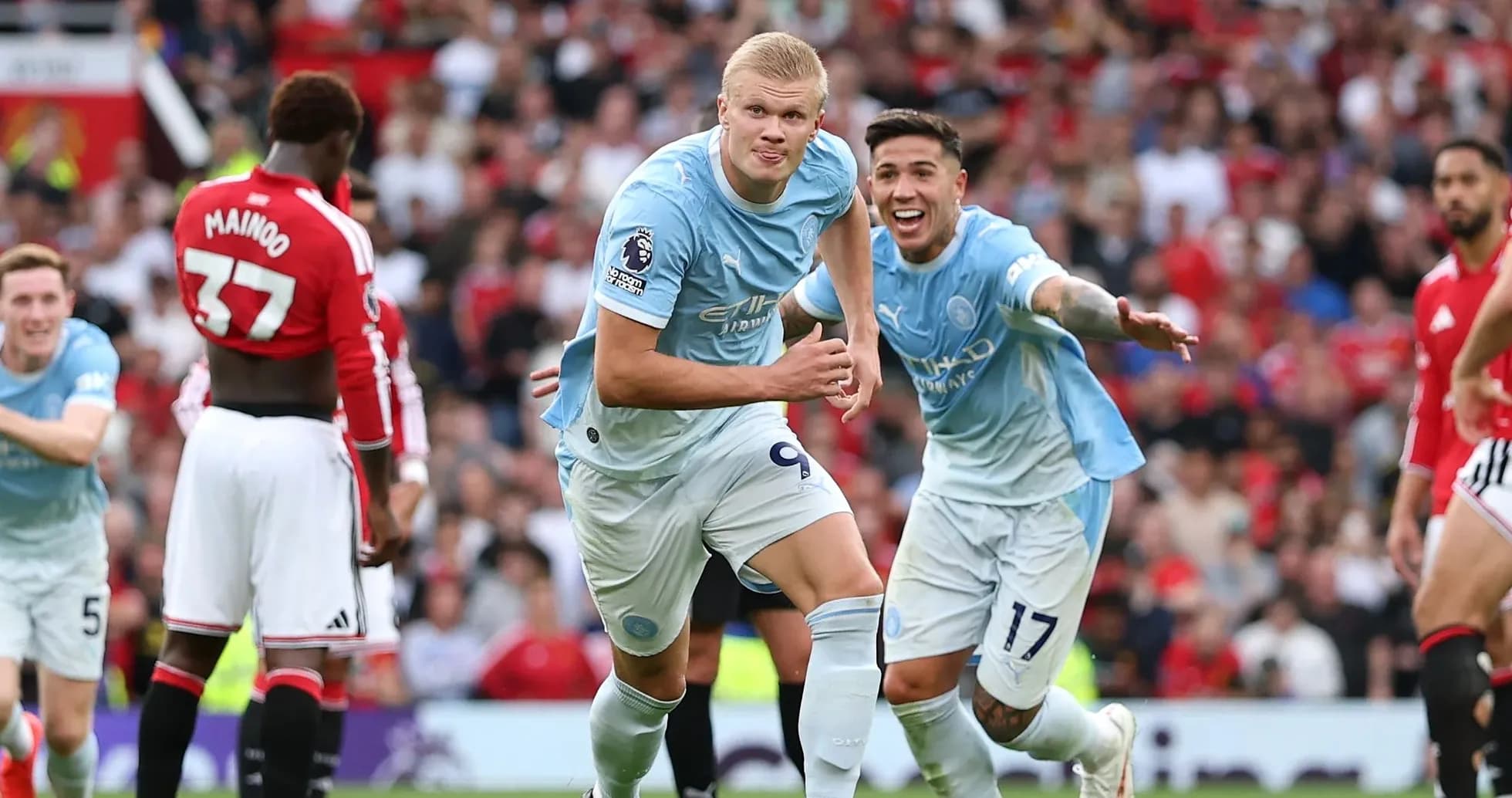
Old Trafford has seen its share of controversy, but this Manchester derby will be remembered less for Erling Haaland’s winner and more for the officials who allowed it.
A game that should have been defined by a decisive 60th-minute strike instead became another exhibit in the trial of VAR.
A Goal, A Flag, And A U-Turn
The moment itself was simple enough. Josko Gvardiol whipped in a cross, Haaland darted, finished, and wheeled away. The flag went up. Old Trafford exhaled. Then came the now-familiar pause.
VAR stepped in, overturned the on-field offside decision, and the goal stood.
Inside the stadium, confusion. Outside it, uproar.
Within 24 hours, the Professional Game Match Officials body contacted Manchester United to acknowledge what it called an "error of judgment" on the incident. The officials’ own governing body effectively agreed with what millions watching had already sensed: the process had failed.
Initially, the Premier League Match Centre tried to hold the line. On social media, it defended the call, explaining that VAR had "determined that Haaland was in an onside position" and had "deemed that while in an offside position, [Enzo] Fernandez didn't play the ball."
That justification did not survive the weekend.
By Sunday evening, the officials’ organisation conceded that the VAR team "did not recognise the likely impact" of Fernandez’s position and "should have recommended an on-field review." In other words, the referee never got the chance to re-referee the key moment on the pitch. The technology, and those operating it, had taken that away.
Schmeichel’s Fury With Modern Football
For Peter Schmeichel, watching on at the stadium where he built his legend, this was not just another mistake. It was the latest symptom of a game he feels is being drained of its soul.
Speaking on Viaplay, the former Manchester United goalkeeper did not bother with diplomacy.
"I wish that we could scrap VAR," he said. No caveats, no softening of the blow. Just a blunt verdict from someone who has seen the game at its highest level.
"We've got into a system now where VAR and the referees are the most important people in football. It sucks all the energy out of it. As soon as there is a goal, you're not allowed to celebrate."
That last line cuts to the heart of the debate. Football lives in those first wild seconds after the ball hits the net. Limbs in the stands. Players sprinting to the corner flag. Noise, chaos, release.
Schmeichel argued that the current version of VAR has ripped that out.
"We saw after five minutes, the players and the fans could celebrate -- but it's not the same. The ball goes in the back of the net, it's a goal, but then the linesman puts his flag up for offside."
The delay. The doubt. The cold, clinical wait for someone in a remote room to decide whether joy is allowed.
"I wish, and I'm longing for these days, we could scrap VAR because it's such an annoyance and it's interfering with football. And it hasn't made it better."
That last sentence is damning. This was the promise: fewer mistakes, more fairness, a cleaner game. Schmeichel’s view is that the sport has paid in emotion and not even received accuracy in return.
Neville Lost In The Laws
Schmeichel was not alone in his anger. Gary Neville, on co-commentary for Sky Sports, sounded less furious and more bewildered.
Watching the decision unfold in real time, the former United defender could not reconcile what he was seeing with what he understood of the laws.
"I'm going to need the offside law explaining to me, because that has lost me, I have to say," he admitted on air.
This was not a pundit trying to whip up drama. It was a former professional, steeped in the game, openly stating he no longer understood how offside is being interpreted when VAR and frame-by-frame replays get involved.
Neville went further, predicting that the officials’ body would have to row back on the decision once the dust settled. By Sunday night, that is exactly what happened.
The goal stood in the record books. The fallout, though, landed squarely on VAR and the current reading of offside.
A System On Trial
The derby has poured fresh fuel on an already raging argument: is the modern offside law, as enforced by VAR, fit for purpose?
The technology was sold as a tool to correct "clear and obvious" errors. Instead, it has ushered in a world of microscopic judgments and legalistic interpretations, where the spirit of the law often feels secondary to the letter.
In this case, the officials later admitted they had not properly weighed the "likely impact" of Fernandez’s position. That phrasing is telling. It hints at a system that can measure lines to the millimetre but still struggles with the basic football question: did that player’s position and movement affect the play?
For many supporters, that disconnect is becoming unbearable. They are not arguing about the existence of cameras or replays. They are questioning whether the game, as lived in the stands and on the pitch, can coexist with a forensic, remote-controlled version of justice.
At Old Trafford, the answer felt like a resounding no.
The Cost Of Clinical Football
As the criticism piles up, the Premier League faces a stark choice: refine the technology and its protocols yet again, or accept that the price of this level of intervention may be too high.
Right now, the anger is not just about one decision in one derby. It is about what the sport feels like.
Schmeichel spoke for a growing section of fans when he said VAR "sucks all the energy" out of the game. That is not a technical complaint. It is emotional. It goes to the core of why people turn up, week after week, and why players still dream of scoring in matches like this.
The officials’ admission of error has confirmed what the pundits saw and what supporters felt in the moment. The system failed the occasion.
The question now is not whether VAR can draw the lines more accurately. It is whether football is prepared to keep sacrificing its most human moments to a process that still cannot guarantee it will get the big calls right.