.svg&w=384&q=75 "logo")
Kendry Páez's Journey: From Prodigy to Chelsea Academy Project
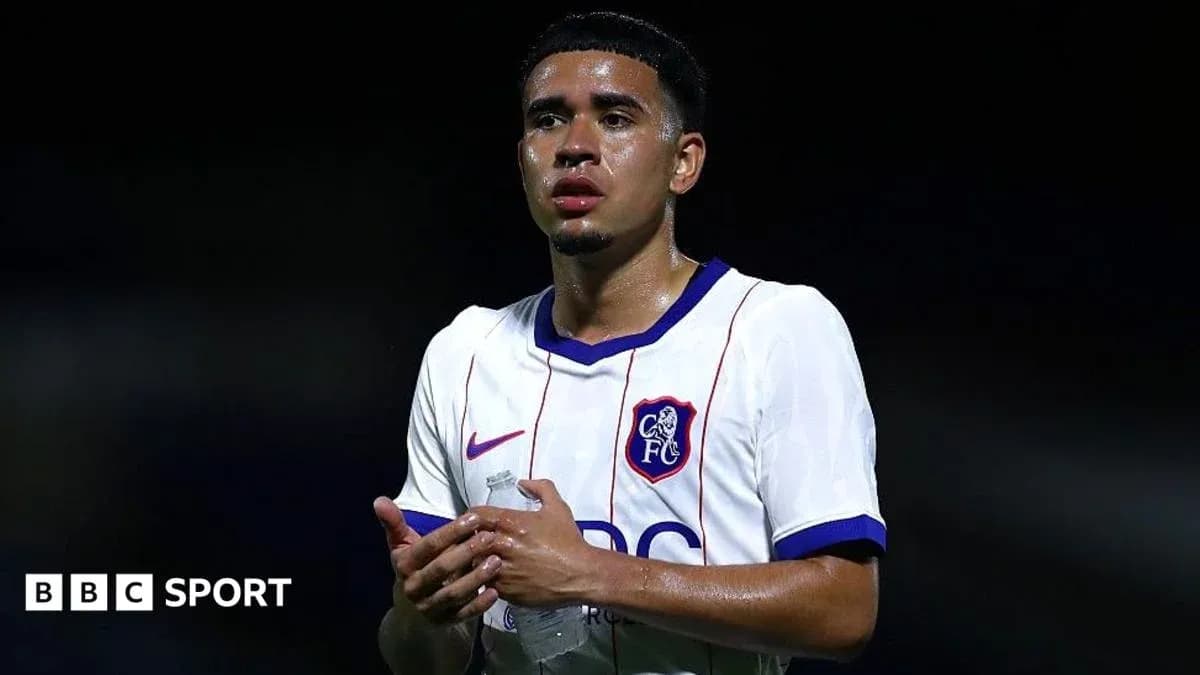
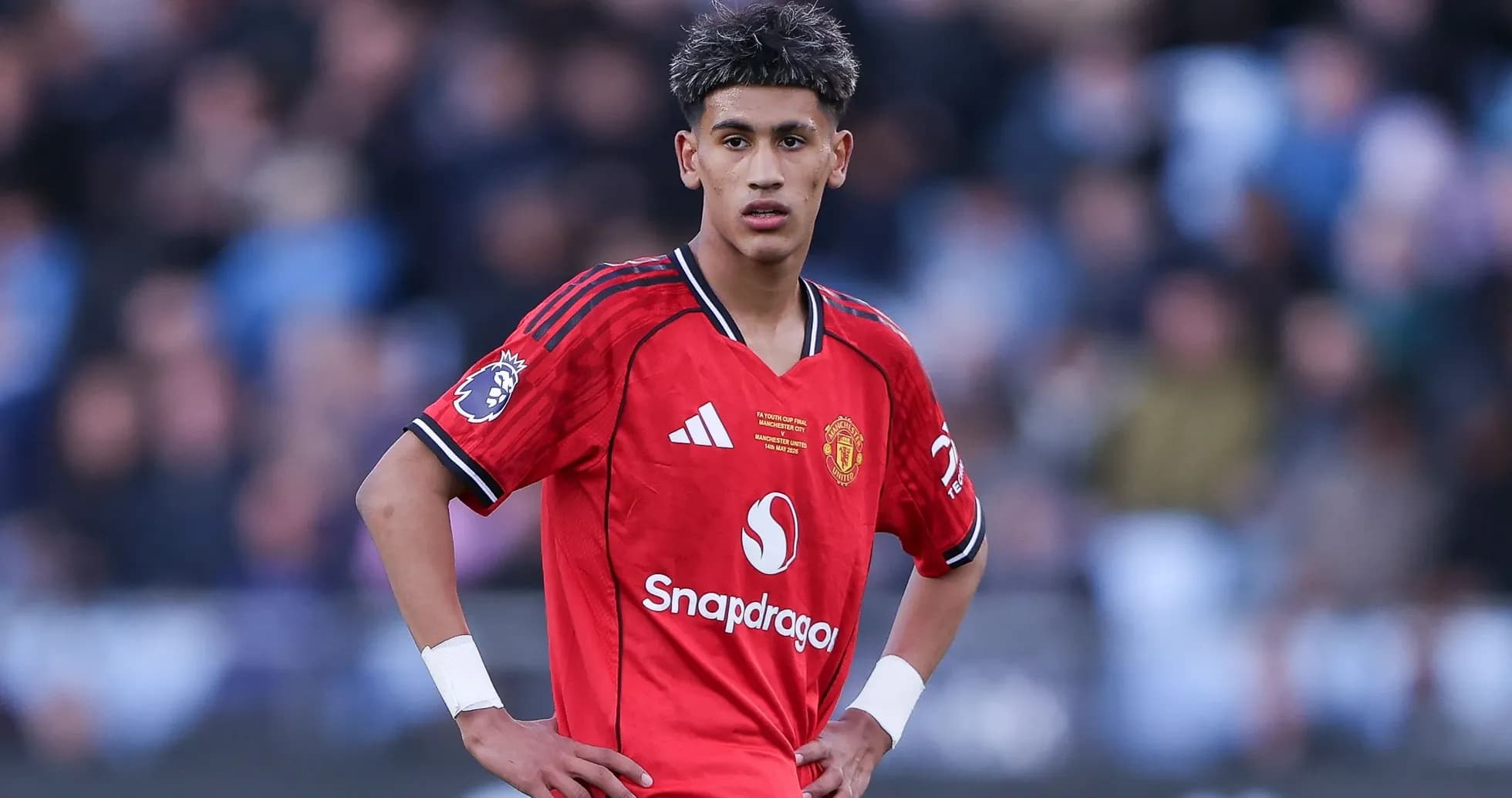
Kendry Páez finally stepped into a Chelsea shirt at the weekend. Not under the Stamford Bridge lights, not in front of a global audience, but as a 12th‑minute substitute for Cobham Next Gen in a 4-1 win away at Arsenal’s Under-21s.
Three years after Chelsea committed £17.27m to prise him from Independiente del Valle, one of South America’s great teenage hopes has arrived in England not as a ready-made star, but as an academy project.
From prodigy to question mark
Páez’s story was supposed to be straightforward. At 15, he became the youngest debutant and goalscorer in Ecuador’s top flight. That same season, he tasted the Copa Libertadores, thrown into the continent’s most unforgiving competition before he was old enough to drive.
The milestones kept coming.
At 16 years and 131 days, he made his second appearance for Ecuador and became the second-youngest South American to feature in World Cup qualifying, behind only Diego Maradona. A month later, he was rewriting history again, this time as the youngest South American ever to score in a World Cup qualifier, in a 2-1 win away to Bolivia.
By the time Chelsea agreed the deal in 2023, Páez already had 18 caps and two international goals. The narrative wrote itself: the London club had secured one of the continent’s next great attacking talents, a creative midfielder mentioned in the same breath as Estevão Willian.
Chelsea treated him like that, too. He trained regularly with the first team long before he was eligible to officially join after his 18th birthday. When violence erupted in Ecuador in early 2024, the club stepped in, arranging security for Páez, his family and the family of international team-mate Moisés Caicedo.
This was a club investing not only in a player, but in a person.
Then the story veered off course.
Loans, lessons and a growing unease
Páez’s first step into European football came with Strasbourg, the French club linked to Chelsea through their shared ownership. At the start, it looked like a textbook development move. He won Ligue 1’s Young Player of the Month award in September, a quick validation of the hype.
The momentum didn’t last.
His then-manager Liam Rosenior made his frustration public as the season wore on. “We expect more, clearly,” Rosenior said. “I’m tired of using the excuse of the player’s youth.” The words cut through any protective narrative around the teenager. Strasbourg ended the loan early after just one goal in 21 appearances.
Off the pitch, there were more uncomfortable headlines. Páez was filmed in a New York strip club while away on international duty. For a teenager trying to establish himself in Europe, it fed an image of a talent drifting away from the discipline required at the top level.
Chelsea found another stage: River Plate, giants of Argentine football, a club that has shaped and sharpened some of South America’s best. On paper, it looked ideal. In practice, the same doubts resurfaced.
Sources in Argentina raised concerns about his attitude. They pointed to a flat display in the Superclásico, a 1-0 defeat to Boca Juniors at the Monumental in April, a match in which River needed their creative players to impose themselves. Soon after, club president Stefano Di Carlo named Páez among 15 players training away from the first team. Others around the club argued he had not been given enough chances, but the reality was stark: one goal in 14 appearances, 461 minutes, and another loan cut short by mutual consent.
Back home, the tone around him shifted. Ecuador had built him up as the next great attacking figurehead. Now, there was concern.
“He’s like a son to us. We care about him deeply,” said Michel Deller, owner of Independiente, in an interview with Hincha Amarillo. “He’s a good kid who’s had a tough time and has made decisions that have complicated his life. We are always hopeful he’ll show his exceptional talent once again but right now, it’s up to him to decide what to do with his life.”
A talent under the microscope
Chelsea and those close to Páez do not dismiss those worries, but they argue the picture has been exaggerated. He is 19. He has already played more than 100 senior matches, including 70 for Independiente and 27 caps for his country, with a World Cup on his CV. The same early exposure that made him a sensation has also left him under a harsher spotlight than most teenagers.
Right now, his reality is Cobham, not the Champions League.
On Tuesday night at Wycombe, in the EFL Trophy, there was a glimpse – brief, but sharp – of the player who once looked destined to stride straight into the elite. Deep into added time, with Chelsea’s Under-21s trailing, Páez delivered an outswinging cross from a short corner that Harrison Bettoni turned in. Moments later, another cross from his left foot caused chaos as Chelsea chased an equaliser in front of just 778 spectators.
For most of the evening, he had been on the periphery. He started on the bench, came on in the 62nd minute and operated as a right-sided No 10 in a shape mirroring Xabi Alonso’s back three. The comparison with Cole Palmer’s role in the first team was obvious; the influence was not. Until that late flurry, he drifted.
Even before kick-off, the picture was telling. The Spanish-speaking midfielder stood slightly apart from the rest of the academy group. He joined the warm-up, did the drills, but largely kept to himself. It was a small detail, yet it underlined the challenge of adaptation as much as any misplaced pass.
Still, inside Chelsea, there is a quiet optimism. They see a player back in a controlled, elite environment at Cobham, with family present at recent games, a support structure rebuilt around him. They see a teenager who, for all the noise, has not burned through his chances.
What comes next?
The club had explored sending him on loan within English football this summer, only to hit a wall. Fifa rules meant Chelsea had already used all six of their international loan slots, blocking any overseas move and leaving Páez registered as an academy player on the club’s website. Alonso’s blunt admission that he was “not in my plans” for the first team only underlined the current hierarchy.
So the pathway now runs through these under-21 fixtures, through nights at Wycombe and trips to academy grounds rather than packed European stadiums. Scouts from across the English Football League and beyond regularly attend these games. Every cross, every touch, every sign of maturity is logged.
Those close to Páez believe there is a realistic route to a first loan in England in January, or another overseas move if an international slot opens up. Chelsea, for their part, are encouraged by his response since returning. They see a player who has been jolted, but not broken.
For all the drama of the last two years, this remains a salvageable situation. Páez is not an untested prospect wondering whether he belongs at senior level; he is a teenager who has already lived a career’s worth of extremes. Records, criticism, adulation, doubt – he has tasted it all before 20.
The question now is not whether he has the talent. That has never really been in dispute. The question is whether, in the quieter surroundings of Cobham and the harsher realities of English football, Kendry Páez can finally turn his early promise into the career Chelsea thought they were buying.