.svg&w=384&q=75 "logo")
Juventus Faces Unacceptable Collapse Against Sassuolo
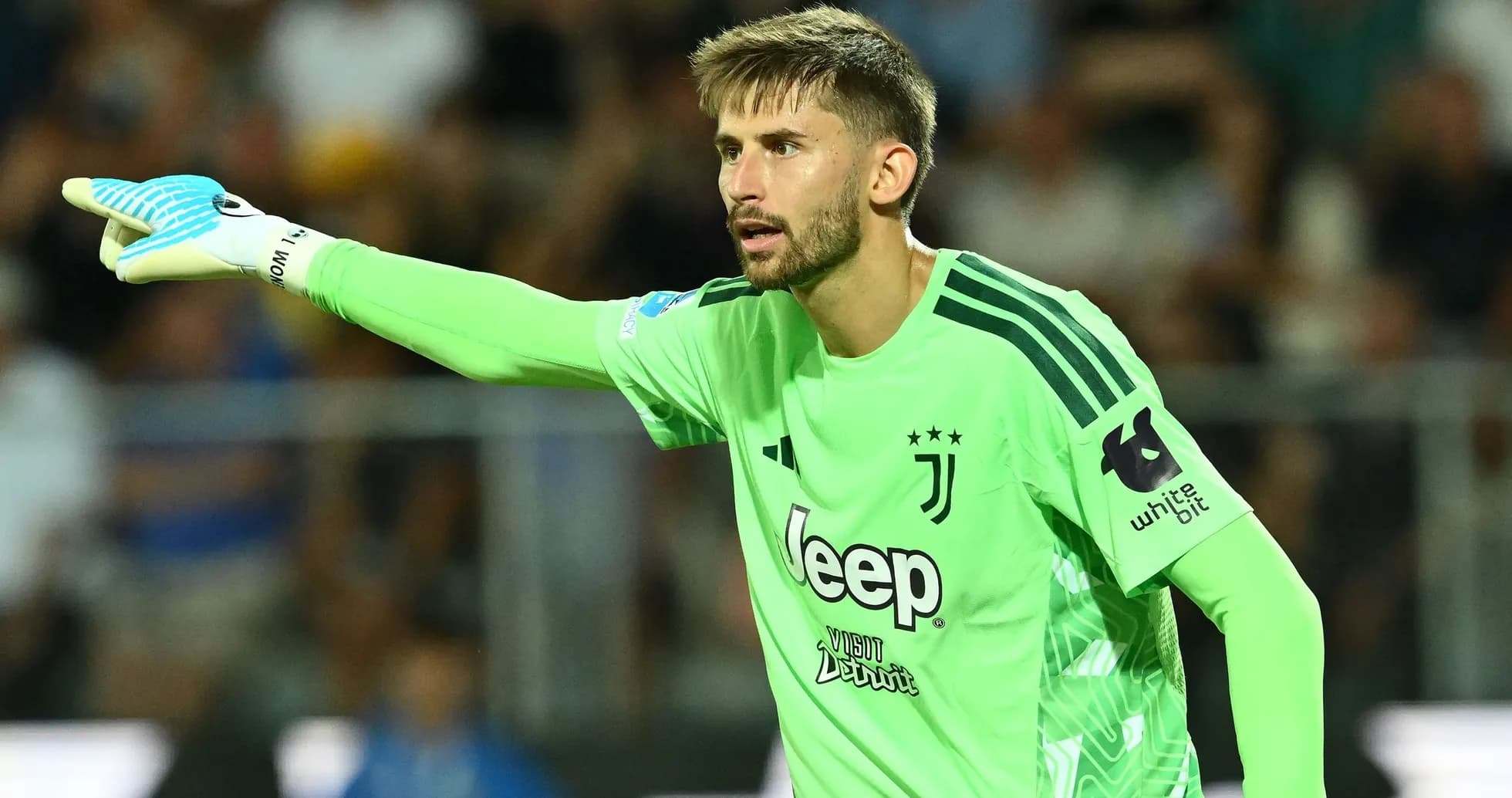
For a few fleeting seconds, it looked like Juventus had done it again. Twice they had dragged themselves back from the brink, twice they had stared down defeat and refused to blink. A point, scrappy but valuable, seemed to be in their hands.
Then everything fell apart.
With the final moments ticking away, Juventus completely lost their shape, their discipline and, ultimately, the game. Vasilije Adzic slipped through to punish a chaotic, disorganised back line and snatch a winner for the hosts, leaving the Bianconeri stunned and their goalkeeper furious.
As the whistle went, Guglielmo Vicario did not hide. He turned on his defence, shouting, arms spread wide in disbelief. A loan signing from Tottenham and one of Juventus’ most reliable performers this season, he looked like a man who had seen enough of the same mistakes.
This wasn’t a one-off lapse. It was the final act in a defensive horror show.
High line, higher cost
From the first whistle, Juventus flirted with danger. Their high defensive line, supposedly a weapon to squeeze the pitch and suffocate Sassuolo, instead became an invitation. The offside trap misfired again and again, with timing and communication badly off.
Sebastiano Esposito struck first, exploiting the space behind a back line that never seemed quite sure of its distances. Kieron Bowie then restored Sassuolo’s lead later on, again exposing the same structural weakness. The pattern was painfully clear: one ball in behind, one panicked retreat, one more chance conceded.
Juventus had no right to still be alive in this game. They were, though, because Edon Zhegrova refused to accept the script.
The winger produced two moments of pure individual brilliance, dragging his team back into contention almost single-handedly. Twice he took responsibility, twice he carved Sassuolo open on his own, and twice he pulled Juventus level when the collective seemed to be crumbling.
But while Zhegrova lit up the attacking half, the defensive third remained a minefield. The team never truly settled, never imposed control, and in the end that fragility proved decisive.
“We talked about this all week”
Vicario’s anger after the match was not just about the goals themselves. It was about what they represented.
Speaking to DAZN, the 29-year-old was blunt, his words carrying the weight of a dressing room that knows it has let something important slip.
“There is great bitterness, because I understand the desire to go and win the game, because we are Juventus and it is our obligation to aim for victory every time, but we lost our balance and we talked all week about this,” he said.
That line cut to the heart of the problem. This wasn’t an ambush. These were situations they had prepared for, scenarios they had discussed. Yet when the game entered its most delicate phase, Juventus abandoned the very principles they had spent days drilling.
“Juventus cannot concede two goals like that. This is a club with a glorious history and we cannot allow goals like that. We need to be more calm and balanced, because we have a team full of quality, and we will be able to create chances.”
Calm and balance. Two qualities that deserted them when it mattered most.
No excuses, even without Locatelli
The context is harsh. Juventus are walking through a difficult stretch, stripped of several key players. The most painful absence is captain Manuel Locatelli, out for four to six months after meniscus surgery. His injury leaves a gaping hole in midfield, tactically and emotionally.
It would be easy to point to that void, to lean on the captain’s absence as a shield. Vicario refused.
“We’re sad to be losing Manuel, but it’s a long-term injury, and we do have players of quality in the squad. We can’t just keep seeking excuses,” he stated.
That refusal to hide behind circumstances is telling. The standards at Juventus do not bend for injuries, and Vicario made it clear the players know it.
From late heroics to late heartbreak
What makes this collapse sting even more is how sharply it contrasts with last week.
Just days ago, Juventus had snatched a result in similar late drama. Federico Gatti came off the bench to score a late equaliser against Milan, a 1-1 draw that felt like a small act of defiance, a sign that this team could suffer and still emerge with something.
This time, the script flipped. Instead of stealing a point, they threw one away.
Asked whether the dressing room felt more anger or regret, Vicario didn’t separate the two.
“In my view both, because we had managed to turn the tide in our favour. We must be able to control these moments of the match better, because we’ve got the quality,” he noted.
That is the crux of Juventus’ current dilemma. The talent is there. The personality surfaces in flashes. Zhegrova’s goals, Vicario’s presence, the squad’s ability to rally from behind — all of it points to a team capable of more than this.
But big clubs are judged not on their best moments, rather on how they manage the most fragile ones. Juventus had the game back in their hands. They let it slip with a final, reckless loss of structure.
On nights like this, history feels less like a comfort and more like a demand. How long can a club of Juventus’ stature afford to keep learning the same painful lesson?