Josh Inglis guides Australia to thrilling ODI win over Zimbabwe
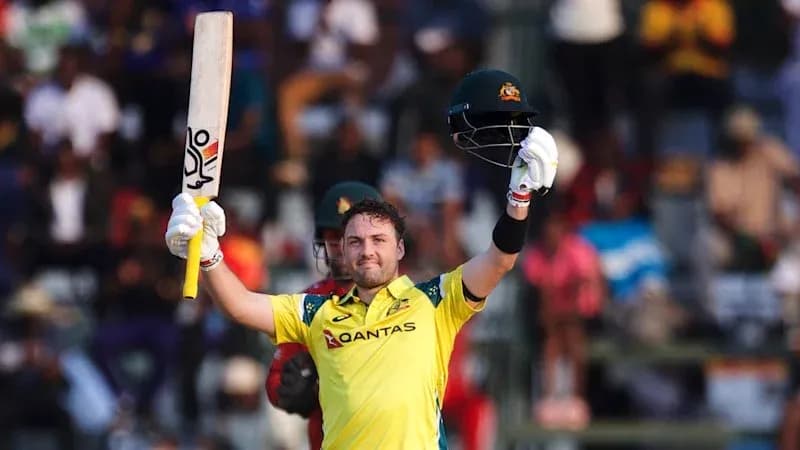
Josh Inglis steadied himself, tapped his bat, and dragged Australia out of trouble. By the time he walked off in Harare with 103 to his name, a one-day series already secured and a one-wicket win snatched with a ball to spare, the bigger picture had come into sharp focus: this wasn’t just about beating Zimbabwe. This was about South Africa, and a World Cup defence that is already humming in the background.
Australia chased down 272 in a finish that veered from routine to chaotic, then finally to ruthless. Nine down, one ball left, series whitewash on the line. Nathan Ellis on strike, Spencer Johnson at the other end, Zimbabwe’s fielders crowding the bat. It should have been Zimbabwe’s night. It wasn’t.
Inglis leads, tail finishes
The tourists were never strangled by the required rate. They were stalked by their own mistakes.
Travis Head went cheaply for 6. Mitchell Marsh followed for 8. Early wickets framed the entire chase: Australia would keep pace, but they would not be allowed to relax. Every partnership felt temporary.
Inglis refused to blink. His 103 from 102 balls was the one innings in the match that truly imposed itself. Eleven fours, crisp and controlled, threaded through gaps rather than slogged into them. While batters fell around him, he kept the tempo, kept the belief, and kept Australia’s chase on the rails.
When he eventually departed, the equation remained manageable but the dressing-room nerves did not. The next highest scorer was Ellis, a seamer picked for his bowling who suddenly found himself as the batting anchor at No. 9. He made 36 from 44 balls, and every one of those runs felt heavier than the number suggested.
Johnson, the last man, arrived with the series on the line and just enough time to make a difference. Seven runs from 13 balls is not the stuff of legend on a scorecard, yet in context it was cold-blooded support. He survived, he ran hard, and he trusted Ellis.
The defining moment came just before that. Wessly Madhevere put down Ellis in the penultimate over, a chance that could have sealed a famous home win. The drop hung over the final six balls. Ellis launched the first of them for six, stripping away the tension and, effectively, Zimbabwe’s last grip on the match. Nine needed at the start of the over; Australia home with one ball left. Brutal.
Raza’s stand, Zimbabwe’s regret
Zimbabwe had earned the right to dream of an upset.
Put in to bat, they built their innings with care and a touch of class. Captain Sikandar Raza was the heartbeat again, finishing unbeaten on 81 from 72 balls. It was a captain’s knock in every sense: busy, inventive, and perfectly timed to lift the innings at the back end.
Craig Ervine’s 59 from 79 balls and Innocent Kaia’s 55 from 66 gave Zimbabwe a solid spine. They worked Australia’s attack around, nudged, drove, and refused to let the visitors dictate terms for long stretches. On a surface that demanded calculation rather than brute force, they read it well.
Australia’s bowlers, missing several first-choice names, were forced to scrap. Ellis was the standout with the ball as well, taking 3-50 from his 10 overs, holding his nerve at the death in both disciplines. Zimbabwe still posted 272, a score Raza felt should have been turned into something bigger.
He judged it honestly afterwards: 280–290 looked par. To push Australia to the final ball with 272 was, in his words, a source of pride. He wanted a fight, not a procession. He got one.
Brad Evans embodied that resistance with the ball. His 4-47 from 10 overs ripped through Australia’s middle order and kept the contest alive long after it should have tilted decisively the tourists’ way. Every time Australia looked ready to cruise, Evans intervened.
The regret will linger around Madhevere’s drop. International cricket is cruel that way. One moment, one misjudgement, and a series sweep is complete instead of a statement victory.
Marsh’s mixed emotions, and what comes next
Mitchell Marsh did not pretend Australia had controlled the day. The captain acknowledged they were “lucky” to get out of Harare with a clean sweep, even as he pointed to the “lots of positive signs” in a squad deliberately stripped of some of its biggest stars.
This tour was always about more than the result. Pat Cummins and Mitchell Starc are waiting in the wings, due to link up with the group for the ODI leg in South Africa. When they arrive, the tone shifts. Experiment gives way to sharpening.
Three ODIs in South Africa, starting in Durban on Thursday, offer exactly what Inglis called them: a trial run. Same continent, similar conditions, and a World Cup now just 12 months away, largely in South Africa with matches also in Zimbabwe and Namibia. The planning is no longer theoretical.
Australia’s return to South Africa for Tests in Durban, Gqeberha and Cape Town will carry its own baggage. They have not played a Test series there since the 2018 ball-tampering scandal, a fault line in the recent history of Australian cricket. Inglis insisted the squad had not spent time dwelling on the reception that may await; the focus, he said, has been on this Zimbabwe series and the work ahead in South Africa.
The subtext is clear enough. This is a different Australian side now, younger in places, still hard-edged but more measured. Marsh spoke of “young talent” and an “exciting” future. The win in Harare, scraped together by a stand between a lower-order seamer and a No. 11, fed that narrative: this group can find a way, even when the script frays.
For now, they leave Zimbabwe with a 3-0 series win and a reminder that nothing about a World Cup defence will be straightforward. They survived a scare, leaned on a second ODI century from Inglis, and were rescued by Ellis and Johnson at the death.
Next stop Durban, and a dress rehearsal that will reveal whether this nervy escape was a warning sign—or the kind of hardened experience that champions cash in when the real thing begins.