.svg&w=384&q=75 "logo")
Jay Meena Makes History in Asian Games Soft Tennis
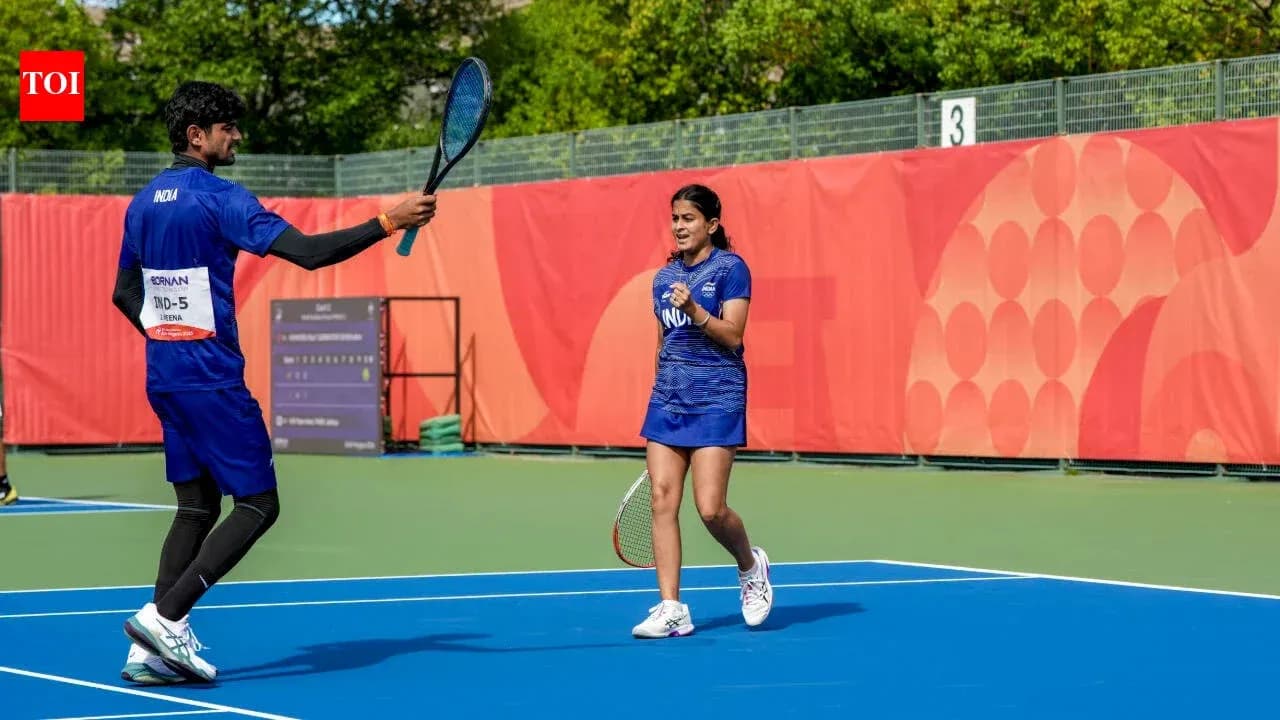
In Nagoya, on a brisk Wednesday that will sit long in Indian soft tennis folklore, Jay Meena finally stepped out of the shadows and into the record books.
Playing in his third Asian Games, the 33-year-old ground his way into the men’s singles semi-finals at the Aichi-Nagoya Asian Games, sealing India’s first-ever medal in soft tennis at this stage of the continental showpiece. No Indian had been here before. Meena made sure that wait ended with a clenched fist and a 4-3 win over the Philippines’ Sherwin Nuguit in a quarter-final that swung wildly for seven tense games.
It was not pretty at the start. It was monumental by the end.
A seven-game rollercoaster
The scoreline tells its own story: 0-4, 4-2, 2-4, 5-3, 2-4, 7-5.
Meena opened flat, dropping the first game 0-4 as Nuguit came out sharper and more assertive. The Indian looked in trouble, misjudging pace and length, almost feeling his way into the contest while the Filipino dictated.
Then the response came.
He steadied his feet, shortened his swings, and began to drag Nuguit into longer exchanges. The shift brought a 4-2 second game to level the momentum, only for the match to tilt again as Nuguit took the third 4-2. Every time Meena seemed to find a foothold, the Filipino knocked him back.
The fourth game became a mini turning point. Meena, refusing to let the match drift, raised his intensity at the net and stole it 5-3. The pattern held: Nuguit hit back 4-2 in the fifth, putting Meena on the brink once more.
The pressure finally told in the sixth. With the match balanced on a knife-edge, Meena dug deep, chasing down balls that looked lost, forcing errors, refusing to blink. He edged through 7-5, sealing the 4-3 overall victory and, with it, at least a bronze medal.
For a man who had walked away empty-handed from the 2018 and 2022 editions, the significance was immediate. This was not just a win; it was a breakthrough for an entire discipline in India.
From group dominance to a historic guarantee
Meena’s quarter-final drama capped a strong campaign that had quietly built towards this moment. In the men’s singles Group D, he had swept past Pakistan’s Arain Hussain 4-0, a statement win that carried him into the knockout phase brimming with confidence.
That authority in the group stage gave way to grit in the quarters. Both, in different ways, underlined a player who has grown with each Asian Games appearance, finally converting experience into a guaranteed podium.
Now comes the hardest part. The semi-final will decide whether this historic medal stays bronze or turns into something even brighter. Meena has earned the right to dream of a place in the gold medal match; he has also earned the weight of expectation that comes with it.
Bronze in women’s skeet adds to shooting haul
While Meena was rewriting history on the soft tennis courts, India’s shooters kept the medal machine ticking at the ranges.
In the women’s skeet team event, the trio of Raiza Dhillon, Parinaaz Dhaliwal and Maheshwari Chauhan combined for a total of 331 to secure bronze. Raiza and Parinaaz were locked in step, both posting 111 out of 125, with Maheshwari adding 109 to the tally.
China, relentless as ever in shooting, took gold with 346. Kazakhstan claimed silver. India, though, walked away with another podium finish in a discipline that has become one of the country’s most reliable sources of medals at multi-sport events.
No drama here, just solid, professional shooting under pressure.
Manu Bhaker marches into 10m air pistol final
On another range, another familiar Indian name moved into familiar territory.
Two-time Olympic medallist Manu Bhaker produced a composed qualification performance to reach the women’s 10m air pistol individual final, once again placing herself in the thick of the medal battle. Her series carried the assurance of a shooter who has lived on this stage for years.
Suruchi Inder Singh and Esha Singh, also in the fray for India, could not join her in the final, missing the cut in qualification. Bhaker, though, ensured the tricolour would still be present in the medal round.
Between Meena’s historic soft tennis run, the women’s skeet team’s bronze, and Bhaker’s advance into yet another final, India’s day in Nagoya carried a clear message: this is no longer a delegation content with isolated flashes of success.
The question now is simple and compelling: how far can this wave run before the Games are done?