.svg&w=384&q=75 "logo")
Issy Wong Sparks England's Fightback Against Ireland
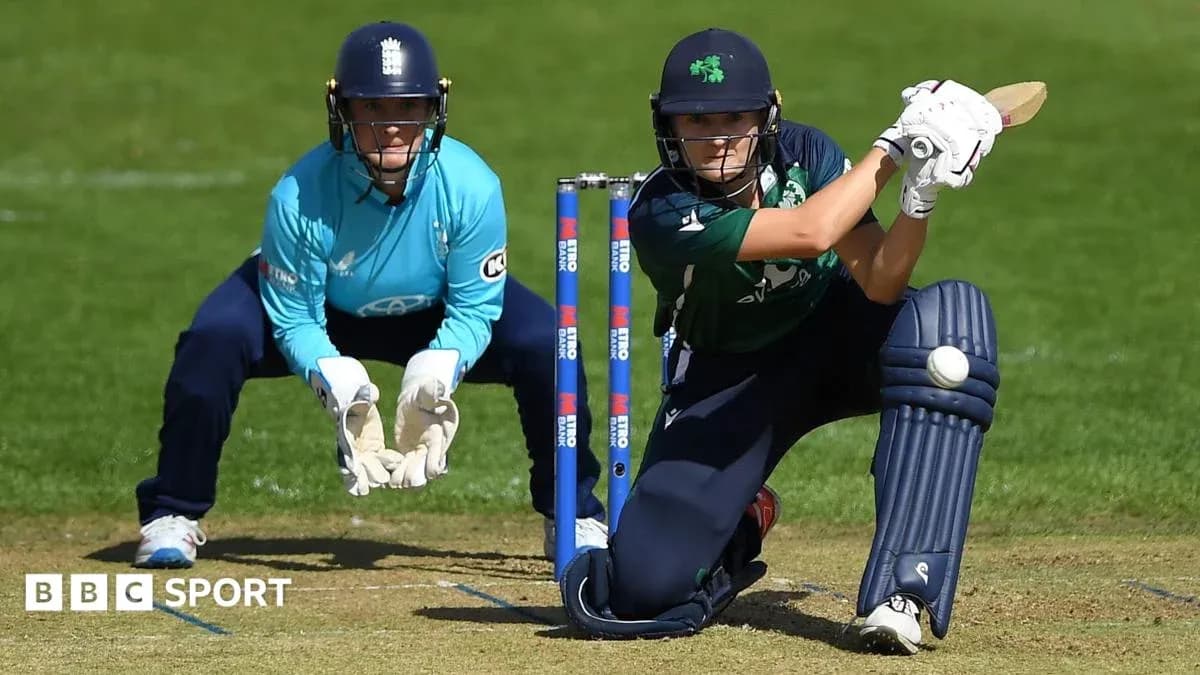
For a long stretch, Ireland’s innings looked serene. Then Issy Wong and Mady Villiers ripped up the script.
Ireland had motored to 149-1, Gaby Lewis anchoring with a fluent 69 and Orla Prendergast lurking with intent. England’s bowlers had worn the brunt of clean striking, the fielders chasing more than dictating. The contest needed a jolt. Wong provided it.
Wong’s switch of ends sparks breakthrough
The change was subtle on the scorecard but glaring in rhythm. Wong, previously loose and searching for her radar, switched ends – a move Katherine Sciver-Brunt had been calling for on commentary. The difference was immediate.
No more scattergun lengths. No more freebies. Just a harder, sharper version of Wong, hitting the pitch with purpose and dragging the tempo back England’s way.
Lewis, set and commanding, suddenly found herself under real examination. Wong found a bit of fizz, a hint of nip off the surface, and crucially, a gap. She drove the ball between bat and pad, Lewis’ stumps rattled, and with it Ireland’s calm.
Lewis gone for 69. Ireland 149-2. Wong roaring, England alive.
Capsey grows into the gloves
Behind the stumps, Alice Capsey was writing her own quiet subplot.
Only her second professional match as a wicketkeeper, international or otherwise, yet she handled the role with a composure that belied her inexperience. Standing up to Wong, she took a rising ball near shoulder height, a take that would have tested far more seasoned keepers.
Those around the England camp had suggested at the start of the summer that Capsey could genuinely take on the job. On this evidence, that judgement carries weight. She didn’t just survive the experiment. She added a layer of stability at a time England badly needed it.
Villiers’ spin and scrap turn the tide
If Wong provided the spark, Villiers supplied the squeeze.
From the moment she came on, Mady Villiers looked the most threatening spinner on show. The numbers backed it up: more spin on the ball than any other England option – Villiers at 2.8°, Tilly Corteen-Coleman at 2.2°, Charlie Dean at 2.0° – and a relentless habit of attacking the stumps, challenging them roughly once every four deliveries.
This wasn’t just tidy containment. It was aggressive, probing spin, designed to force errors.
Her reward came in a way that summed up both the contest and Prendergast’s form. Villiers dragged one down, a ball she’d want back nine times out of ten. Prendergast, hitting cleanly all day, pounced. She struck it so well that instead of dying in the gap, it carried all the way to Maia Bouchier at deep mid-wicket.
Bouchier still had work to do, sprinting to her right and tumbling forward to complete a fine catch. Prendergast gone for 19. Ireland 172-3. A “horrible dragdown,” as Sciver-Brunt put it on air, turned into a pivotal moment.
The pressure finally told again as Villiers continued to scrap for every run. She dived full length to her right to cut off a boundary off the last ball of her over, a small act that spoke volumes about her intent. Villiers wasn’t just in the game; she was dragging it towards England.
Ireland’s charge checked, England sense a window
Ireland had threatened to surge. At 165-2, with Lewis flowing and Prendergast yet to be dismissed, they looked set for a towering total. Corteen-Coleman, a touch loose and too wide at times despite a packed off-side field, even conceded a no-ball as Ireland kept ticking.
But Wong’s strike to remove Lewis, followed by Villiers’ dismissal of Prendergast, changed the feel of the innings. What had looked like a procession suddenly felt like a contest again.
Rebecca Stokell arrived with Ireland 174-3, missing her first ball on the drive before nudging her way off the mark second delivery. A new batter, a fresh reset. England, once clinging on, now had an opening.
From 149-1 to 174-3, Ireland still held runs on the board, yet the mood had shifted. Wong had found her length. Villiers had found her reward. Capsey had found her feet behind the stumps.
The question now is whether this burst of resistance becomes a turning point in England’s day – or just a brief interruption to an Irish statement innings.