.svg&w=384&q=75 "logo")
Inaki Williams Ends Ghana International Career After World Cup Exit
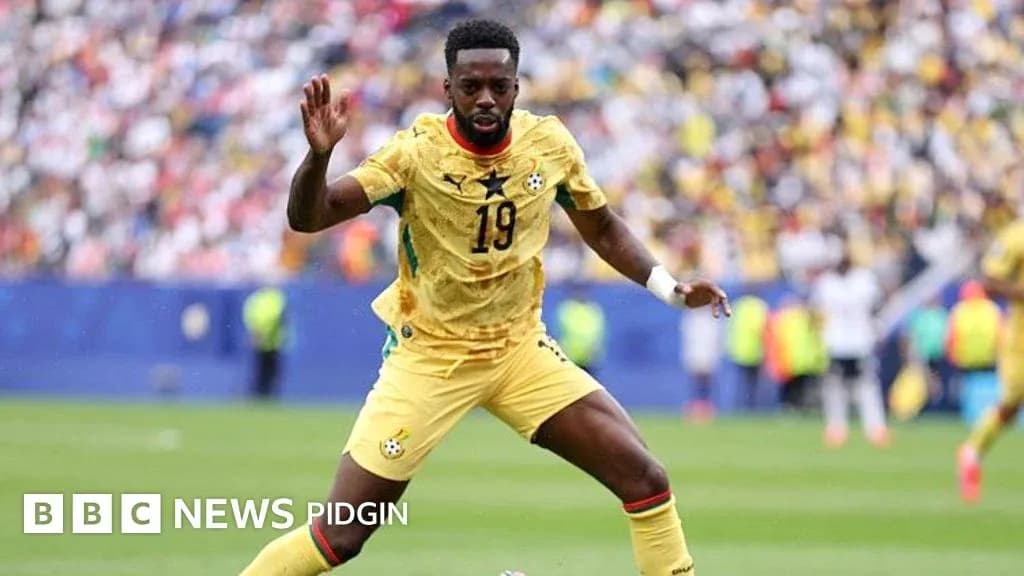
Inaki Williams has called time on his international career with Ghana, bringing a short but emotionally charged Black Stars chapter to an end.
The Athletic Bilbao forward announced his decision on Friday, 11 September 2026, posting on X that his “journey with the Ghana national team” had reached its conclusion. He stressed that he steps away “happy, proud and with the peace of mind” that he gave everything each time he pulled on the shirt.
The timing is no coincidence. Williams leaves the Black Stars just weeks after the 2026 Fifa World Cup, a tournament that promised a resurgence but ended in frustration. Ghana exited after a 1–0 defeat to Colombia, a flat, disappointing result that undercut the belief generated by disciplined, clean-sheet performances against Panama and England in the group stage.
For Williams, that World Cup served as the final act of a story that began in 2022, when he chose Ghana over Spain.
From Spain hopeful to Black Stars forward
Born in Spain to Ghanaian parents who made a perilous journey across the Sahara desert and over the Melilla border fence, Williams grew up with two worlds pulling at him. His football education was entirely Spanish. His roots, unmistakably Ghanaian.
Spain spotted his talent early. He received his first international call-up with Spain’s under-21s in March 2015, featuring for the junior side but never breaking into the senior team in competitive action. For years, that seemed his path.
In 2021, when asked about representing Ghana, he was clear about where he felt he belonged at the time, noting that his parents came from Accra but that his culture was in Spain. The door to Ghana appeared closed.
Then came the turn.
On 5 July 2022, Williams announced he would represent Ghana, committing to the Black Stars ahead of the 2022 Fifa World Cup. It was a decision driven by heritage and identity as much as football. He later spoke of how Ghana had given him more than the game itself, allowing him to “come back home,” feel closer to his roots and experience the pride of carrying the flag on his chest.
That pride framed every one of his appearances in Ghana colours, even as results fluctuated and expectations weighed heavily on the squad.
A club stalwart, a brief but symbolic international spell
While his international journey took time to settle, his club career at Athletic Bilbao has been a model of continuity.
Spotted at 18, Williams joined Athletic’s youth ranks and climbed rapidly. He made his La Liga debut for the first team in 2014 and scored his first league goal in February the following year. From there, he grew into a cornerstone of the side, known for his relentless running, direct play and durability.
He underlined his commitment in 2019 by signing a nine-year contract with Athletic, one of the longest deals in modern football, rivalled only by the famous 10-year agreement Real Betis handed Denilson in 1998. Williams has since become one of the faces of the club, delivering standout moments, including a memorable long-range strike against Barcelona in the Spanish Super Cup final.
For Ghana, his impact was less about numbers and more about symbolism. A player raised in Spain, with the option of a European powerhouse, choosing to wear the Black Stars at back-to-back World Cups carried weight far beyond one tournament cycle.
Walking away, not turning his back
Williams made it clear in his farewell that this is not a rejection of Ghana but a closing of one chapter. He leaves “happy and proud,” and has pledged to continue supporting Ghanaian football and the Black Stars from afar.
Ghana, he said, has given him “so much more than football,” a line that underlines why his decision to switch allegiance in 2022 resonated so strongly with fans in Accra and across the diaspora.
Now the national team moves on without him, searching for new attacking leaders as it rebuilds from another World Cup disappointment.
Williams, firmly anchored at Athletic Bilbao, continues his career in La Liga. The shirt may change, but the question lingers: in the years to come, how sharply will Ghana feel the absence of the forward who chose them when he did not have to?