.svg&w=384&q=75 "logo")
Imran Khan's Health Concerns: A Test Match Backdrop
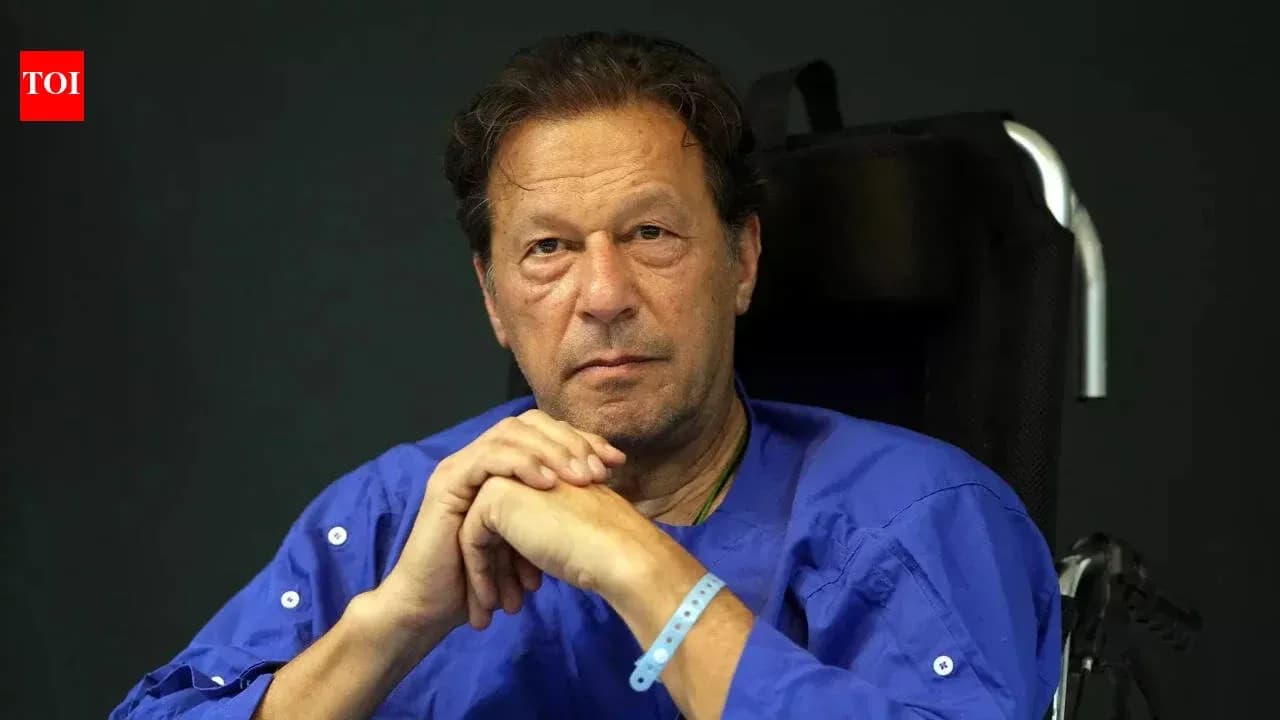
The lunch interval at Lord’s is usually a gentle exhale – scorecards, sandwiches, and soft analysis drifting across the airwaves. On the opening day of this Test, it became something else entirely.
Instead of a routine segment, Sky Sports aired an 18‑minute interview between Michael Atherton and Suleiman and Kasim Khan, the sons of Imran Khan. The conversation centred not on cover drives or World Cups, but on their father’s health, his safety in prison, and their growing alarm over his medical treatment.
Behind the scenes, it had already sparked a storm.
PCB’s warning and Sky’s call
According to Cricinfo, the Pakistan Cricket Board contacted Sky Sports before lunch on Thursday, hours before the segment was due to go out. The message was blunt: the board objected to the planned broadcast and warned that Pakistan’s players could refuse to return to the field if the interview was shown.
Sky initially held the piece back. Then, during the lunch interval, the broadcaster ran it.
The PCB had reportedly considered the nuclear option – keeping the players in the dressing room when the second session was due to start. In the end, play continued, but the tension around the broadcast hung over Lord’s like low cloud.
The interview itself had been recorded a day earlier, on Wednesday, at the ground. Sky had already used a preview clip in its build-up to the Test, a teaser that hinted at the depth of concern within Imran’s family.
Viewers in Pakistan never saw it. State broadcaster PTV holds the television rights for the series and did not carry the segment.
Sons’ fears over Imran’s health
On camera, Suleiman and Kasim spoke candidly about what they say is their father’s worsening condition behind bars. They voiced fears for his safety and described the family’s efforts to secure what they regard as proper medical care.
Imran Khan, Pakistan’s 1992 World Cup-winning captain and former prime minister, has been incarcerated for around three years. His health and access to treatment have become a central, and increasingly public, concern for his relatives.
In recent weeks, his sons have intensified their appeals, pushing for greater access to doctors and more robust medical oversight. The interview with Atherton was the most visible – and politically charged – extension of that campaign yet, cutting straight into the heart of a marquee Test match at the sport’s most storied venue.
Court order, hospital dispute
The controversy did not emerge in isolation. It followed a fresh twist in the legal and medical saga around Imran’s detention.
Last week, Pakistan’s Supreme Court ordered that he be admitted to Shifa Hospital in Islamabad. Instead, he was taken to the government-run Pakistan Institute of Medical Sciences (PIMS) for a check-up and then returned to prison.
His sisters and sons say the authorities ignored the court’s directive. They insist he should be examined by his own doctor and have continued to demand that the original order be followed.
Those developments have drawn in some of the game’s elder statesmen. Former international cricketers have gone public with their concerns, arguing that whatever the politics, a former captain of Pakistan deserves clear, adequate medical care.
Atherton among captains backing Imran
Atherton’s role in the story runs deeper than a single interview.
Last week, he was one of 21 former international captains who signed a letter to Pakistan Prime Minister Shehbaz Sharif, urging that Imran receive proper medical attention while in custody. The signatories spanned eras and continents, including former captains from India, Australia, England, New Zealand and the West Indies.
It was not the first such appeal. In February, 14 former international captains had written to the Pakistan government on the same issue. Reports say that letter drew no response.
The PCB, for its part, has not publicly commented on the reported complaint to Sky Sports or on the threat of a player protest at Lord’s.
The Pakistan government has consistently rejected claims that Imran is being mistreated or denied access to family and legal representatives. Speaking to the Associated Press last week, officials said Imran had received more than 900 visits from relatives, lawyers and doctors since his imprisonment in August 2023.
So the game went on at Lord’s, the players returned after lunch, and the scorebook will record only runs, wickets and overs. Yet for one interval, a Test match became the backdrop to a far more combustible question: how far can cricket stay insulated when the fate of one of its most famous captains is being fought over in full public view?