.svg&w=384&q=75 "logo")
Imam-ul-Haq Injury Controversy: Pakistan's Tour in Turmoil
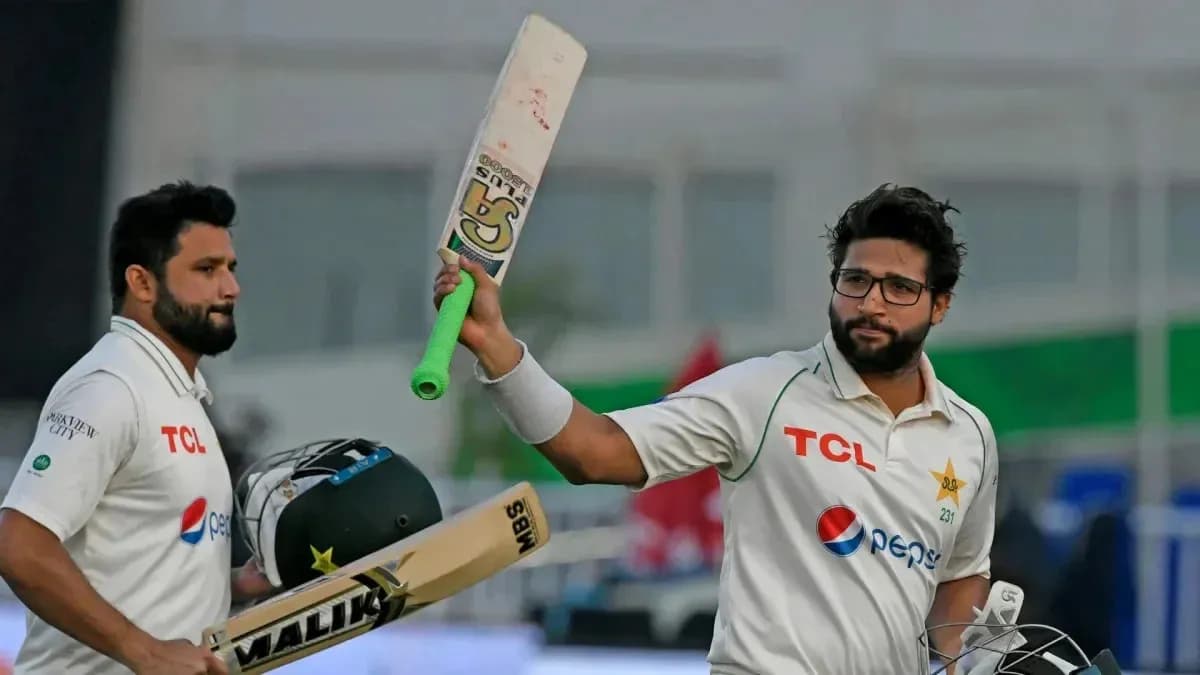
Lord’s has seen its share of controversy. It rarely comes wrapped quite like this.
On a day when Pakistan’s batting fell apart in brutal fashion, one of their senior batters found himself at the centre not just of a collapse, but of a character question. Imam-ul-Haq, ruled out of Pakistan’s first innings with a calf strain confirmed by scans, has been accused by former chief selector Mohammad Wasim of “faking” injuries — an explosive charge aimed at a current player in the middle of a live Test series.
The timing could hardly be more combustible.
A strain, a scan, and a stinging allegation
Imam’s injury appeared straightforward enough. Fielding on the opening day of the second Test at Lord’s, he pulled up with pain in his left calf and left the field during the evening session. The Pakistan Cricket Board moved quickly, issuing a medical update.
Scans, they said, showed a low‑grade calf strain. Imam would receive treatment under the supervision of the team’s medical staff, with his participation in the rest of the Test dependent on his recovery.
On paper, routine. Unfortunate, but routine.
Then Wasim weighed in.
Speaking about Imam’s fitness history, the former selector claimed this was part of a pattern, even referencing a specific moment from the 2022 Multan Test.
“In 2022 Multan test, the physio warned me in advance that he is going to fake an injury soon. And he did that,” Wasim said.
One sentence, built on a private recollection, instantly turned a standard injury bulletin into a public trial of a player’s integrity.
Pakistan crumble as England seize control
While the debate raged off the field, the scoreboard delivered its own harsh verdict on Pakistan’s tour.
Imam’s absence from the top of the order came at a terrible time for a side already bruised by a heavy innings defeat in the series opener at Leeds, where he had partnered young Azan Awais. At Lord’s, with their senior opener missing from the first innings, Pakistan’s batting simply disintegrated.
England had posted 290, a competitive but hardly untouchable total. Pakistan’s reply never resembled a contest.
Ollie Robinson, skilful and relentless, ripped through them with figures of 4 for 11 from 13 overs, including six maidens. Jofra Archer, back in rhythm and hostile, added 3 for 26 from 11.2 overs. Josh Tongue chipped in with two wickets. Only Gus Atkinson went wicketless, but by then the damage was done.
Pakistan were bundled out for 110 in just 37.2 overs.
From 290 plays 110, England walked away with a 180‑run first‑innings lead that felt even larger than the numbers suggested. By the close of the second day, they had moved to 81 for 3 in their second innings, stretching the overall advantage to 261 before bad light ended play early.
The tourists were not just behind. They were hanging on.
When criticism crosses a line
Wasim’s remarks land in that bleak context. That is what makes them so incendiary.
Questions about fitness, conditioning, and injury management are fair game in modern cricket. They sit at the heart of selection debates, workload planning, and squad balance. A former chief selector is well within his rights to argue that a player’s availability record deserves scrutiny, or that patterns over time should be examined.
But this is different.
Wasim has accused a current Pakistan opener of faking injuries, in public, in the middle of a Test, while the player is undergoing treatment for a scan‑confirmed strain. The only evidence presented is his own memory of what a physio allegedly told him four years ago, and his interpretation of what followed.
That is a serious charge, made on very thin ground.
Such a claim does two things at once. It attacks the player’s reputation, casting doubt over every future injury he might suffer. It also chips away at the credibility of the medical process itself, implying that official diagnoses and scans are not enough to settle the question.
For a team already under intense pressure, it is a needless additional fault line.
Distraction from deeper problems
Strip away the noise, and Pakistan’s issues on this tour are brutally clear.
A batting unit that folded inside three days at Leeds. A first‑innings total of 110 at Lord’s. Technical frailties against the moving ball. A middle order that has not stood up often enough. A side that looks short on both confidence and stability.
Those are structural problems: selection uncertainty, fragile technique, underperforming seniors, and a team management setup still searching for answers. They demand hard analysis and firm decisions.
Accusations about faked injuries, aired casually in the media without hard proof, do nothing to fix any of that. They only drag the conversation away from what actually unfolded in the middle: England’s disciplined bowling, Pakistan’s soft dismissals, and a tour unravelling fast.
If Wasim genuinely believes there is a pattern worth investigating, the path is clear. Present evidence. Push for a formal review behind closed doors. Let doctors, management, and the board test the claim properly.
Because right now, as England tighten their grip on the series and Pakistan scramble for a way back, the team can ill afford to fight battles on both the field and the treatment table.