.svg&w=384&q=75 "logo")
Heinrich Malan's Departure: A High-Point Exit from Ireland Cricket
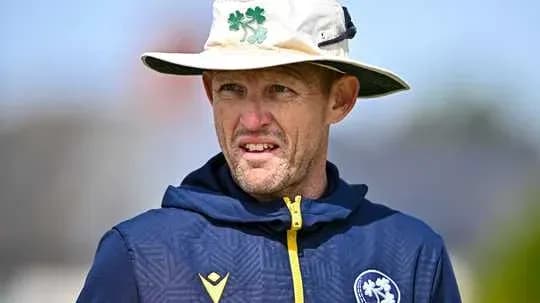
Heinrich Malan walked away at the very moment most coaches would be asking for a pay rise.
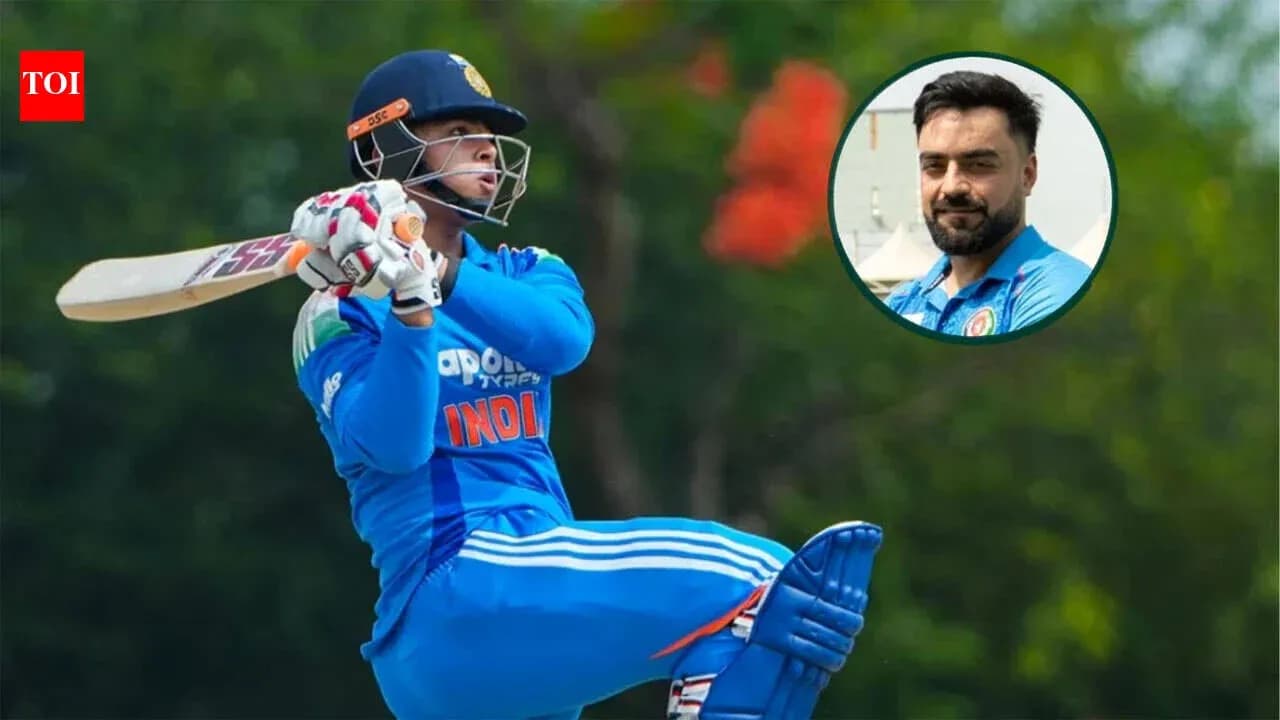
A day after Ireland completed a 2-0 T20I series win over India, the reigning world champions, the 38-year-old South African stepped down as head coach, ending a tenure that was supposed to run until 2027. On paper, it looked like a bizarre time to go. In Malan’s mind, it was the only time that made sense.
A High-Point Exit
Beating India in a bilateral series is not a routine line on Ireland’s cricketing CV. For a coach, it is the kind of result that usually buys time, leverage, and a louder voice in the room. Malan instead chose it as his curtain call.
"It was a fantastic series for us and it was great to see the lads go across the line and implement the plans we discussed and execute them under pressure in a game situation," he told Cricbuzz. The timing, he admitted, is rarely perfect in high-performance sport, but a 2-0 win over the world champions as a last act? "It worked out as best as you could have asked for."
Behind that polished finish lay a more complicated story. Conversations began after Ireland’s Test against New Zealand, discussions not about the next series or the next cycle, but what the world might look like after 2027. As those talks deepened, the gap between Malan’s vision and the direction of the wider set-up became harder to ignore.
"We had some conversations post the New Zealand Test match around what the future (post 2027) looks like and the timing was right from our perspective to make a very tough call and finish my time as Ireland head coach," he said.
New people had come into the system. New ideas followed, as they always do. Over time, coach and hierarchy reached the only conclusion they felt honest: "It was time for us to move on as our overall philosophies and direction didn't align moving forward."
Progress, But Not Enough Cricket
Malan does not leave empty-handed. His four-and-a-half years brought some of the most memorable days in Ireland’s modern cricket history: that famous win over England at the 2022 T20 World Cup in Melbourne; a first-ever Test victory, against Afghanistan in 2024; a first home Test win, over Zimbabwe in Belfast; and finally, the India series.
Yet he keeps circling back to one theme: they simply did not play enough cricket.
"Very proud of what we achieved and how we went about our daily business but also very challenging as we didn't play enough cricket sadly," he said. Ireland proved they could go toe-to-toe with heavyweight sides. Sustaining that level, Malan insists, demands something the calendar never really gave them: volume.
"We showed that we can compete with any team which means we have quality players but to be consistent you need to play day in and day out."
For him, that shortage is not a minor irritation; it is the structural fault-line.
"The lack of consistently playing cricket (domestically and internationally) is definitely the biggest challenge across the system," he said. Training, he stressed, has its place — and Ireland did plenty of it — but drills and nets only take you so far.
Ultimately, players must test new methods, feel pressure, fail, adjust, and succeed in real games. Malan hopes that balance will tilt. More fixtures. More exposure. More chances for a promising core to turn flashes of excellence into a habit.
Building an Environment, Not Just a Fixture List
For all the headline wins, Malan’s pride runs just as deep in what the public never sees. He talks less like a man counting trophies and more like a coach obsessed with daily standards.
"I honestly look back at all those 'achievements' with huge pride and gratitude," he said. "But ultimately I am more proud of the daily work we did to ensure we put ourselves in these positions to compete and get across the line."
He points to an environment built around what it truly means to be a professional cricketer. Senior players, he says, did not just lead on match days; they took charge of behaviours, preparation, and the "holistic programme" that underpins performance.
The result, in his eyes, is a dressing room that understands ownership. Leaders who know that culture is not a slogan on a wall but a checklist of everyday actions. Malan believes that legacy leaves Ireland "in a strong position for future Irish cricketers to thrive in."
Money, Matches and the Ceiling on Ambition
If philosophy was one point of divergence, finances are the unavoidable reality. Malan is blunt: the system’s biggest challenge is money, and the way it constrains everything from the domestic schedule to Ireland’s ability to broaden its player base.
"The biggest challenge, as we well know, is the financial side of things which impacts the whole structure and system," he said.
He wants to see more domestic cricket, especially in the red-ball game, to give top youth players a proper ladder and to deepen the pool beyond the current core. More international cricket would then sharpen that expanded group and drive competition for places — a marker, in his words, of "a healthy system."
There are some reasons for optimism. The growth of European cricket, and new competitions on the continent, offers another route to higher-level exposure.
"It's a great addition to the European cricket landscape and creates more opportunities for players to get exposure at a higher playing level," Malan said. Mixing with leading players and coaches from around the world will help, but he keeps coming back to the same bottom line: more games. More chances to play, to learn, to fail and respond.
A New Chapter, With One Eye Still on the International Game
Malan has already moved on geographically and professionally. He is back in New Zealand, now head coach of Central Stags, swapping the volatility of international windows for the rhythm of domestic cricket.
The step back from the global stage is not a retreat, he insists, but a new phase. International cricket still tugs at him.
"I really enjoy international cricket and will definitely miss it," he admitted. His ambition has not shrunk with the job title. He wants future roles with national teams, perhaps a stint in T20 franchise leagues, spaces where he can "keep evolving as a coach" and "add value to the players and ultimately successful environments."
Ireland, meanwhile, must decide what comes next. They have proof they can bloody the noses of giants. They have a group of players who believe they belong. What they do not yet have is the volume of cricket, or the financial muscle, to know how far that belief can really take them.