.svg&w=384&q=75 "logo")
Harry Kane's Historic Ballon d'Or Bid After 25 Years
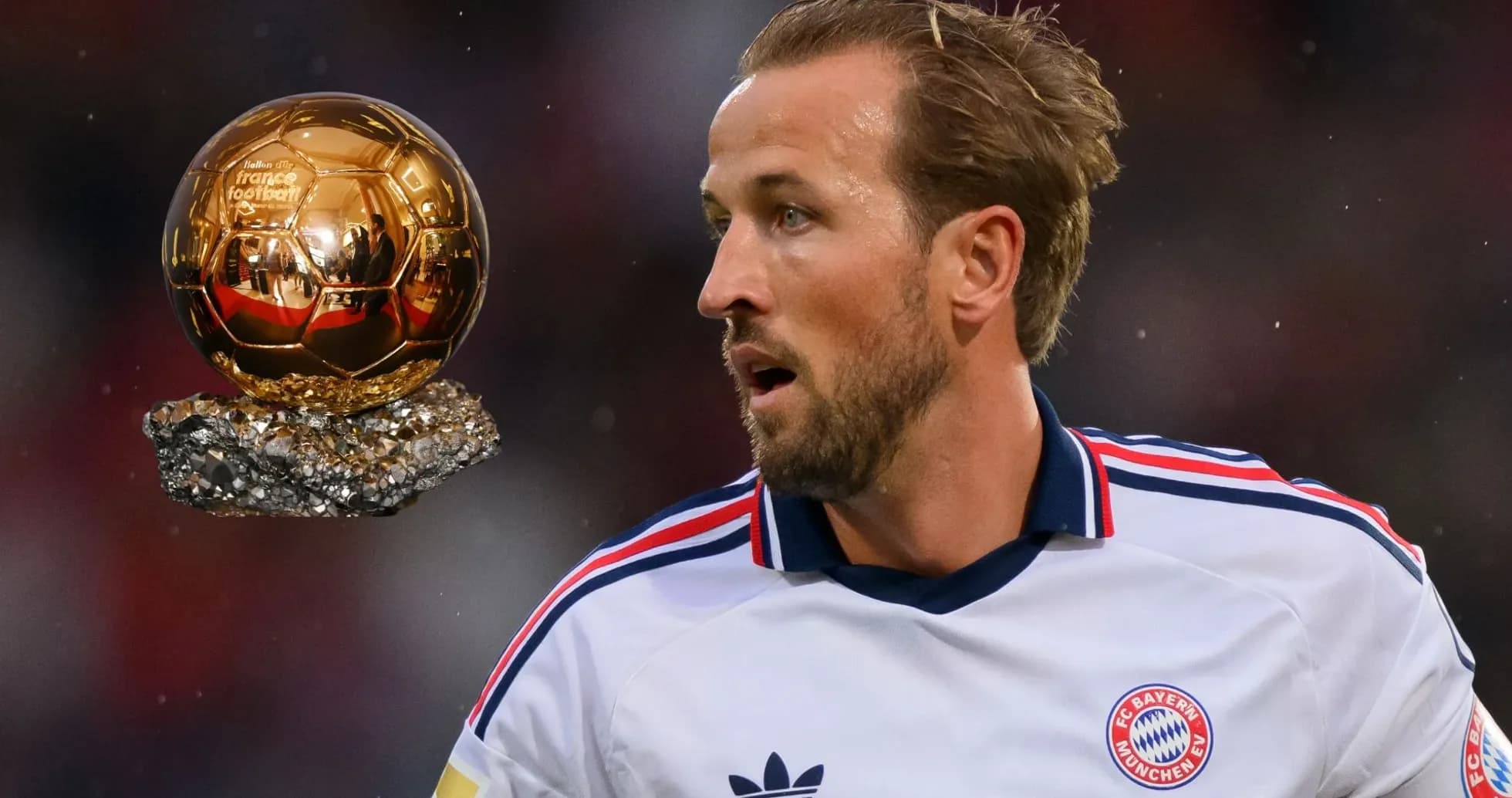
For a quarter of a century, English football has stared at the Ballon d’Or stage from the outside, watching others lift the game’s most coveted individual prize. The wait might finally be coming to an end.
Harry Kane, the relentless finisher who left Tottenham for Bayern Munich in search of trophies, now stands on the brink of joining one of football’s most exclusive clubs. Only four Englishmen have ever been crowned the best player in the world. The last was Michael Owen in 2001. Before him came Stanley Matthews, Bobby Charlton and Kevin Keegan. That’s the entire roll call from roughly three quarters of a century of Ballon d’Or history.
The scale of Kane’s push is impossible to ignore. Sixty-one goals for Bayern last season. Twelve more for England. Seventy-three in total for club and country. Those are numbers that once seemed the preserve of Lionel Messi and Cristiano Ronaldo alone. In fact, they are numbers that surpass Ronaldo’s best single-season haul of 69, with only Messi’s peak of 82 still out in front.
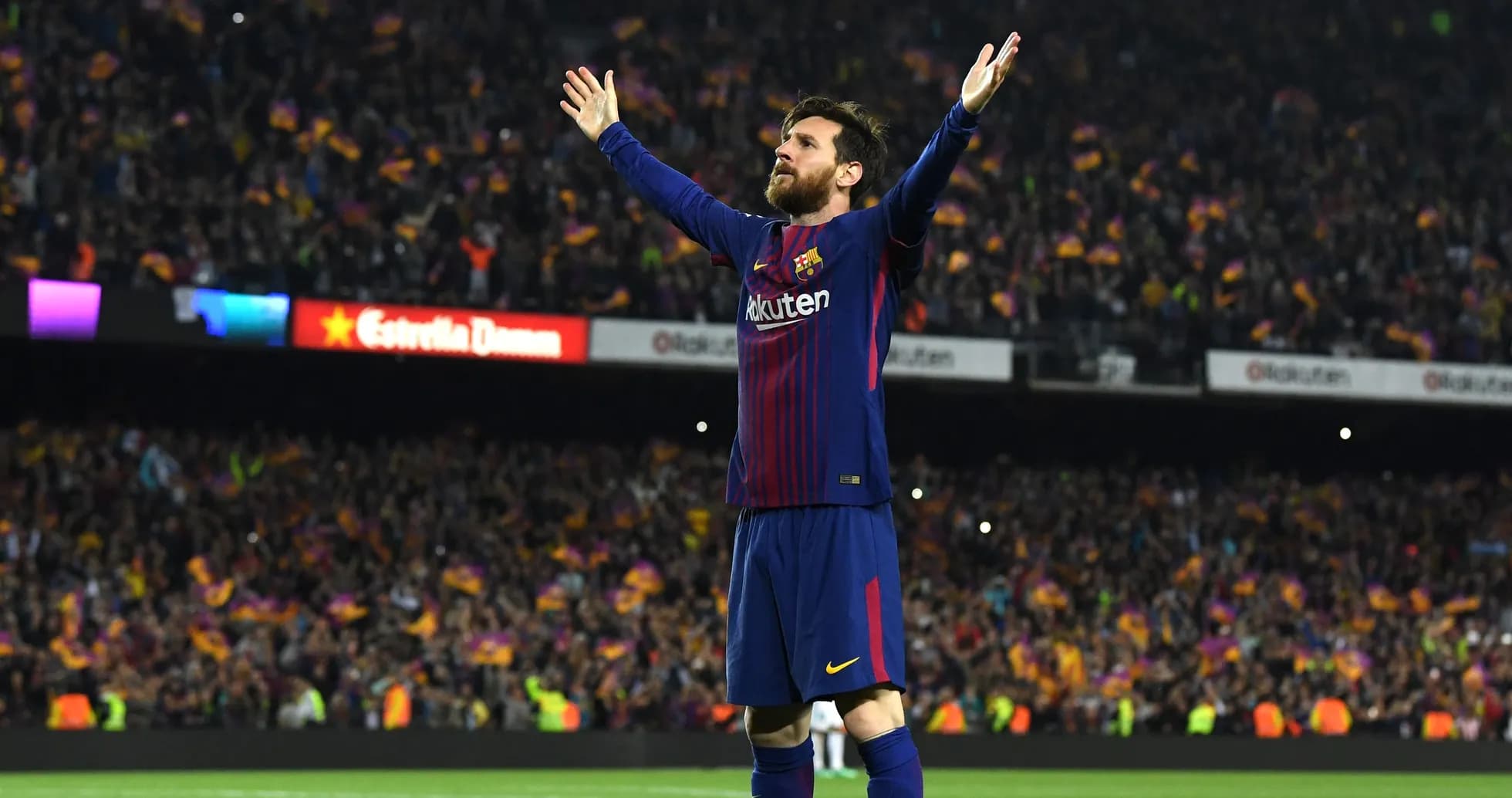
Kane’s eruption has arrived just as the old order has loosened its grip. Messi and Ronaldo’s 15-year duopoly – 13 Ballons d’Or between them – has finally given way. The Argentine genius went out on eight, the record that rewrote the award’s history. Now the throne is vacant, the hierarchy unsettled, the conversation open again.
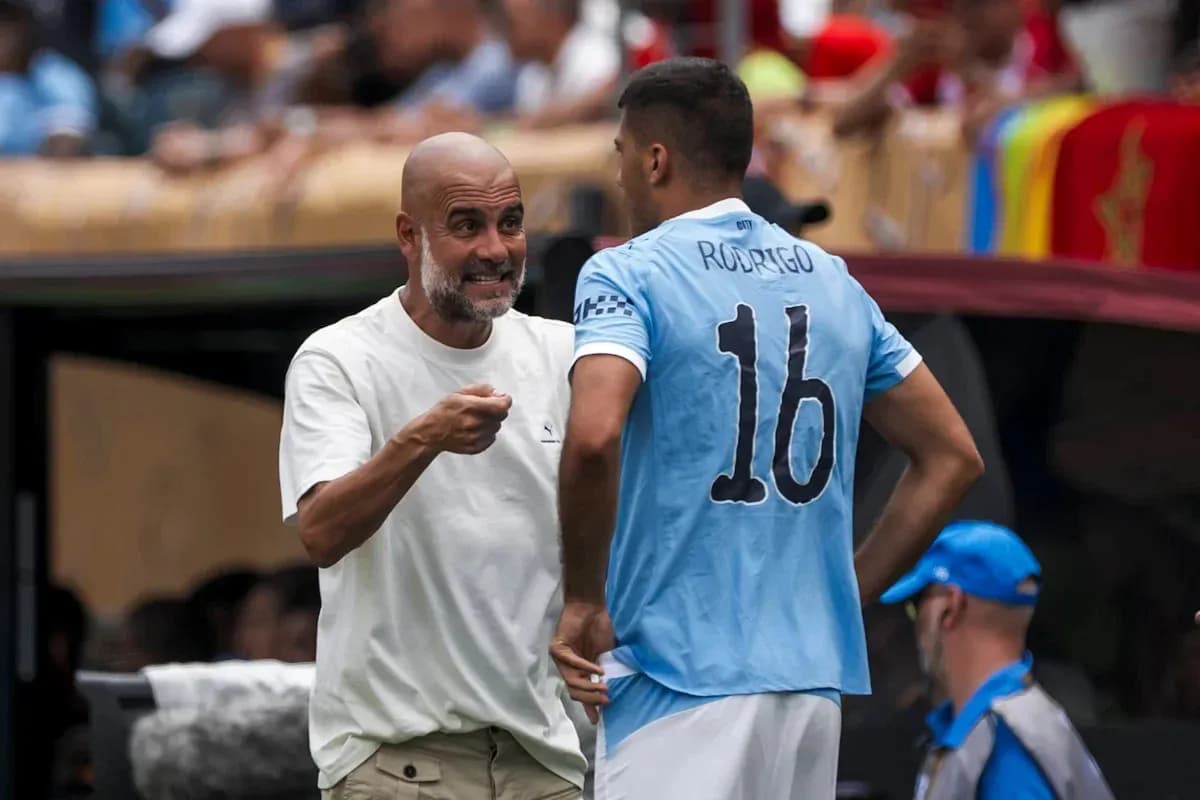
Rodri and Ousmane Dembele have helped frame that new era, their influence reflected across the last two Ballon d’Or polls. Both arrive in this year’s race with World Cup and Champions League medals from 2026, both still firmly in the frame. They are not alone. Kylian Mbappe, Lamine Yamal, Michael Olise and Khvicha Kvaratskhelia all have their own cases to present, their own highlight reels to throw at the voters.
Yet the favourite, as things stand, is the England captain.
Kane’s decision to leave the Premier League was framed as a gamble by some. It looks anything but now. Two Bundesliga titles banked. A scoring record in Germany that borders on the absurd. A leading role with England maintained. The narrative writes itself: the complete modern centre-forward, carrying elite numbers in two arenas and leading his country.
The significance of what might be coming is not lost on Owen, the last Englishman to touch the Golden Ball and now an ambassador for Casino.org. He knows exactly how rare these moments are.
“There’s only four of us that have won it in its history,” he told GOAL. “What is the history? 75 years or something? So, we’re talking every 20 years, just under 20 years is the average anyway. So, we’re pushing that average at the moment, because it’s 25 years since I won it.
“Obviously, Harry’s got a good shot at it. I do think it’s quite an open year, but I do think Harry Kane’s got a great chance of winning it. It’d be a fabulous achievement if he did.”
The lineage is illustrious. Matthews, the inaugural winner in 1956, the wizard of the wing. Charlton, the World Cup winner and symbol of a nation’s golden summer. Keegan, back-to-back Ballon d’Ors in 1978 and 1979, a force of nature in European football. Then Owen, the teenage sensation turned global star in 2001.
Kane has made no secret of how much it would mean to add his name to that list. Speaking to TNT Sports, he framed the award in the context of a boyhood dream already exceeded.
“Not that long ago, I was that fan wanting to become a professional footballer, and I am here now and winning awards and the Ballon d'Or is the same,” he said. “Of course, now it is out of my hands, it is down to the voters and the people who decide it. The season I had was my best season by far, and we’ll have to wait and see.
“It is a weird one because I am already focused on this season now, and the next season. Can I be better? Can I improve? But I also want to appreciate what I did.”
That tension – between reflection and relentless forward motion – defines Kane’s career. He has never moved like a player satisfied with what he has already banked. Even now, on the cusp of a possible Ballon d’Or, his mind tracks ahead to the next finish, the next campaign, the next standard to raise.
He also understands the chaos at the heart of these debates.
“The thing with football opinions – there are so many opinions, so many arguments for different players, and people love this player because ‘he’s fast’ and ‘he’s got great IQ’ and ‘his finishing is great’,” he said. “So I think that is what makes football special, all those debates, and the Ballon d'Or is definitely one of them. I’m happy that I am in contention, so we will have to wait and see.”
The numbers, though, are not up for debate. Seventy-three goals in a single season is a return that belongs in the same statistical stratosphere as the game’s greatest. Kane himself has admitted the figures feel “silly”, the kind of output that once seemed ringfenced for Messi and Ronaldo alone.
Whether that will be enough is the question hanging over this year’s ceremony. The field is stacked with champions and game-changers. Mbappe’s star power. Yamal’s precocious brilliance. Rodri’s control. Dembele’s trophies. Kvaratskhelia and Olise bringing their own flair and influence.
But raw production matters. Consistency matters. Carrying the burden for both club and country, month after month, matters.
On October 26, at the London Palladium Theatre, football will get its answer. Either the Ballon d’Or will stay out of English hands for a little longer, or Harry Kane will walk onto that stage and end a 25-year exile in a single, defining stride.