.svg&w=384&q=75 "logo")
Fouzi Lekjaa's Legal Battle Over AFCON Final
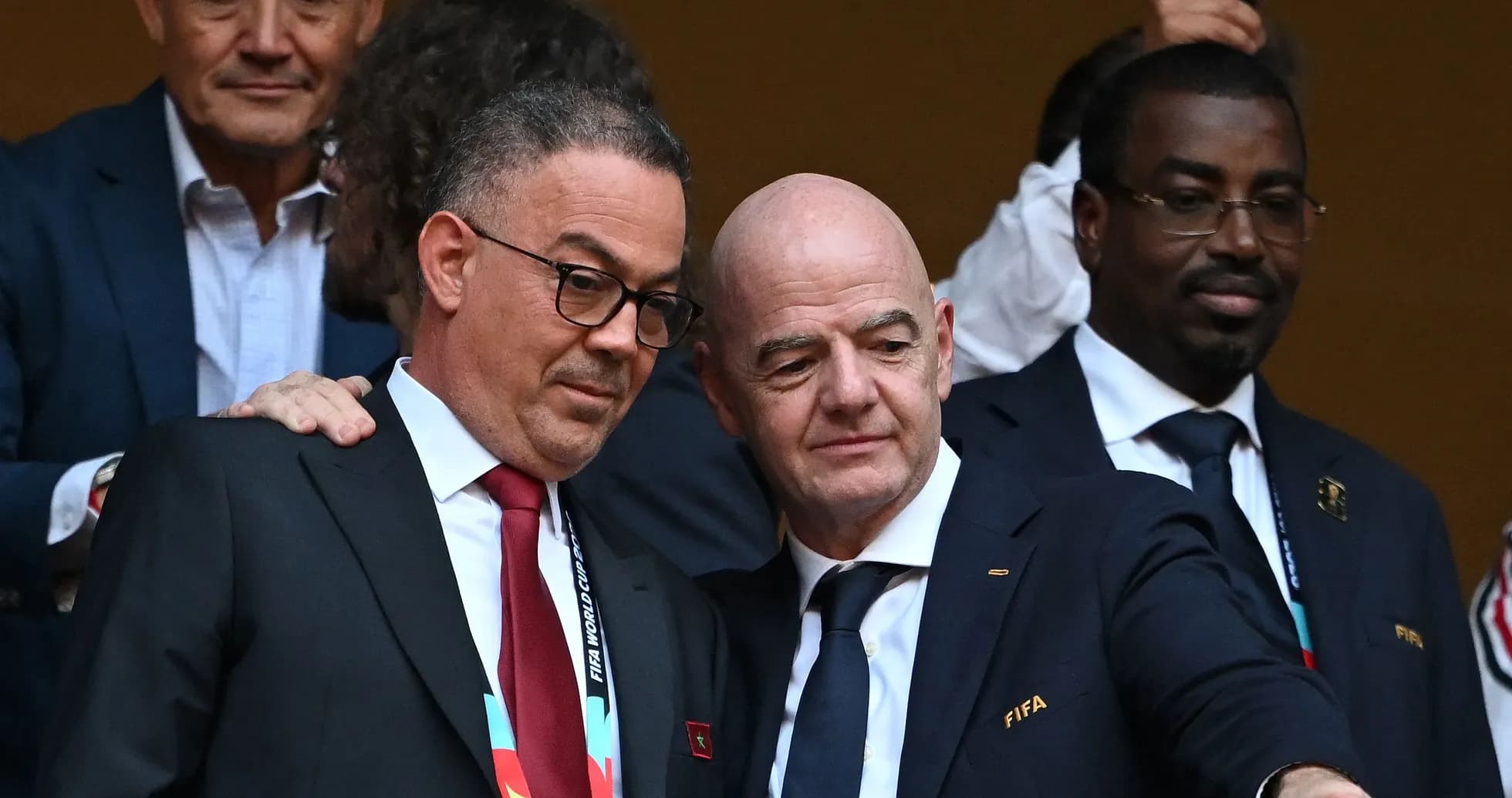
Fouzi Lekjaa is not backing down.
With the clock ticking toward an 8 October hearing at the Court of Arbitration for Sport (CAS), the president of the Royal Moroccan Football Federation has doubled down on Morocco’s stance over the controversial 2025 Africa Cup of Nations final against Senegal. For Lekjaa, this is not a diplomatic tug of war. It is a legal battle over the very rules that govern the game.
Speaking at length to the magazine "Jeune Afrique", in comments relayed by "Al-Shorouk", Lekjaa laid out Morocco’s case and its broader vision: from the storm around the AFCON final to the race to host the 2030 World Cup showpiece.
Morocco digs in over AFCON final dispute
Lekjaa insists Morocco’s position in the AFCON crisis is rooted solely in regulations and fair play. No politics, no side deals. Just the rulebook.
According to him, the Moroccan federation is convinced Senegal breached competition regulations during the final when players and members of the coaching staff left the pitch. That act, in Morocco’s eyes, crosses a line that international football cannot ignore.
For Lekjaa, it is not an isolated incident but a test case. He underlined that FIFA later amended certain laws to toughen sanctions in similar situations, a move he sees as proof of how crucial it is to uphold the regulations and prevent behaviour that chips away at the integrity of competition.
Morocco, he stressed, will keep pushing its case through the “competent bodies” to protect what it considers its rights and to ensure that the same rules apply to everyone, regardless of name or flag.
CAS hearing just one stop on a longer road
Attention now turns to 8 October and the CAS hearing. Lekjaa is careful not to dress it up as judgment day.
He described the session as one step in what could be a lengthy legal process, not necessarily the moment when the final verdict drops. The file may require additional hearings, further analysis, and more time before CAS delivers a definitive ruling on the dispute.
Morocco’s strategy is clear: stay the course, trust the legal route, and seek a decision that, in its view, reaffirms respect for the regulations that underpin both continental and global competitions. The hearing might bring clarity. It will not close the book.
Eyes on 2030: a World Cup final on African soil?
From courtroom corridors, Lekjaa’s gaze shifts to the biggest stage of all.
Morocco, alongside Spain and Portugal, will co-host the 2030 World Cup. The question now is where the final will be played, and Lekjaa makes no attempt to hide Morocco’s ambition: the country wants the showpiece match.
He was keen to stress that Morocco is scrupulously following every FIFA procedure, from inspection visits to the formal criteria for selecting host cities and stadiums. No shortcuts, no special treatment requested.
At the same time, he argued that Morocco has every right to defend its candidacy for the final as Africa’s representative in the bid. For him, ambition and respect for the rules are not opposites. They run in parallel. Morocco will lobby hard, but it will do so within the framework FIFA has already laid down.
Backing Infantino, but calling for stronger governance
Lekjaa also addressed his support for FIFA president Gianni Infantino, a stance that has drawn scrutiny in some quarters of the African game.
He framed that support around a broader conviction: football can bring people together, break down barriers, and act as a force for unity. That belief, he said, underpins his relationship with Infantino.
Yet his endorsement does not come with a blank cheque. Lekjaa underlined that world football still needs stronger governance, more balance, and greater transparency at the top. His vision, he explained, is anchored less in individuals and more in principles and institutions.
He wants a robust system capable of managing competing interests and power centres within international football, one where structures outlast personalities.
From the AFCON legal fight to the battle for the 2030 World Cup final, one thread runs through Lekjaa’s message: Morocco will argue its case hard, but always with the rulebook in hand. The next ruling, whether in Lausanne or at FIFA’s headquarters, will show how much that approach truly counts in the modern game.