.svg&w=384&q=75 "logo")
England’s New Pace Pack Evokes 2005 Ashes Memories
The names roll off the tongue a little differently now, but the rhythm feels familiar.
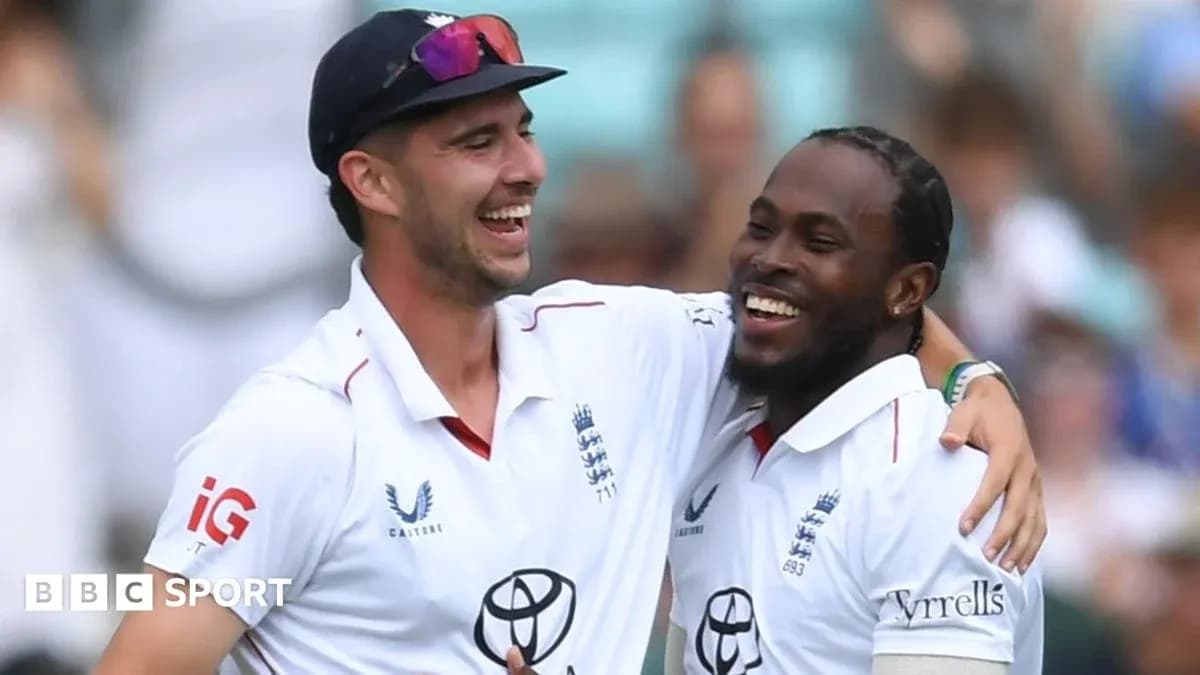
Ollie Robinson, Jofra Archer, Gus Atkinson, Josh Tongue. Four seamers, four distinct threats, driving England to a series win over Pakistan and stirring memories of a fabled quartet from 21 years ago.
Stephen Harmison, Matthew Hoggard, Simon Jones, Andrew Flintoff. The class of 2005. The attack that bullied Australia and dragged the urn back.
Marcus Trescothick shared a dressing room with that group. Now, as England’s interim head coach, he stands on the other side of the boundary rope watching a new fast-bowling unit begin to take shape.
“We do have some real skill, and you look back to 2005 and the sort of comparisons of Harmy, Fred, Simon and Hoggy, you could easily make those sort of comparisons,” he said, allowing the parallel that many have tiptoed around.
For a team that had won only two of its previous 10 Tests, this is more than nostalgia. It is a reset.
Stokes exits, Root returns, and a New Balance
The end of Ben Stokes’ reign as captain brought more than a change of voice in the team talks. His retirement from Test cricket forced England to rip up the template that had underpinned the Stokes–Brendon McCullum era.
No Stokes, no ready-made all-rounder to glue the XI together. Joe Root stepped back into the captaincy, but the bigger question sat in the middle of the team sheet: how do you balance the side without the man who did everything?
For now, England have gone heavy on pace and light on spin. Four frontline seamers, no specialist spinner, with Dan Lawrence’s part-time off-breaks on standby if the pitch demands it.
It is a gamble that has paid off against Pakistan. Back-to-back wins have delivered England’s first series triumph since 2024 and, just as importantly, a coherent identity with the ball.
Three at 92mph, One at 80mph – and All in Sync
Under Stokes and McCullum, raw pace often trumped all. The brief was clear: bowl fast, keep attacking, live with the consequences. This version of England’s attack feels more layered.
Archer, Tongue and Atkinson all hit the 90mph bracket. They hurry batters, pound the splice, and force mistakes. Then there is Robinson, operating so often with the keeper standing up, nudging below 80mph, but relentlessly on a nagging length.
His numbers this summer are absurd: 23 wickets at an average of 8.3. Not a tearaway, but a technician, prising movement from surfaces where others see only toil.
“We’ve got a good contrast in what we’re trying to do at the moment,” Trescothick said. “What we do have is three guys bowling at 92 miles an hour, which is really nice to have in your armoury and to have the potency in what you’re trying to do.
“And the more that they play together and the more experience that everyone gets together, then it fits into place to how you want it to be.”
That last line is telling. This isn’t just about raw materials. It’s about a unit learning its roles, just as Harmison, Hoggard, Jones and Flintoff once did.
Vaughan’s Challenge
The comparisons have not been universally embraced. Writing in the Telegraph, Michael Vaughan, England’s captain in 2005, set a clear bar.
The current group, he argued, can only truly be mentioned alongside his Ashes-winning attack when they deliver on the biggest stage and win a major series.
But he did not dismiss them.
“They are certainly capable of doing something really special, and winning back the Ashes for England next summer,” Vaughan wrote, dangling the prospect of another seismic home series.
That is the standard now. Not just beating Pakistan at home, but building an attack that can intimidate Australia, India, anyone.
Edgbaston and the Temptation to Rotate
Before any Ashes talk gathers pace, there is unfinished business. England head to Edgbaston on 9 September with a 3-0 clean sweep over Pakistan in their sights.
The squad for Birmingham will be named in the coming days, and Trescothick faces a familiar modern dilemma: protect his fast bowlers or ride the hot hand?
Seven quicks were named for the Lord’s Test. Brydon Carse was among them before being removed following an incident outside a nightclub in Derby. He will not be considered again until police and the Cricket Regulator complete their investigations.
Without Carse, the reserve seam options are Sam Cook, Sonny Baker and Matthew Fisher. Between them, they own just four Test caps. Fresh legs, but green at this level.
Trescothick hinted that sentiment and experimentation will not get a look-in if his main four pull up well.
“First and foremost I want to win the series 3-0, and I think if you’re going to do that you want to play the most consistent team possible,” the 50-year-old said.
“We’ve got to see how they all pull up from this game, and they’ve got four or five days now of break which they’ve not had for a good period of time because the schedule has been so busy.
“Once we know that then we’ll be able to make that decision, but emphasis massively on winning the series 3-0.”
The message is ruthless and simple: the sweep matters. Momentum matters. This attack matters.
England have stumbled through too many stop-start cycles in recent years to casually shuffle a winning pace unit. Trescothick, shaped by the brutal clarity of 2005, knows what a settled, snarling seam quartet can do across a summer.
The names are different now. The stakes, as ever in English cricket, feel just as high. The question is no longer whether this group can evoke memories of Harmison and company.
It is whether they can write a story of their own.