.svg&w=384&q=75 "logo")
England vs Pakistan: A Hard-Fought Test at Lord's
On a grey, sulking Lord’s afternoon, England and Pakistan dragged this series back to something more familiar: a hard, honest Test match scrap.
No avalanche of runs. No collapse of pure farce. Just a low, nagging total, a ball that wouldn’t behave quite the same twice, and two teams straining for control without ever quite getting it. By the time bad light finally pushed the players from the field, England’s 248-9 felt like a number loaded with possibility rather than certainty.
How good is it? Only the next three days will tell.
Smith and Cox steady a shaken week
It has been a bruising week for English cricket. Brydon Carse’s removal from the squad after an alleged late‑night incident in Derby dragged the off‑field drinking culture back into the spotlight just when Joe Root’s second stint as captain had promised a cleaner narrative.
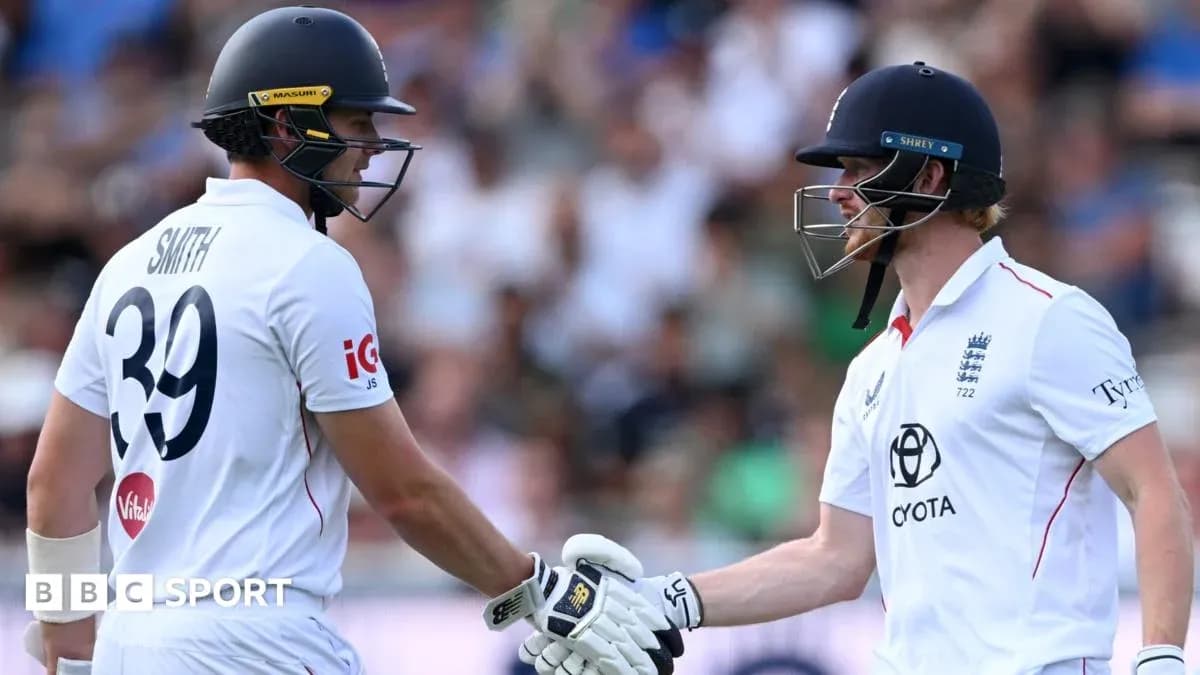
On the field, Root needed grown‑up runs. Jamie Smith and Jordan Cox gave him exactly that.
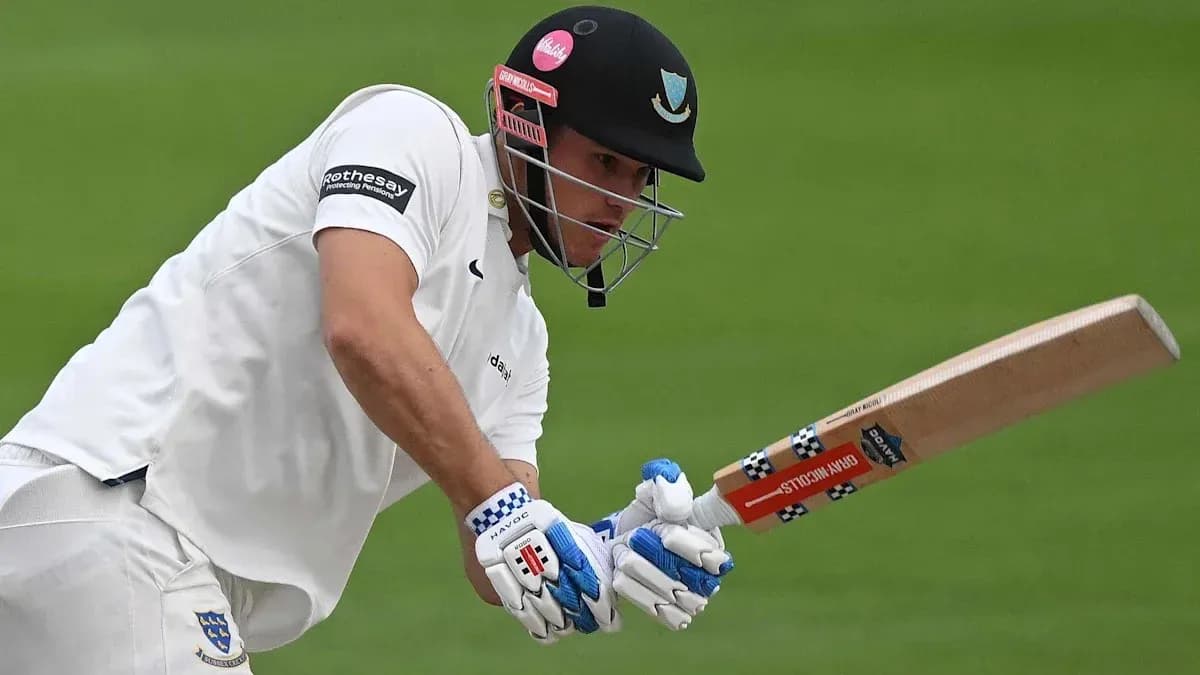
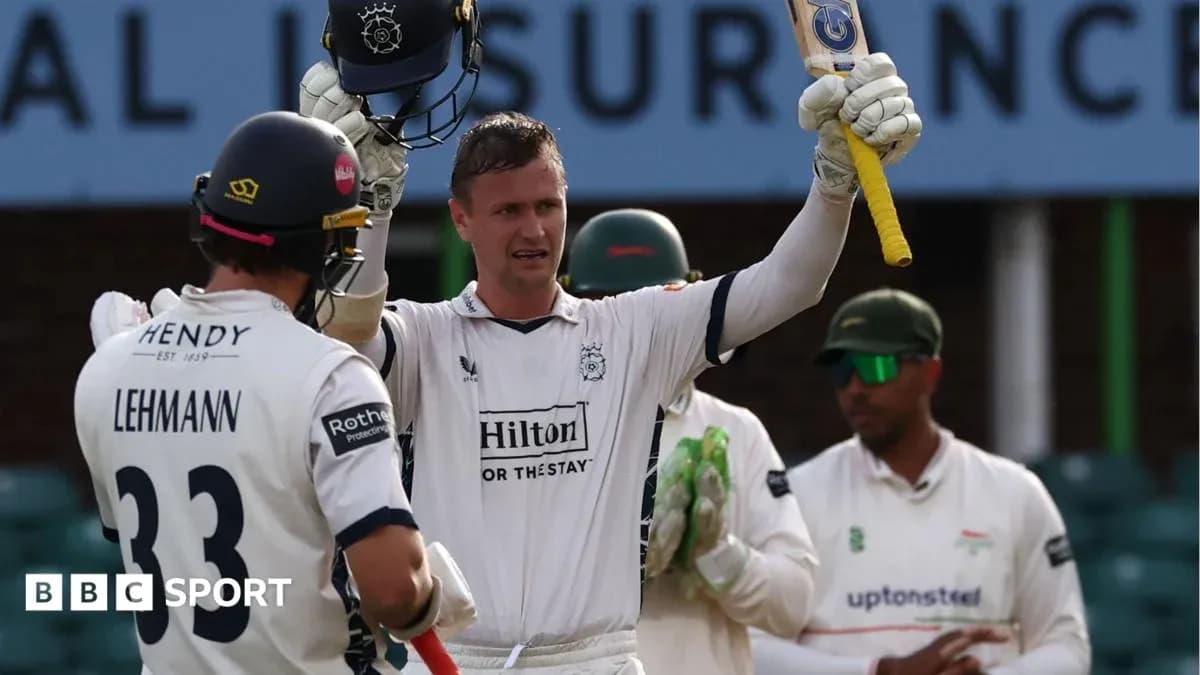
In dank, testing conditions under floodlights, Smith’s 61 and Cox’s 55 were not pretty in the modern, white‑ball sense. They were better than that: stubborn, skilful, and threaded with just enough strokeplay to keep Pakistan’s seamers honest. The pair added 67 for the sixth wicket, the day’s defining partnership and the only time England looked remotely in charge.
Smith, under pressure for runs and for a place in a side Root is reshaping in his own image, found fluency where others found only edges and air. Cox, in just his third Test, again looked as if he has been here for years, tight in defence, decisive when the bowlers over-pitched.
They walked out with England wobbling, walked back with the innings repaired. In between, they gave the dressing room something it has lacked too often in recent months: resilience.
Abbas leads Pakistan’s response
At Headingley, Pakistan looked lost. At Lord’s, they turned up.
The return of Babar Azam from a hand injury instantly steadied them. His first act was simple but crucial: win the toss. On a day that started late at 12:20 BST because of rain and never fully escaped the gloom, that decision gave Pakistan’s seamers the new ball in conditions that could hardly have suited them more.
Muhammad Abbas seized it. This was Abbas in his element: nagging, relentless, the ball on a string. At one stage he took three wickets for four runs in 16 balls, England’s top order unpicked almost methodically.
Emilio Gay feathered one down the leg side. Ben Duckett followed, undone by that familiar, teasing length. Then came the big one: Root himself, prised out in a spell that briefly made Lord’s feel like Abbas’s private net session.
He finished with 4-56, every one of them earned. Pakistan, humiliated in Leeds, suddenly had their craftsman back at the heart of the attack.
On the other end, Mohammad Ali provided the perfect foil. His three wickets all came via the same ruthless method: the ball darting down the slope, stumps rattled. Harry Brook, Smith and Ollie Robinson all fell to that nip off the seam, each dismissal a small tactical victory for a bowler who understood the ground as well as the moment.
England’s errors, Pakistan’s waste
This was never a day of dominance. It was a day of missed chances, shared almost generously.
England’s batters contributed to their own trouble. Dan Lawrence ran himself out after a mix‑up, having already been reprieved when Shan Masood dropped him on 10 at mid‑wicket. Brook, always eager to drive, was bowled trying to impose himself when the situation demanded something more patient.
Gay’s dismissal down the leg side felt harsh, but the scoreboard does not care for sympathy.
Pakistan, for all their improvement, let England wriggle off the hook more than once. Three catches went down. Two did not cost much: Root was shelled at third slip by Imam-ul-Haq on one, but gone again for four soon after; Masood’s drop off Lawrence was later erased by a sharp run‑out from the same fielder.
The third error may yet matter. Mohammad Rizwan missed the most expensive chance of the day, a drop that underlined a recurring issue: Pakistan’s keeper and slip cordon often stood too deep, edges dying in front of them or falling short. In these conditions, those half‑chances are the difference between chasing 180 and 260.
They let England back in. Gus Atkinson took full advantage.
Atkinson’s late surge and the shape of the match
At 200-8, England were drifting towards an under-par total. Atkinson refused to let it slide. His unbeaten 34 was not a slog; it was a calculated counter-attack, an injection of pace into an innings that had threatened to stall completely.
He farmed the strike, picked his moments, and dragged England towards something that looks, at the very least, competitive. With the ball likely to move again under cloud and more rain forecast, that late surge could loom large.
Root would have loved a crack at Pakistan’s fragile top order under the lights. The dark skies and floodlights were made for his seamers. The umpires thought otherwise. Bad light closed in, and with it went England’s chance to land an early blow.
So Pakistan will begin on day two with fresh minds, a dry ball, and the knowledge that 248-9 is neither a gift nor a sentence. It is an invitation.
A tight Test in the balance
This pitch is no repeat of June’s poor surface against New Zealand. It has enough pace, enough carry, enough in it for everyone. England’s total is “workable”, to borrow the dressing-room cliché, but that hides the truth: both sides know they could have been in a far stronger position.
For Root, the bigger picture is clear. Win here and England claim their first Test series since 2024, drawing a line under an ugly week and giving his second reign as captain a solid early marker.
For Babar, this is a chance to drag his team from embarrassment to relevance in the space of five days.
The arm wrestle has begun. England have runs on the board. Pakistan have the ball, the conditions, and a point to prove.
Who blinks first?