.svg&w=384&q=75 "logo")
The End of Neymar's Era: Ancelotti's Vision for Brazil's Future
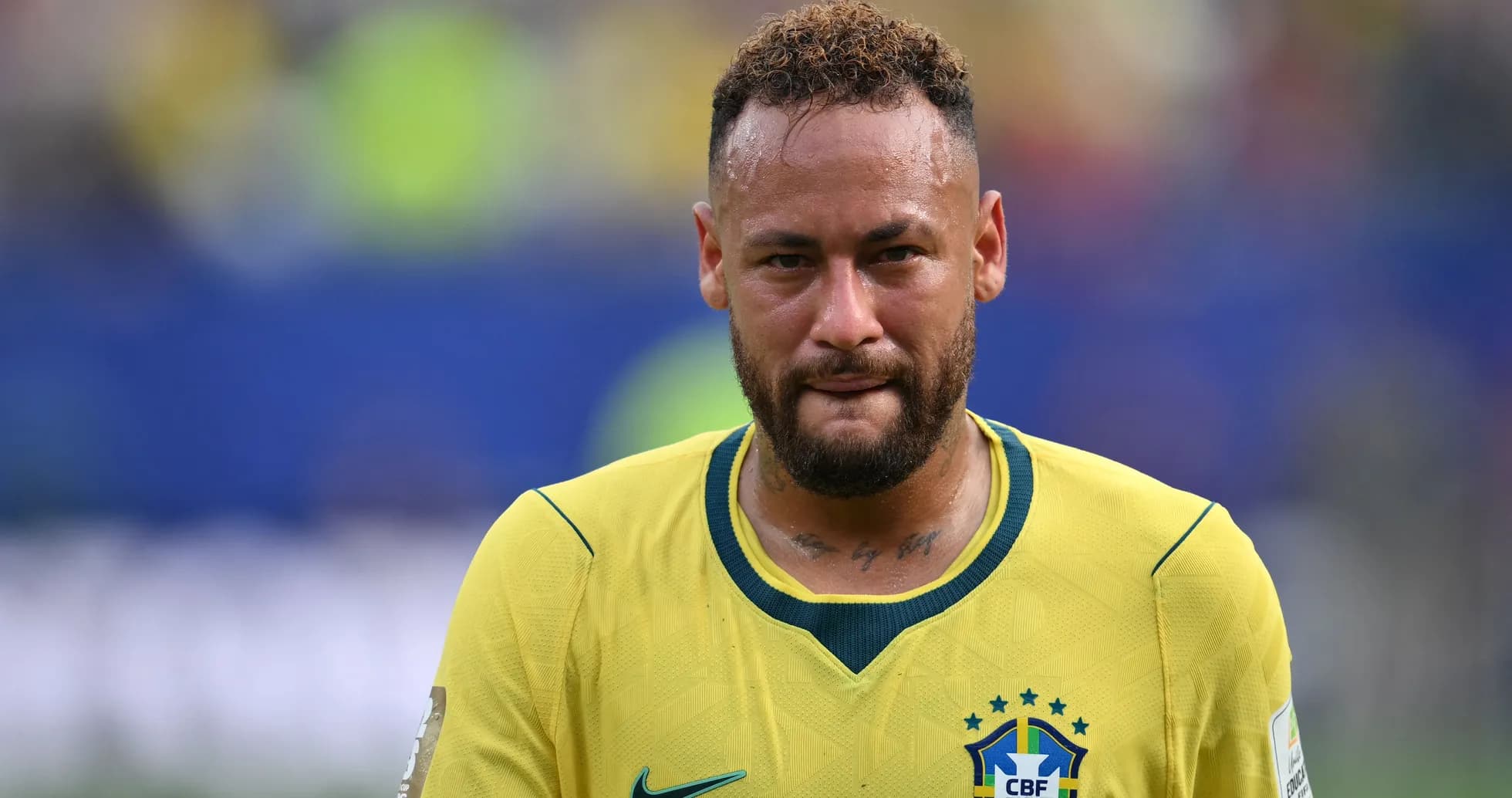
Carlo Ancelotti didn’t whisper it. He slammed the door on one of the most turbulent, dazzling chapters in Brazilian football history.
Neymar is done with the Seleção.
No farewell tour, no teasing comeback hints, no “never say never.” The Italian coach confirmed what had been hanging in the air since the 2026 World Cup: the country’s long-time talisman has chosen to walk away from international football.
“He deserved to be there because of his quality. Neymar has already confirmed that he does not want to return to the national team,” Ancelotti told CNN Esportes, stripping away any remaining doubt. Then came the line that will echo through Brazilian football for years: “Neymar cannot be replaced because he was an extraordinary and unique talent. So, an irreplaceable player.”
An era closed in a single sentence.
Life After an Irreplaceable No. 10
For more than a decade, every Brazilian conversation about football eventually circled back to Neymar. Goals, injuries, pressure, controversy, genius. He carried the No. 10 and the weight of a nation that measures itself in World Cups.
Now there is no safety net. No superstar to bail out a broken game plan with a flick, a feint, or a free-kick into the top corner.
Ancelotti isn’t pretending someone else will simply step into that role. He’s not even trying.
With Neymar’s chapter officially shut, the coach and national team director Rodrigo Caetano have moved onto something far more ruthless: a deep rebuild aimed squarely at the 2030 World Cup. Veteran names are already fading from the team sheet. Teenagers and domestic standouts are taking their place.
The message is blunt. Sentimentality is out. Succession is in.
A Squad Built Around Birth Years, Not Birth Certificates
Ancelotti laid out his blueprint with unusual clarity. This isn’t vague talk about “youth” and “future.” It’s a targeted generational reset.
“I think we need to proceed step by step. Now we need to focus on the young players who could be the future, the players born in 2004, 2005, and 2006,” he said. “We have young players born in 2008 with a lot of quality, who aren't playing yet, but who can play. Now is the time to look at them, taking their age into account and respecting it.”
Those dates matter. They point directly at who Brazil expects to peak in 2030, not in the next window.
Ancelotti still nodded to the old guard — “It's true that a player can play very well even at 36 or 37” — but the hierarchy has flipped. “Now is the time to prioritize the youth,” he insisted.
Brazil, a country that has so often waited for one genius to save it, is being dragged into a different kind of project: long-term, structured, patient. The sort of rebuild that doesn’t usually sit comfortably with a fanbase raised on instant magic.
Breaking the Neymar Dependency
One of the lingering criticisms of the Neymar years was that Brazil leaned too heavily on his individual brilliance. When he shone, the team looked unstoppable. When he limped, the entire structure seemed to wobble.
Ancelotti wants that dynamic gone.
“I believe that in modern football, teamwork is what matters, not individual talent,” he said. “Of course, if you have great individual talent, you have a greater chance of winning, but modern football doesn't tolerate a lack of teamwork.”
That’s as close to a manifesto as you’ll get from him. The days of building everything around a single superstar are over. The next Brazil, if Ancelotti gets his way, will be a collective machine with room for flair, not a support act for one headline act.
He talks about integrating young players into a side that is both “rigid” and “creative” — disciplined enough to withstand the high-intensity demands of the modern game, imaginative enough to still look like Brazil.
The theory will be stress-tested immediately.
Australia, India, and the First Steps of a New Cycle
Friendlies against Australia and India would not usually move the needle in Brazil. This time, they carry a different weight.
Several debutants are expected to feature, and these games have been openly framed as auditions. Not just for the next Copa América or World Cup qualifiers, but for the entire direction of the project.
“We are working to build a strong team for the future, not to rely on a single great individual talent,” Ancelotti said. Every minute on the pitch in these fixtures becomes a trial. Who can cope with the shirt? Who understands the demands off the ball? Who can bring something different without breaking the structure?
The stakes are quiet but enormous. This is where careers in yellow either begin or vanish.
The Pain of 2026 and the Push to 2030
All of this urgency comes from a wound that still hasn’t healed.
Brazil’s last World Cup campaign ended too early, too flat, too far from the standard the country sets for itself. “I think the World Cup was a disappointment, we're sorry about that, but now we have to look forward,” Ancelotti admitted.
That disappointment has forced a reset at federation level. No more minor tweaks. No more hoping that the next tournament will be different with the same formula. The coach spoke of “time to prepare a new generation of players” and using friendlies to “see the new young talents that Brazilian football is developing in action.”
The language is sober, but the ambition remains towering.
“I believe Brazil should be among the best teams in the world,” he concluded.
Neymar’s departure leaves a void that, in pure talent terms, cannot be filled. Ancelotti knows it. He said it out loud. The response is not to search for the next Neymar, but to build a Brazil that doesn’t need one.
The question now is brutal and simple: can a country that fell in love with a singular genius learn to trust a team again by the time 2030 arrives?