.svg&w=384&q=75 "logo")
Dinusha's Resilience Secures Draw for Sri Lanka Against India
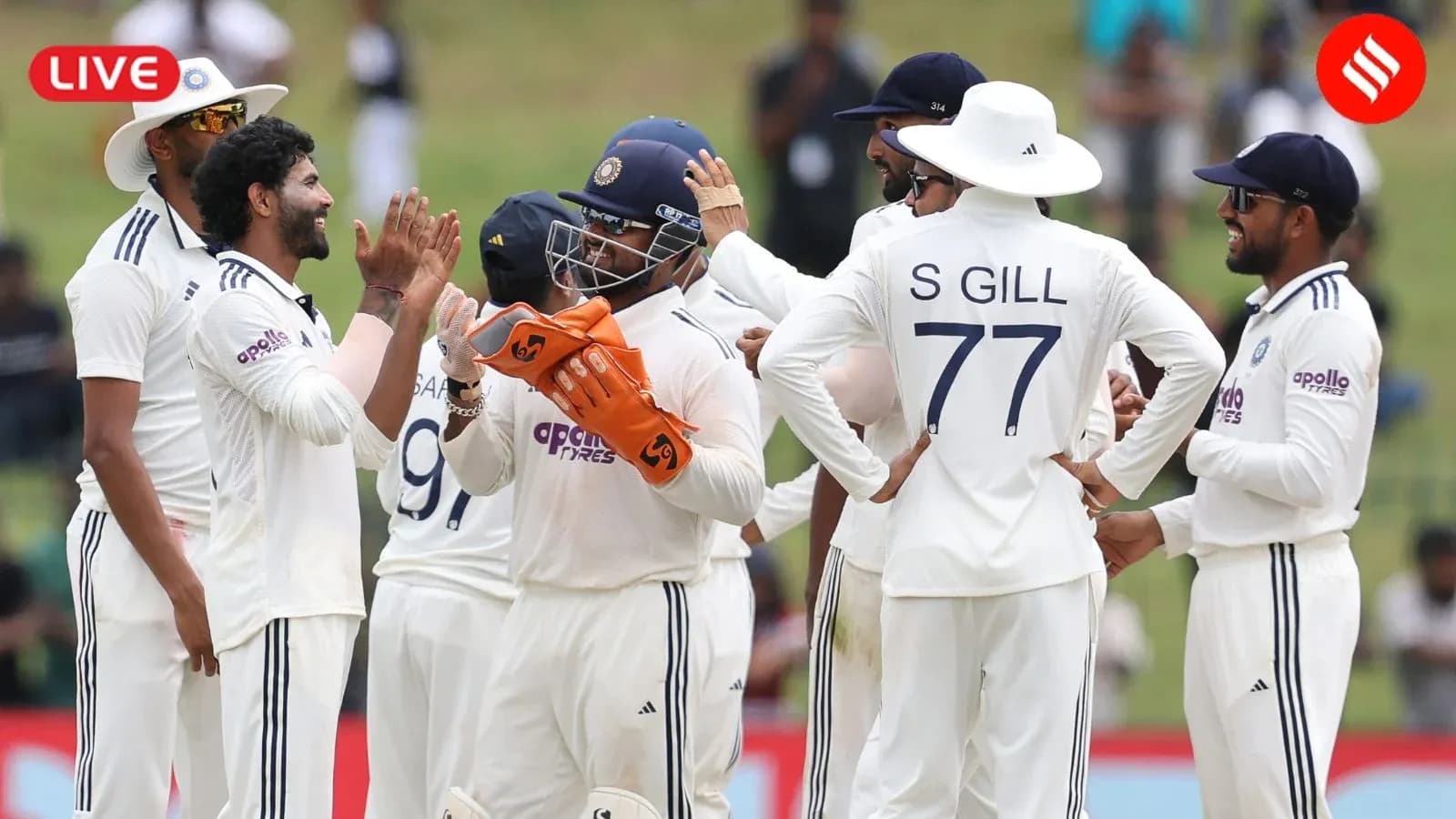
By the time the umpires walked across to the two captains on the final evening in Colombo, everyone inside the ground knew the truth: India’s push for a clean sweep had run out of road, and a young Sri Lankan allrounder had dragged his team to safety almost by sheer force of will.
Sonal Dinusha, sore back and all, turned the fifth day into his personal vigil. He batted, grimaced, stretched, and batted some more. By the final session, with Sri Lanka 395 for 8 following on and the lead out of India’s reach on a lifeless surface, the only result left on the table was the one no captain dreams of at the start of a series — a draw.
A Pitch That Went to Sleep
India had earned the right to enforce the follow-on. They had bundled Sri Lanka out for 290 on the fourth morning, Saransh Jain finally claiming Dinusha for his maiden Test wicket, and then sent the hosts back in under low, threatening clouds. With weather hovering over the game and World Test Championship points at stake, it was the aggressive, logical call.
For a while, it looked like a ruthless one too. Mohammed Siraj and Prasidh Krishna hit their straps with the new ball in the second innings, Siraj bouncing out Lahiru Udara for 10 and later unsettling batters with chest-high hostility on a surface offering very little. Ravindra Jadeja, tireless as ever, pinned Kamil Mishara lbw, staying true to his stump-to-stump mantra.
Yet beneath the early drama, the pitch was quietly changing character. It had offered some turn from Day 2, but never the venom Indian spinners usually feast on in this part of the world. As the match wore on, the surface flattened into a batter’s ally: the ball turned, yes, but mostly from the rough, and rarely from a length that forced mistakes. Batters could trust their defence. That, more than any tactical call, defined the final two days.
Sri Lanka’s Middle-Order Rebellion
Once the openers were gone, Sri Lanka’s resistance hardened. Pasindu Sooriyabandara and Kamindu Mendis, who had shown promise in the first innings, stitched together a partnership that changed the mood of the Test.
They were not content to merely survive. Sooriyabandara slog-swept, drove, and even produced a no-look slog-sweep that should have been a gift wicket, only for Siraj to misjudge the catch. Kamindu, rediscovering the form that had lit up the start of his Test career, reached a commanding half-century, launching Manav Suthar for a six over square leg and repeatedly putting the young left-arm spinner under the microscope.
The 100-run stand between them dragged India’s lead down under 100 and forced Shubman Gill into a carousel of bowling changes. Suthar, on his first real trial by fire at this level, was attacked from both ends of the wicket. Jain, on debut, was asked to hold his nerve and his line. Jadeja kept bending his back, extracting what little the surface would give.
India did strike. Prasidh Krishna, operating with clever fields for the pull shot, induced Kamindu into one hook too many, Shubman Gill sprinting back to cling on to a fine catch. Later, Suthar removed Dhananjaya de Silva with a soft inside edge to gully, then outfoxed Sooriyabandara down the track to have him stumped by Rishabh Pant.
But every time India prised open a door, Sri Lanka found another pair to slam it shut.
Dinusha Takes Over
If the first innings had hinted at it, the second removed all doubt: Sri Lanka have found something special in Sonal Dinusha.
He had already scored a superb century under pressure in the first dig, dragging his side from peril to respectability. When he walked in again at 212 for 4 following on, with India still ahead and the ball just beginning to grip, he carried the weight of a series on his shoulders.
India knew the plan. Siraj tested him with short balls into the ribs, having spotted a discomfort zone there. The spinners hunted his outside edge. Pant chirped, the close catchers circled. Dinusha just settled in.
His method was clear and relentless. He swept. Then swept again. The shot that has tormented India’s spinners from Ben Duckett and Tom Latham in recent years resurfaced in Colombo, and Dinusha played it with a veteran’s certainty. Every over, it seemed, he found that single with the sweep, occasionally the boundary, constantly nudging the game away from India’s grasp.
By the time he reached his half-century, Sri Lanka’s deficit was a memory and the lead was starting to grow into something India could no longer ignore. His third century of the series arrived in the final session of the fifth day — a landmark that felt less like personal glory and more like a declaration of intent: Sri Lanka would not be rolled over again.
This was not a chanceless epic. Dinusha battled visible discomfort in his back. At times he ceded the strike early in the over, trusting tailenders to survive. But his concentration never wavered. Ball after ball, hour after hour, he absorbed India’s best and gave them almost nothing in return.
Tailenders With Iron Nerves
If Dinusha was the spine, Sri Lanka’s lower order was the stubborn cartilage that refused to snap.
Keshara Nuwantha, who had stonewalled through a wicketless morning session on Day 5, resumed his trench work alongside Dinusha. He played within the line, rarely flirting with anything outside off stump, and forced India to toil for every half-chance. Manav Suthar finally broke him with a delivery that had beaten the edge all morning before finally kissing it, Dhruv Jurel snapping up a sharp catch.
Prabath Jayasuriya then took over the role of brick wall. He faced more than 20 deliveries, offering the deadest of bats, leaving anything he could, and refusing to be lured into expansive strokes. On a pitch that never fully turned into a minefield, such discipline was priceless.
The most telling resistance came from Lahiru Kumara. Known more for hostile spells with the ball than for any batting exploits, he had already shown in the first innings that he could occupy the crease. In the second, his 24-ball vigil early on swelled into a much more significant blockade. He left with care, defended with surprising assurance, and soaked up over after over.
India targeted him. Prasidh Krishna returned with attacking fields. Jadeja and Suthar worked the rough outside his off stump. Yet Kumara looked, for long stretches, entirely at ease.
Dinusha, increasingly hampered physically, began to shield himself. He often handed over the strike early in overs, trusting Kumara to see them out. Remarkably, it was the set man, not the tailender, who looked likelier to fall.
By the time tea arrived on Day 5 with Sri Lanka 383 for 8 and Dinusha marooned on 98, the mood had flipped. India were no longer hunting a win. They were chasing a miracle.
India Run Out of Ideas — and Time
Gill did not captain this innings passively. He shuffled his bowlers constantly, searching for a spark. He tried seam with the new ball in the final morning, then reverted to spin. He brought Siraj back late in spells, flirted with unconventional fields, and backed his debutant off-spinner Jain in key moments.
Some decisions will be revisited. Jadeja, India’s most threatening bowler across the day, might have been kept on longer before the second new ball was taken. The frequent absence of a slip for Siraj and Prasidh, especially when they were working batters over with the short ball, left chances uncourted. The follow-on, though logical with weather looming, inevitably pushed India’s attack into the red zone physically.
There was another blow. Midway through the afternoon, Jadeja walked off with discomfort in his heel. The bowler who had looked most likely to break the game open was suddenly out of the attack. Gill briefly toyed with the idea of part-timers — Yashasvi Jaiswal, Devdutt Padikkal — but stuck largely with his frontline options.
The ball turned more in the afternoon than it had all morning. Sharp spin, closer to the bat, began to appear from both ends. Yet the surface never crossed that invisible line into chaos. It never produced the unplayable delivery with a name on it. As Sairaj Bahutule had noted before play, the ball in these conditions softens quickly, the seam dampened by a wet outfield. Spinners, in response, tend to push it through faster, and batters adjust.
Sri Lanka had adjusted perfectly.
By the final hour, the game had slipped into a stalemate both sides could read without a scoreboard. The lead — 170 by tea, swelling slowly — was no longer a platform from which to dangle any realistic carrot. The overs remaining were too few, the pitch too docile, the Indian top order too strong for a late declaration gamble. Sri Lanka, having been outplayed for long stretches of the series, chose pragmatism over romance. They batted on. They blocked. They survived.
When the handshake came, India had four wickets fewer than they needed and one series win fewer than they wanted.
Lessons in the Heat
This was not a dead rubber for India. It was a hard, hot education for a bowling unit still learning how to close out Tests on flat, late-summer subcontinental tracks.
Prasidh Krishna, praised by Morne Morkel for his bounce and willingness to do the “donkey job”, pounded away tirelessly. Siraj, operating at mid-120s pace with the keeper up at times, showed yet again that aggression does not always need a helpful pitch. Jain, with his side-spin, flat trajectory and 80–85 kph pace, discovered what it means to bowl when nothing much is happening and wickets must be created, not gifted. Suthar endured his first real mauling and kept coming back, eventually finding breakthroughs.
They will take scars from Colombo. They will also take lessons — about patience, about partnerships, about how to start the “next 10 or 15 balls” to a new batter after a wicket, as Morkel had framed it. These are the days that turn promising bowlers into complete ones.
Sri Lanka, for their part, leave with something more precious than a draw on the scorecard. They leave with a template. A middle order that can bat long. A lower order that can scrap. And a 24-year-old allrounder who has just put together a series of centuries against one of the world’s best attacks.
India wanted a clean sweep and full WTC points. They got a reminder instead: on a flat fifth-day pitch, against a side that refuses to fold, even the strongest teams can be held at arm’s length.
The next time these two meet, and the ball starts turning on Day 4, who will remember this stalemate more sharply — the bowlers who toiled, or the batter who simply would not go away?