.svg&w=384&q=75 "logo")
Demichelis Faces Pressure at Leipzig Over Language Barrier
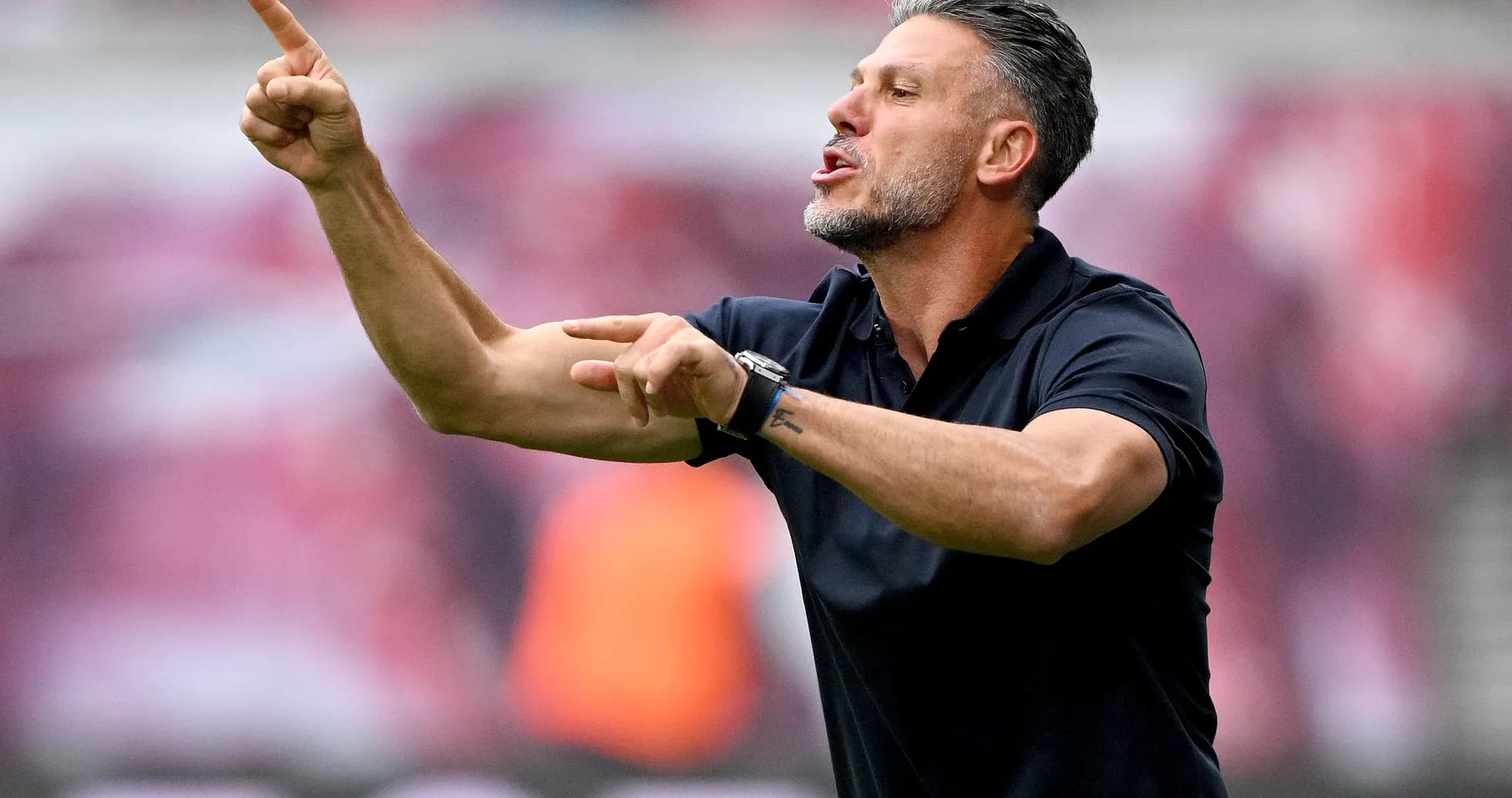
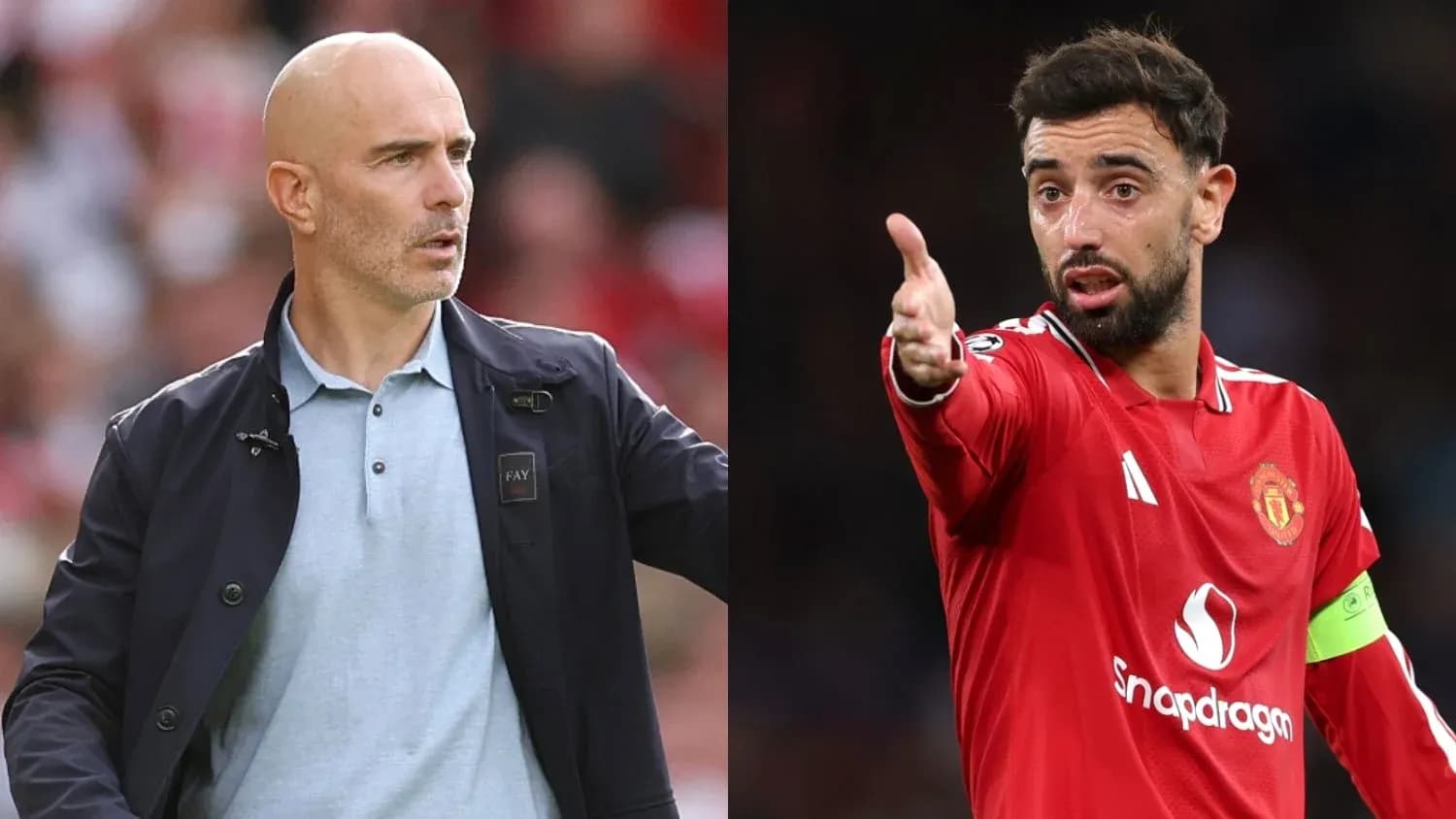
Martin Demichelis arrived at RB Leipzig in the summer with the aura of a former Bayern stalwart and the expectation that he would sharpen a team fresh from a third-place finish. Instead, a few months on, the story is less about his tactics and more about whether his players can actually understand them.
The 45-year-old Argentinian, appointed after the surprise dismissal of Ole Werner, finds himself coaching a Champions League club without speaking enough German or English to address the squad directly. Every team talk has turned into a relay race.
In the dressing room, several voices now stand between Demichelis and his players. Team manager Babacar N'Diaye translates for the French-speaking group. Goalkeeping coach Frederik Gößling relays the message in English. Assistant coach Cristian Fiél, the German-Spaniard, acts as a crucial bridge, shuttling instructions back and forth.
It is an improvised system, and it is creaking.
German players are reportedly left clarifying instructions among themselves after meetings, trying to piece together what their head coach actually meant. The raw edge of Demichelis’ delivery – the urgency, the emotion, the detail that defines a coach’s identity – gets thinned out each time it passes through another interpreter. By the time it reaches the full squad, the message feels diluted.
On the training pitch and under the stadium lights, that gap has started to show.
Results stoke the debate
Leipzig’s form has only sharpened the focus on the communication issue. A club with title aspirations has already stumbled badly.
The 1-3 league defeat at Werder Bremen jarred. The 1-4 collapse against FC Como 1907 in the Champions League did more than that – it set alarms ringing. Performances lacked cohesion, the kind of collective clarity that comes when a group moves as one under a coach they fully understand.
Demichelis did not hide from the stakes after the Como defeat. “I know the rules. I know exactly that there is not that much time in football – especially not at a big club. If you don't win, everything is bad,” he said. It was a blunt assessment from a man who knows how quickly the ground can shift beneath a coach at this level.
Then came a response. Last weekend’s emphatic 5-0 win over HSV offered a glimpse of what this Leipzig side can be when it clicks: aggressive, ruthless, fully on the front foot. The result gave Demichelis some breathing space and briefly cooled the temperature around the club.
But it did not erase the doubts. One big win does not wash away a shaky start, not at a club that expects to build on a top-three finish, not when early-season setbacks already threaten to drag them off course. Every game in the coming weeks feels like a test of whether Demichelis can impose his ideas clearly enough, quickly enough, despite the linguistic wall between him and large parts of his squad.
He needs more than the occasional statement victory now. He needs a run that proves this project is moving in the right direction.
Board calls for calm – with conditions
Inside the club hierarchy, the official line is stability. With criticism growing louder, sporting managing director Marcel Schäfer stepped forward last week to steady the narrative.
He stressed that Leipzig would remain “calm, focused” and united. The message from the top was one of collective backing: the employees, the team, the entire coaching staff all have the club’s support and trust. Patience, Schäfer argued, is part of the plan. A newly assembled team needs time to develop automatisms, to build rhythm, to understand each other.
Still, there was no attempt to gloss over the reality. Schäfer admitted the recent results “do not meet our standards”. Internally, he said, the club is addressing the situation “very clearly” and refuses to let the current debate derail the chosen path.
For Demichelis, that statement amounts to a formal vote of confidence, but not a blank cheque. The conditions are obvious, even if they are not spelled out in bold: communication must improve, performances must stabilise, and Leipzig must start looking like a side that belongs at the sharp end of both the Bundesliga and Europe.
The language barrier is no longer a quirky subplot. It sits at the heart of the Demichelis question in Leipzig. If he cannot get his ideas across with enough precision and force, the project will struggle to breathe, no matter how talented the squad or how patient the board.
The coming weeks will show whether this is just an awkward teething phase or the fault line that defines his tenure.