.svg&w=384&q=75 "logo")
Dana White's Strategy in Boxing: Targeting Ryan Garcia and David Benavidez
Dana White hasn’t just walked into boxing. He’s walked in with a playbook, a war chest, and a very clear hit list.
At the top of it: Ryan Garcia and David Benavidez.
Both are one fight away from free agency. Both are restless. And Zuffa Boxing, under the TKO umbrella, has quietly built the perfect bridge to them — using Conor Benn and Jai Opetaia as the key pieces on the board.
Not centerpieces. Pawns. Very expensive, very useful pawns.
Ryan Garcia: The star who’s already halfway out the door
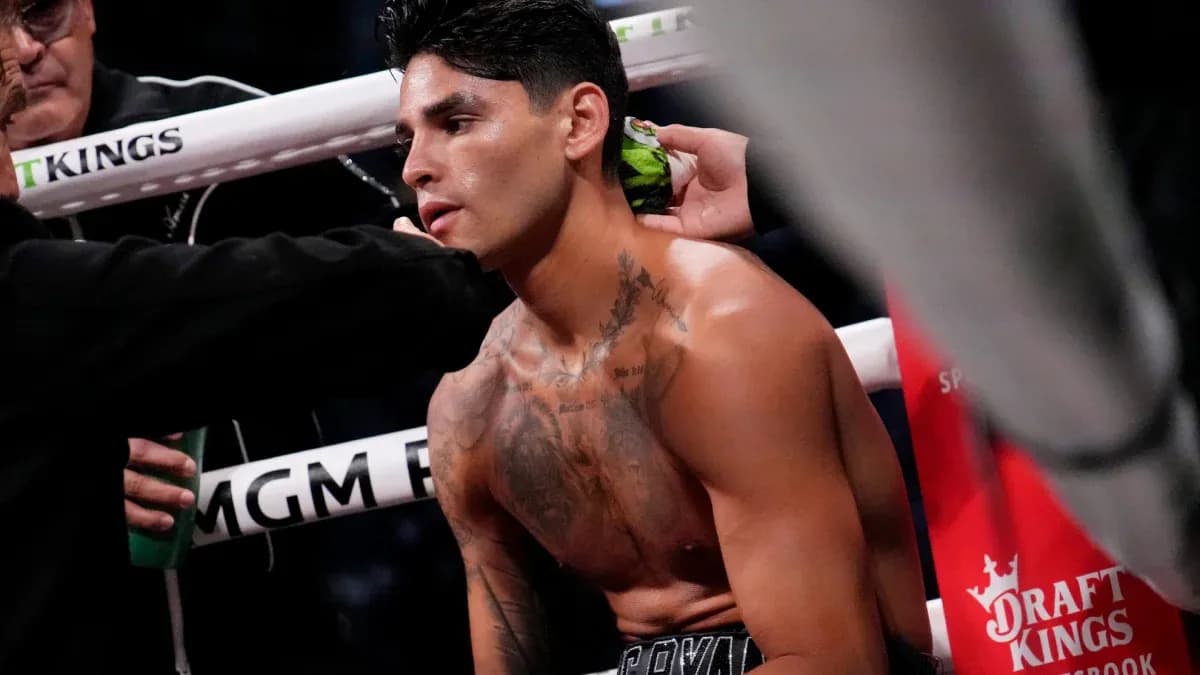
Garcia’s relationship with Oscar De La Hoya and Golden Boy has been frayed for years. The public sniping, the lawsuits, the constant sense that he’s looking over the fence at what other promoters can offer — it’s all been out in the open.
The turning point came in April 2023.
Garcia’s fight with Gervonta “Tank” Davis, a PBC promotion on Showtime, was the kind of night that changes a fighter’s expectations forever. The event did 1.2 million pay-per-view buys and a $22.8 million gate. It felt big. It felt like the center of the sport. Garcia got a taste of what a full-scale, modern promotional machine looks like when it’s built around him.
In the aftermath, he sued Golden Boy, trying to break free. He didn’t manage it then. The contract held.
Now he’s down to one fight left. The power dynamic has flipped.
Enter Zuffa.
TKO and Zuffa Boxing threw more than $30 million at Conor Benn across two fights, and it wasn’t just to bring a controversial British welterweight into the fold. That money bought them access to Garcia’s orbit. It bought them the chance to show him, again, what life could look like with a different promoter.
The Garcia-Benn event was the template.
It looked and felt like a Zuffa show. Paramount+ front and center. Dana White everywhere, playing the promoter’s role with his usual blunt force charisma. The production, the build-up, the messaging — all of it screamed TKO/Zuffa.
On paper, it was a Ring Magazine-funded event. In reality, it functioned as a long audition for Garcia.
De La Hoya was invisible. No presence in the build-up. No presence on fight night. No public role in the biggest moment of his fighter’s current run. That wasn’t an accident. It was a statement.
Garcia has now twice experienced what it’s like to be the centerpiece of a major promotion outside Golden Boy. Twice he’s walked away feeling like the superstar he believes he is. When he spoke to Uncrowned on Monday, he made it clear how happy he was with Zuffa.
The courtship is no longer subtle. It doesn’t need to be.
Conor Benn: The one that broke Eddie Hearn’s heart
If stealing Garcia’s affection is the long game, poaching Conor Benn was the message.
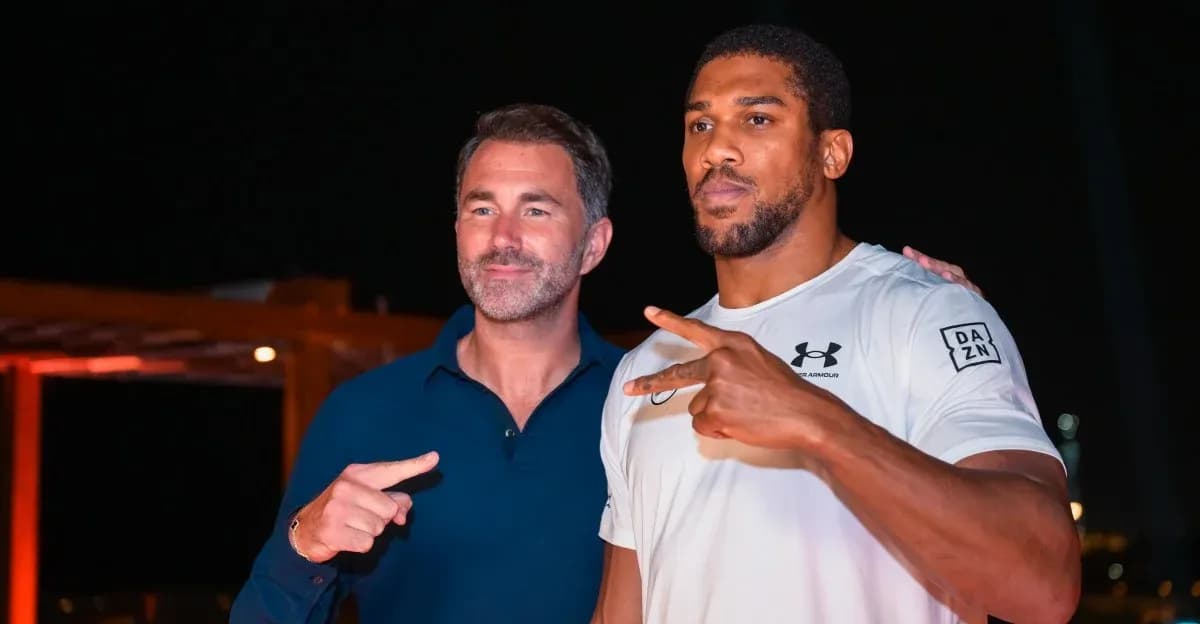
Benn wasn’t just another name on the Matchroom roster. Alongside Katie Taylor and Anthony Joshua, he was one of Eddie Hearn’s homegrown pillars — a fighter who debuted under the Matchroom banner, a fighter Hearn defended relentlessly through Benn’s multiple failed tests for clomiphene, a fighter many assumed would never leave.
He left.
And he left for Zuffa.
The damage to Matchroom was financial, but it cut deeper than that. Benn’s departure told every fighter in Hearn’s stable — and every fighter with any traditional promoter — that nobody is safe. No relationship is sacred. If the money and the platform are right, Zuffa will come knocking.
Hearn made the oldest mistake in the business: he fell in love with a fighter.
Bob Arum’s warning hangs over the whole saga: “Don’t fall in love with your fighters because they will break your heart.” Arum learned it. De La Hoya learned it. Now Hearn has, too.
Benn also gave Zuffa something else: the keys to the UK.
He’s a major star in British boxing, and his arrival helped Zuffa land a lucrative television deal with Sky Sports and establish a serious foothold in one of the sport’s most important markets. That alone would have justified the investment.
But Benn’s biggest value may still be what he represents to Garcia — a bridge, a shared stage, a proof of concept.
Jai Opetaia: The weapon aimed at the belts — and at Benavidez
If Benn was the emotional blow to Hearn, Jai Opetaia is the blunt instrument aimed at boxing’s power structure.
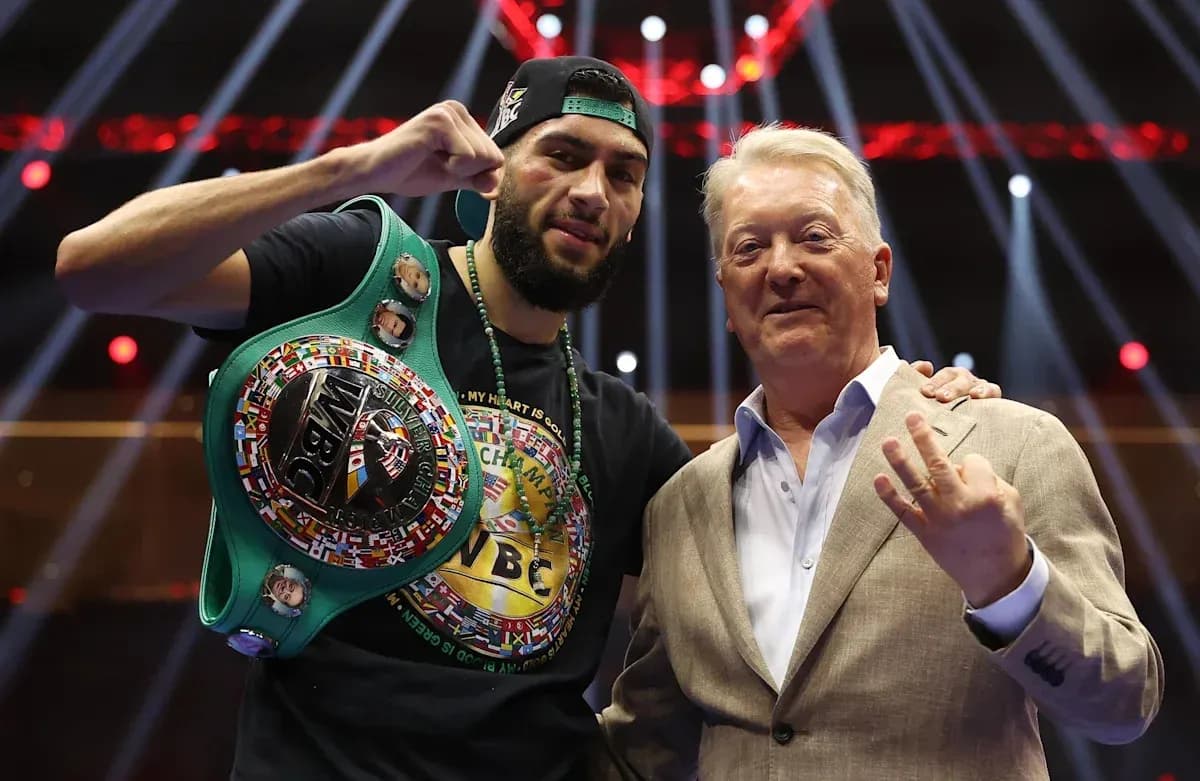
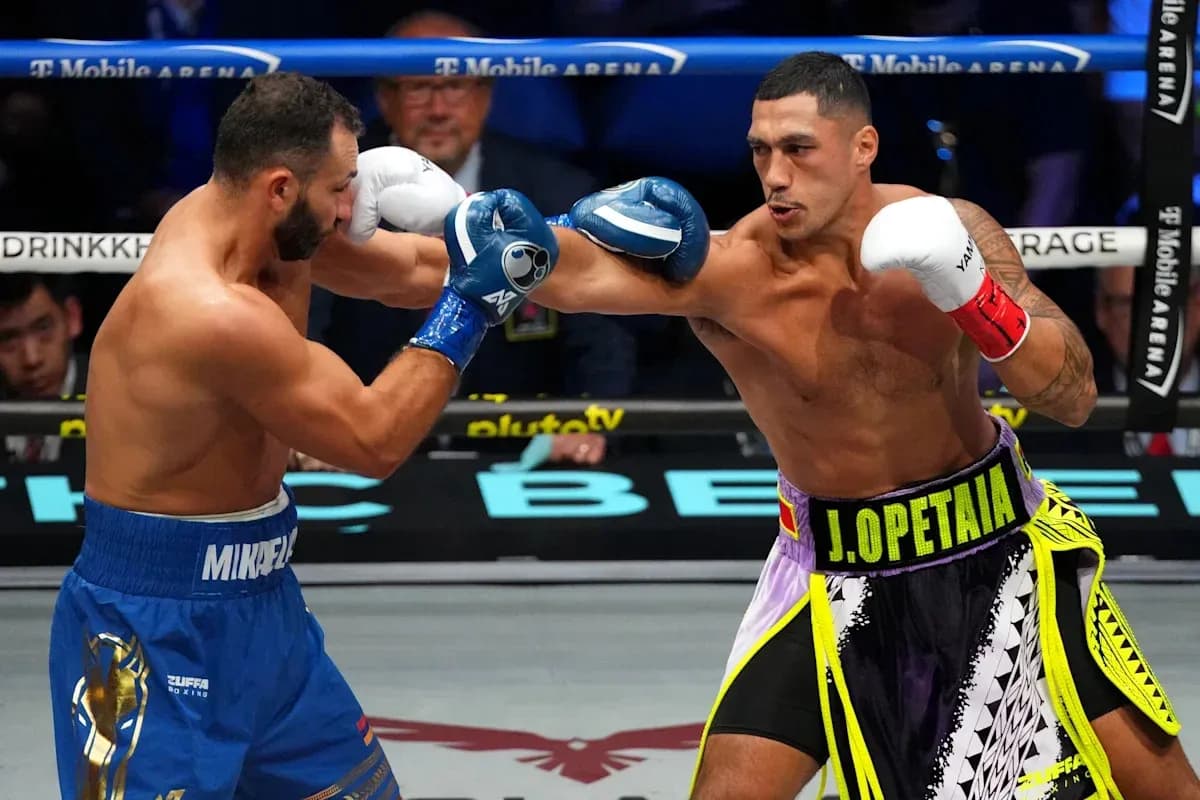
On the Garcia-Benn card, Opetaia stopped Noel Mikaelian in nine rounds, then immediately called out David Benavidez. Benavidez, sitting ringside, climbed through the ropes and squared up with him. It was no casual moment. It was a teaser.
Benavidez has one fight left with PBC and Sampson Lewkowicz. White hasn’t hidden his intentions. “The Mexican Monster” is a target.
Benavidez has spent the last few years chasing the biggest names and watching them slip away. At 168 pounds, he was the most proven contender, but never got Saul “Canelo” Alvarez. At 175, he tried to land Dmitry Bivol or Artur Beterbiev and came up empty. Now he’s at cruiserweight, finally in position to face the division’s No. 1 man.
That man is Opetaia.
Benavidez has shown over and over that he’s a legacy fighter. He doesn’t duck risk. He wants the top names, the toughest challenges, the fights people tell him he can’t win. Offer him Oleksandr Usyk at heavyweight and you get the sense he’d say yes on instinct.
With Opetaia in-house and serious money on the table, Zuffa can dangle exactly the kind of fight that speaks to Benavidez’s ambitions — a crack at the best cruiserweight in the world, on a huge stage, with a promoter that knows how to turn that kind of risk into superstardom.
Garcia and Benavidez have already talked about sharing a card next May. That’s not a coincidence. If Zuffa lands Garcia once he’s free, it becomes the natural staging ground for Benavidez, even if only for a single fight.
One night might be enough. One night to show him the scale, the reach, the money. One night to make PBC feel small by comparison.
It worked on Garcia.
Opetaia vs. the sanctioning bodies
Opetaia is more than just a lure for Benavidez. He’s also the sharp edge of Zuffa’s long-running war with boxing’s sanctioning bodies.
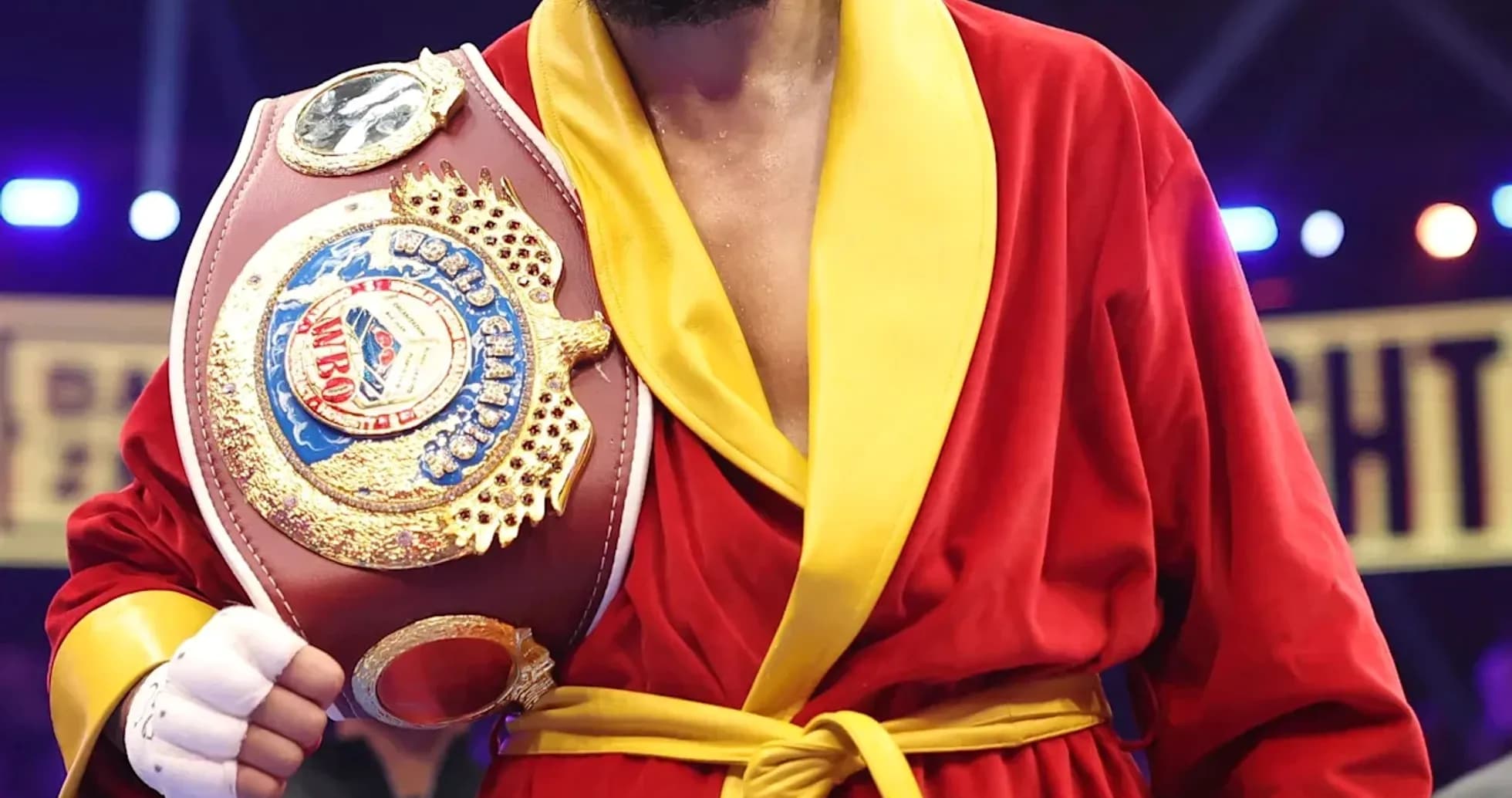
That conflict has quieted recently as Zuffa has done more business with the WBC, WBA, IBF, and WBO, but the endgame hasn’t changed. Dana White has never hidden his disdain for the alphabet soup that clutters the sport.
Opetaia’s story gives Zuffa a powerful narrative.
He was stripped of his IBF title in March. On Saturday, he beat WBC champion Noel Mikaelian, only for that belt to be declared vacant less than 48 hours later. In the eyes of most observers, Opetaia is the best cruiserweight in the world. Yet somehow, he’s left without a major sanctioning body belt to show for it.
That’s not just a bad look for the IBF and WBC. It’s an open invitation for Zuffa to paint the entire system as broken.
Opetaia hasn’t taken it lying down. After the IBF stripped him, he filed a lawsuit accusing the organization of unlawfully taking his title as retaliation for signing with Zuffa. He isn’t just evidence in Zuffa’s case against the belts; he’s the vehicle for the attack.
If Zuffa can build him as the people’s champion — the lineal No. 1, the man the belts keep abandoning — it strengthens White’s argument that fans don’t need four sanctioning bodies to tell them who the best fighter is.
The endgame: Garcia, Benavidez, and the post-Canelo era
Benn and Opetaia were big signings. They brought headlines, controversy, and leverage. But they were never the destination.
Benn gave Zuffa a direct route to Ryan Garcia and delivered a body shot to Eddie Hearn. Opetaia handed Zuffa a path to David Benavidez and a high-profile weapon in its fight with the sanctioning bodies.
Garcia and Benavidez are the real prize.
In a post-Canelo landscape, they have the talent, personality, and fan bases to become the twin faces of American boxing. They’re not under Zuffa contracts — not yet. But before either man has even reached free agency, Zuffa has positioned itself as the obvious next step.
The money is there. The platform is there. The opponents are there.
TKO’s war on boxing is still in its opening chapters. The board is set. The pawns are in place. Now the sport waits to see whether two of its most valuable generals decide to cross the lines.