.svg&w=384&q=75 "logo")
Dan Lawrence Shines as England Takes Control at Lord’s
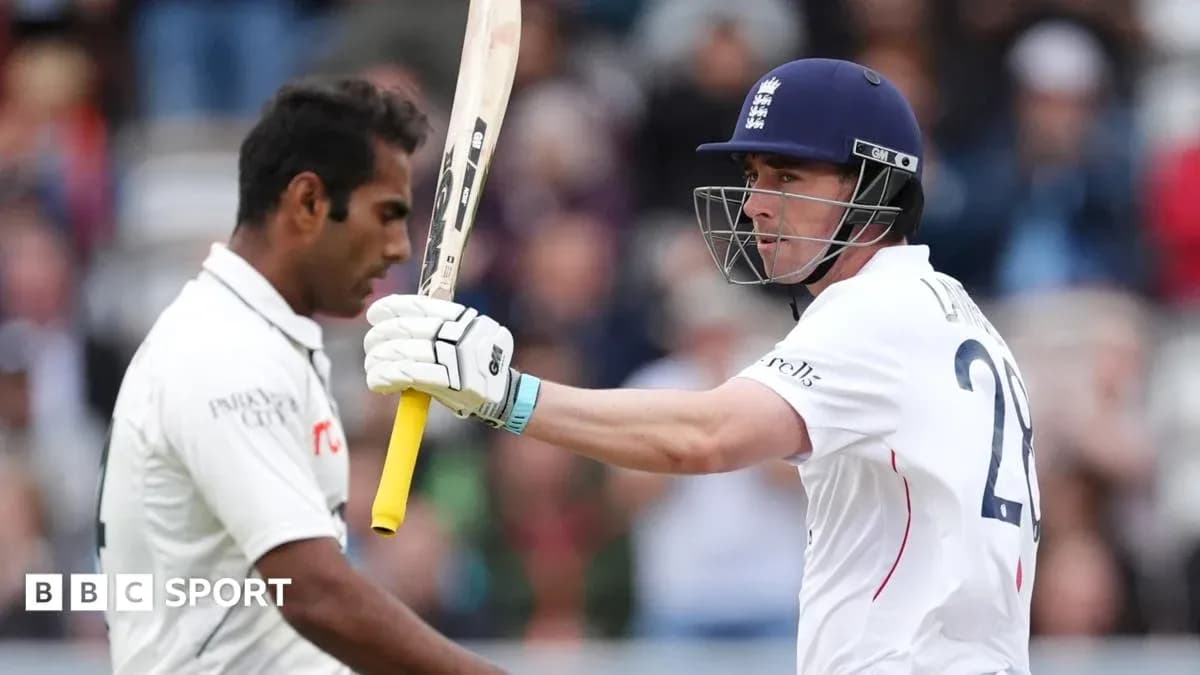
England’s new era is still taking shape, but on a dark, stop-start day at Lord’s one thing cut through the gloom with real clarity: Dan Lawrence belongs in this team.
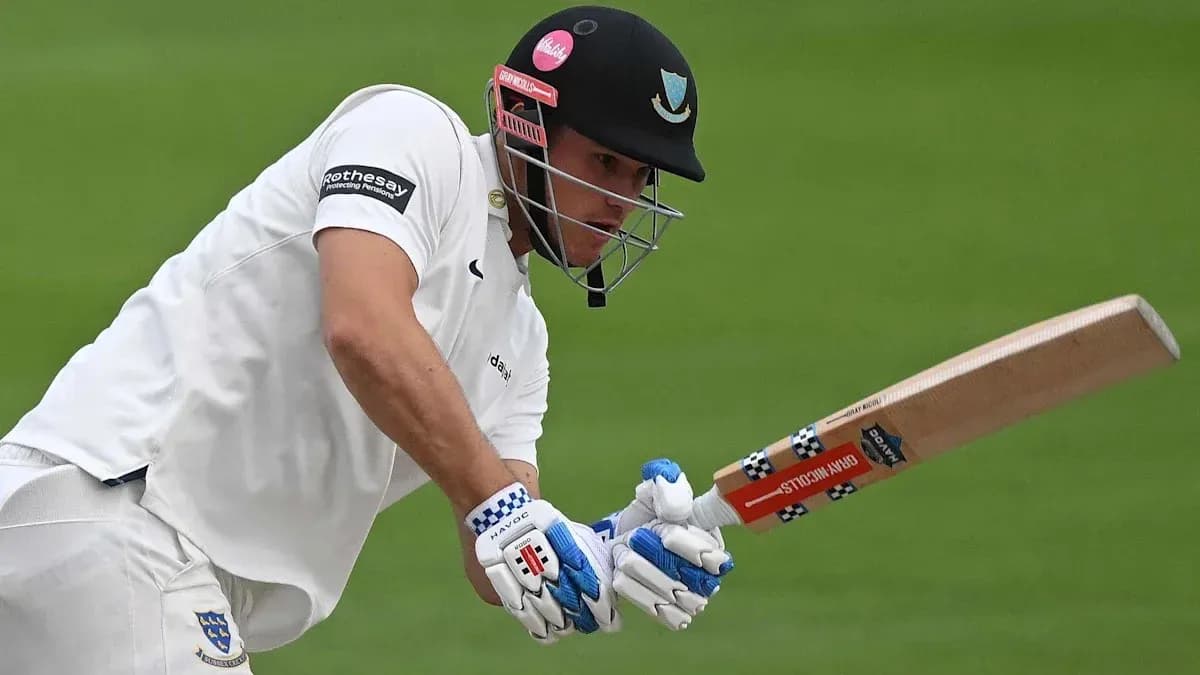
On a pitch misbehaving like a bad-tempered veteran and under skies that never stopped brooding, Lawrence carved out an unbeaten 50 that felt far heavier than the number on the scoreboard. His effort dragged England to 177-7 in their second innings and a lead of 357 – a mountain that already looks close to insurmountable for a fragile Pakistan batting line-up that has scraped together only 416 runs across three completed innings in the series.
A day that never really started
This was a Test match day in name only for long stretches. Rain loitered over Lord’s, teasing, retreating, returning. The players finally walked out at 14:40, and from then on the cricket was played in fragments: 24.5 overs in total before the umpires led the sides off for the last time at 17:08.
Then came the farce. By 18:30, with the floodlights on and the best weather of the day finally over the ground, play was abandoned to a chorus of boos from those hardy spectators who had stayed. There was time for more cricket. It never came.
In between the showers, though, the game moved. On this juicy surface, under heavy cloud and artificial light, the ball jagged both in the air and off the seam. Every delivery felt like an examination. For batters, this was survival training.
England had resumed on 81-3, already well ahead but keen to slam the door. Pakistan’s seam trio sensed opportunity. With the new ball talking and the pitch occasionally misbehaving, they made every run feel like a small act of defiance.
Abbas and the pitch that won’t stay out of the story
The first act of the day was brutal. Emilio Gay, who had battled hard for his 30 overnight, faced only five balls before his innings ended in a way that will keep the Lord’s pitch in the headlines.
Muhammad Abbas, relentless as ever, pushed one in on a good length. It didn’t rise. It skidded, shot along the ground and pinned Gay lbw for 31. No footwork, no technique could have saved him. It was the sort of dismissal that stokes arguments as quickly as it takes a wicket, and it will do nothing to quiet the debate about whether this famous surface has lost some of its old poise.
Gay trudged off crestfallen, while Joe Root shook his head on the balcony. The context makes it sting even more. This is Gay’s first summer as a Test opener, a role he’s trying to claim in conditions that have been as unforgiving as any in recent memory. An average of 23 does not scream permanence, but the manner of this exit felt cruel rather than careless.
It may yet be that Gay and Lawrence are fighting for one long-term spot once Jacob Bethell returns from his knee injury. If so, this day nudged the scales.
Brook adjusts, Rizwan pounces
Where Gay had no chance, Harry Brook and Lawrence at least had the opportunity to adapt. They did so with impressive discipline, adding 45 for the fifth wicket – a modest number on paper, a significant one given the chaos around them.
Brook, usually a free-flowing stroke-maker, reined himself in. He left well, played late and picked his moments carefully. Just as he seemed to be mastering the conditions, Pakistan struck with a piece of wicketkeeping brilliance.
On 34, Brook edged behind and Muhammad Rizwan, standing up to the stumps, snapped up a superb catch. It was the kind of dismissal that tells you everything about the pressure in the middle: bowlers on top, keepers involved, batters always one mistake from the walk back.
Abbas, who had already wrecked England’s first innings with 4-73 and now had Gay, continued to probe. By the close he had 3-48 in the second dig and match figures that underline his enduring menace when the ball does anything.
Lawrence chooses his moment
Lawrence, though, refused to be worn down. Early on he absorbed punishment, taking blows to the body as deliveries spat from the surface and reared at him. Where Gay was undone by the shooter, Lawrence survived the lifters, riding the awkward bounce and refusing to give his wicket away.
At some point, he flipped the script. Attack became his shield. Sensing that merely hanging on was a slow path to failure, he began to counter-punch, picking off anything marginally overpitched or short, forcing Pakistan’s seamers to recalibrate.
This was not a reckless charge; it was controlled defiance. Singles turned into firm drives, nudges into assertive strokes. Lawrence moved through the 40s and into his second half-century in as many Tests, his fifth in all. In a side searching for new anchors after Ben Stokes’ retirement, he is rapidly making his case.
By stumps, he was 50 not out, the one batter who had truly mastered the day. Around him, wickets had fallen, the ball had misbehaved, the weather had interfered. Lawrence simply stayed.
England’s new attack, Pakistan’s old problem
Behind the batting intrigue sits a broader shift. In this post-Stokes landscape, England’s bowling has quietly found a new shape. The four-pronged pace attack that dismantled Pakistan for 110 in the first innings – with Ollie Robinson taking 4-11 and Jofra Archer 3-26 – suddenly looks like a unit that can carry a series, not just a session.
That matters, because the surface is unlikely to ease. Even with Sunday’s forecast far brighter, batting will remain a hazardous occupation. The cracks and the moisture have already written themselves into the story of this Test, and they are not going away in a hurry.
Pakistan, potentially without injured opener Imam-ul-Haq, must find at least 358 runs to win. In these conditions, against this attack, that figure feels less like a target and more like a test of nerve and technique.
England, chasing their first series win since 2024, have done the hard work in fragments – through Robinson’s burst, Archer’s hostility, Abbas’ menace and, above all, Lawrence’s resolve.
The stage is set for a decisive fourth day. Pakistan need the innings of the series. England just need their bowlers to do what they’ve already shown they can.