.svg&w=384&q=75 "logo")
Cristiano Ronaldo: Redefining Striker Play at 42
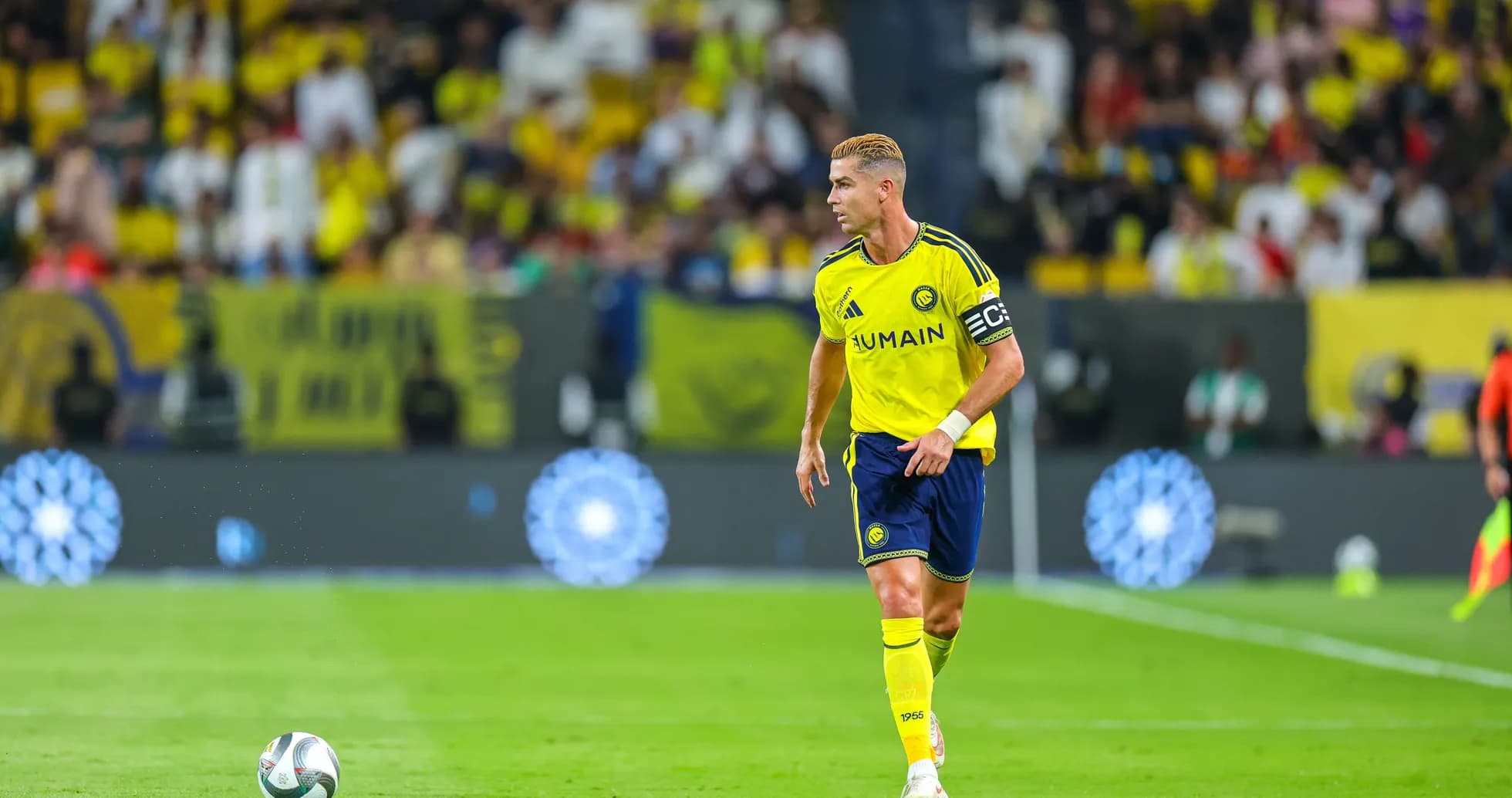
Cristiano Ronaldo has spent a career ripping up scripts. Against Abha, he tore up another one – the idea that a striker in his forties must live inside the penalty area and wait for the game to come to him.
He refused.
Instead of standing between the centre-backs like a classic No. 9, Ronaldo roamed. He drifted into midfield, even dropping deep into Al-Nassr’s own half to knit moves together, linking lines and dictating where the next attack would start. One minute he was almost alongside his holding midfielder, the next he was bursting beyond the last defender.
Abha’s back line never found a reference point. They wanted a fixed target to mark; Ronaldo gave them a moving puzzle.
He read the spaces with the cold precision of a veteran who has seen every defensive scheme there is. When he dropped off the front, there was nothing casual about it. He dragged a defender out, carved open a passing lane for a teammate, then spun and accelerated into the gap he had just created. The movement was the trap. The run in behind was the punchline.
The pressure on Abha’s shape built slowly, then relentlessly. Each time Ronaldo pulled wide or deep, someone in yellow found more room to receive the ball. Each time he reappeared closer to goal, panic followed.
And yet this was not a display built on the raw pace that once terrified Europe. At 42, he leaned on something far more durable: his brain. His performance became a study in timing, angles and anticipation. He showed how to dominate a match without needing to win every sprint or duel with brute force.
Still, he never abandoned his oldest habit.
When the chance finally came, Ronaldo was exactly where a classic striker should be. The cross arrived, and he rose, hanging in the air with that familiar suspension that has defined so many of his goals. The header was ruthless, directed home with the assurance of a man who has been punishing aerial balls for two decades.
One moment he was the extra midfielder helping to construct the move. Seconds later, he was the finisher who turned dominance into a lead. The goal did more than open the scoring for Al-Nassr; it stitched together the two versions of Ronaldo on display – the creator between the lines and the killer inside the box.
The statistics only underlined what the eye had already seen. An 8 out of 10 rating. Eight shots, four of them testing Abha’s goalkeeper. Two key passes. One completed dribble. Numbers that spoke to a player involved in every phase of the game, not just the final touch.
His movement repeatedly pulled Abha’s defenders into areas they did not want to go. His passing helped Al-Nassr progress the ball with clarity. Then, when the move reached its climax, he arrived in the space he had engineered, ready to finish. One goal was enough to make the point: his influence stretched far beyond the scoresheet.
Doubts will keep circling about how long he can sustain this level as the years stack up. Abha, though, saw a different version of the question. If this is what Ronaldo looks like with a game built on intelligence, spacing and economy of effort, how many more matches can he still bend to his will?