.svg&w=384&q=75 "logo")
City's Title Defense: Culture and Depth in the WSL
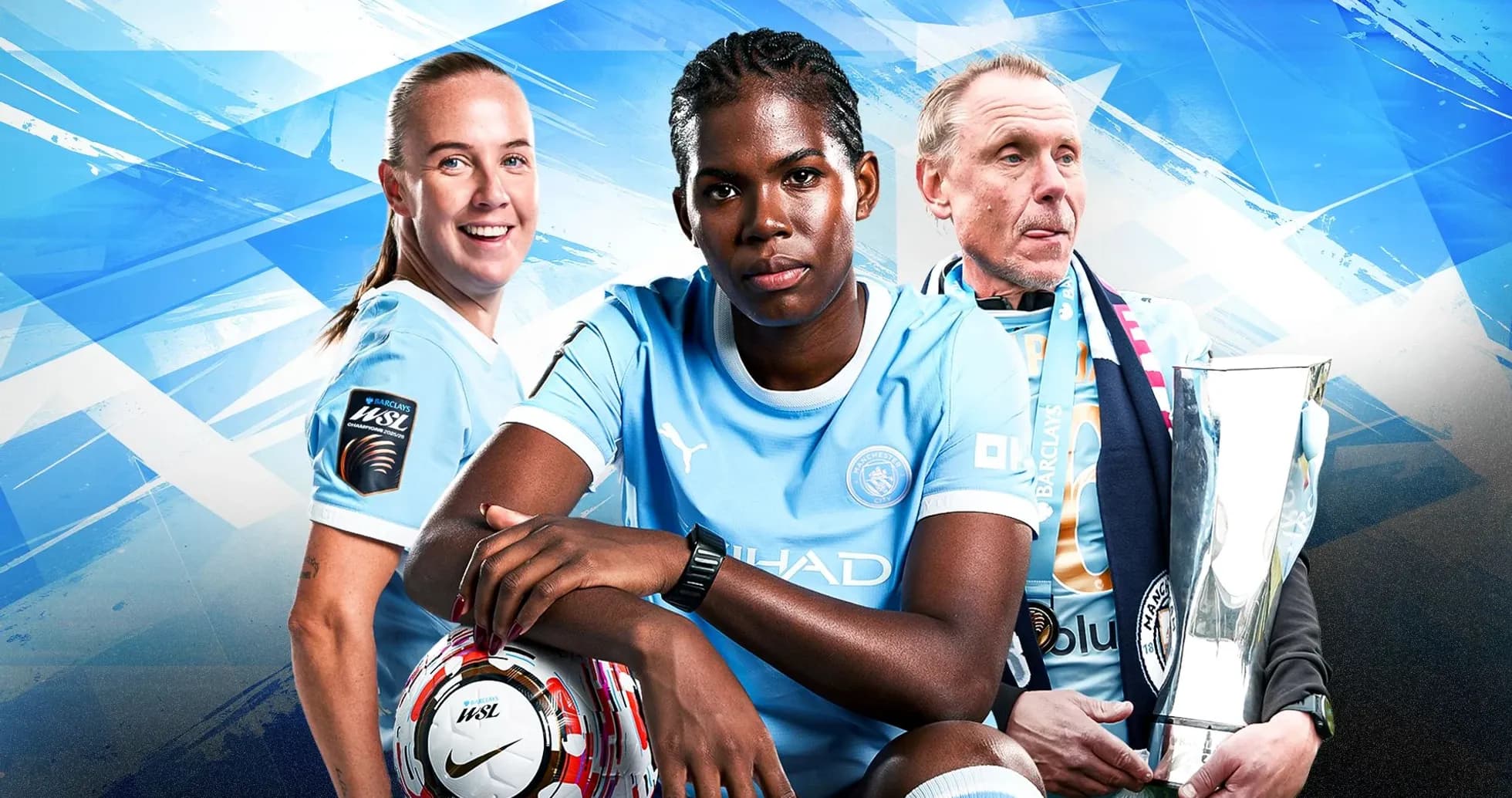
The banners and the confetti told one story in May. The real work, as ever, began the moment they were swept away.
For years, this City side carried the label of “nearly” champions. The talent was obvious, the predictions relentless. Every August, they were tipped as the team most likely to crack Chelsea’s grip on the WSL. Every spring, they found a way to fall short – late-season stumbles, chaotic collapses, a familiar sense of promise unfulfilled.
Jonas Jeglertz changed that.
A culture that finally matched the talent
What he did in his first season in charge cannot be reduced to a tactical tweak or a clever signing. Inside the building, players talk about something deeper. Alex Greenwood called it a “shift in culture” and a change in “the language used” as the squad began to talk openly, and sometimes uncomfortably, about trophies and expectation.
That discomfort mattered. It dragged the squad away from the safety of aiming high and into the sharp glare of demanding to win. Greenwood spoke of crossing a hurdle and how that process “shifted so many mindsets in this building.” The result was City’s first WSL title in four years – and the sense that this time, it is not a one-off.
Mary Fowler, one of the clearest voices in the dressing room, put her finger on what had been missing.
“In previous seasons, maybe we fell short because there was a bit of a lack in the mindset where we felt we were really capable of winning,” she told GOAL. “But I think now that we've done it, it feels like, 'You are very capable and you can do that again'.”
The difference between believing you can win and knowing you have already done it is subtle on the outside. Inside a squad, it is seismic.
Hunger, not relief
Championships can soften a group. Not this one.
Jeglertz returned from a short summer break to find not a dressing room basking in its success, but one itching to push the ceiling higher. There has been no sense that a long-awaited title eased the pressure or gave anyone permission to relax. If anything, it sharpened the edge.
“I've seen it already in the players,” he told GOAL. “They already have a confidence that is great, that is calm, but curious about how we take the next step. What do we do to become a little bit better? I already see it and that's something that we need to keep having the whole year.”
Calm. Confident. Curious. It is a potent mix for a defending champion.
Champions added to a champion’s dressing room
If City’s mentality looks robust, the recruitment has been designed to reinforce it.
Niamh Charles arrives from a Chelsea side that turned winning into a weekly habit. Five straight WSL titles. Seven domestic cups in six years. She has lived inside the sort of relentless, year-on-year standard City now want to sustain.
“That means that she has a little bit of a leader in her,” Jeglertz believes. He sees value not just in what she does on matchdays, but in how she trains, how she responds to pressure, how she treats the grind of going again after success. “That is something that we are going to be able to use also in sessions and in how you win from one year to the next year.”
Beth Mead brings a different kind of pedigree. Back-to-back European Championship titles with England. A starring role in Arsenal’s 2025 Champions League triumph over Barcelona. She knows what it is to stand at the summit of the European game, and still, Jeglertz notes, “you can see in her eyes, she's still very eager to be part of this and to learn more.”
Two serial winners walking into a dressing room that has just discovered its own taste for silverware. The environment almost builds itself.
The big new variable: Europe
Culturally, City look ready to defend their crown. The squad picture is more complicated.
Last season, one key fact hovered over their title charge: no Champions League football. While Chelsea, Arsenal and Manchester United juggled midweek trips and high-stakes knockout ties, City had clear weeks and cleaner legs. This time, Europe is back on the calendar. The load rises. So does the risk.
That matters because, beyond Mead and Charles, only one more senior addition has arrived: Carlotta Wamser, a versatile full-back who can operate on either flank. She will be important, but she is one player. Nine first-team departures have gone the other way. This was never going to be a summer of sweeping overhaul, yet the net effect is a leaner group than many expected.
“The depth is there,” sporting director Nils O’Neill said at the end of last season. “It’s not about a squad transformation. It’s about adding in the key positions we need.” The logic is clear. The reality is about to be tested.
Early injuries, especially the blow to Vivianne Miedema, will stretch that depth immediately. The Guardian understands she may not return until 2027. That City tried to strengthen again on deadline day but failed to push any deal over the line underlines the concern inside the club.
Banking on internal growth
Where they have added, City have been targeted. Left-back has been refreshed with Charles and Wamser after Leila Ouahabi’s departure. Mead steps into the attacking unit following Kerolin’s move to Barcelona. The rest of the plan leans heavily on players already in the building taking a leap.
Risa Shimizu, back from a loan at Liverpool, will be asked to bolster the full-back rotation. Bigger, more decisive seasons are expected from Sydney Lohmann and Grace Clinton. Both arrived last summer with high expectations, both endured niggling injuries and never quite seized their chances. Now, with the schedule expanding, there is less room for half-steps.
Fowler is another central figure in this internal evolution. This will be her first full season back after an ACL injury. She showed flashes of her talent after returning in February. If those glimpses become week-to-week influence, City’s attacking options will look far more formidable.
The forward line carries flexibility as a built-in safety net. Mead, Fowler, Lauren Hemp, Aoba Fujino and Iman Beney can all shift roles, several of them comfortable at centre-forward. That versatility is one reason City did not feel compelled to sign a pure back-up to Khadija Shaw just to leave her understudy idle for months.
Beneath them, the academy conveyor belt is starting to feed the senior set-up. Sacha Lewis, Amelia Oldroyd and Aoibhe Brennan have all signed their first professional deals this summer. Mayzee Davies, already a senior Wales international and tied down last year, could emerge as another depth option as the campaign wears on.
A starting XI to fear – if it stays fit
At the sharp end of the squad, little has changed. Shaw, Greenwood, Hemp, Kerstin Casparij, Jade Rose and Yui Hasegawa still anchor one of the most formidable starting line-ups in the WSL. Add Mead and, in time, Miedema, and the first-choice XI has the quality to compete with anyone, domestically or in Europe.
The question is not about the top of the squad. It is about what happens when the inevitable injuries hit.
Last season, City’s fitness record was almost spotless, a stark contrast to previous years. That kind of fortune rarely repeats itself, particularly with Champions League travel and intensity now back in the mix. O’Neill insists they have learned from the past and will be “absolutely ready next season.” Jeglertz, for his part, argued back in May that the squad was too big for the number of games they played, and he welcomes the expanded schedule.
“We have too many good players to play these few games we are playing,” he said then. “Next year will be different because it's more games. The squad is built for that.”
Even so, there are pressure points. Certain positions look one injury away from a problem. The risk grows if those earmarked for breakout seasons – Lohmann, recovering from hip surgery, or Clinton – do not hit the level expected. The fact City open the campaign with several players already nursing issues, and with Miedema guaranteed to start it on the sidelines, is not ideal.
Culture vs depth in a new WSL era
Elsewhere in the league, rivals may boast deeper benches. They also carry more question marks around chemistry and clarity of identity. City, by contrast, enter the season with a clear playing model, a hardened mentality and a dressing room that, by all accounts, is aligned.
A Chelsea-style dynasty, in this new, more competitive era of the WSL, feels a stretch for any club. The landscape has changed. The pack is stronger. Margins are thinner.
But City have already answered one question: can this group finally turn potential into trophies? The next one is sharper. With a leaner squad, a heavier schedule and the target now fixed on their backs, can they turn one title into a habit rather than a high point?
Last year, they were the best team in England by a distance. The confidence and belief that came with ending a four-year trophy drought, combined with the arrival of proven winners and the hunger of emerging talent, suggest those long waits for another WSL crown should be consigned to the past.
Now we find out if this was the start of an era, or just the end of one.