.svg&w=384&q=75 "logo")
Celtic's Struggles: A Season on the Brink

The unease around Celtic is no longer a murmur. It’s a knot in the stomach.
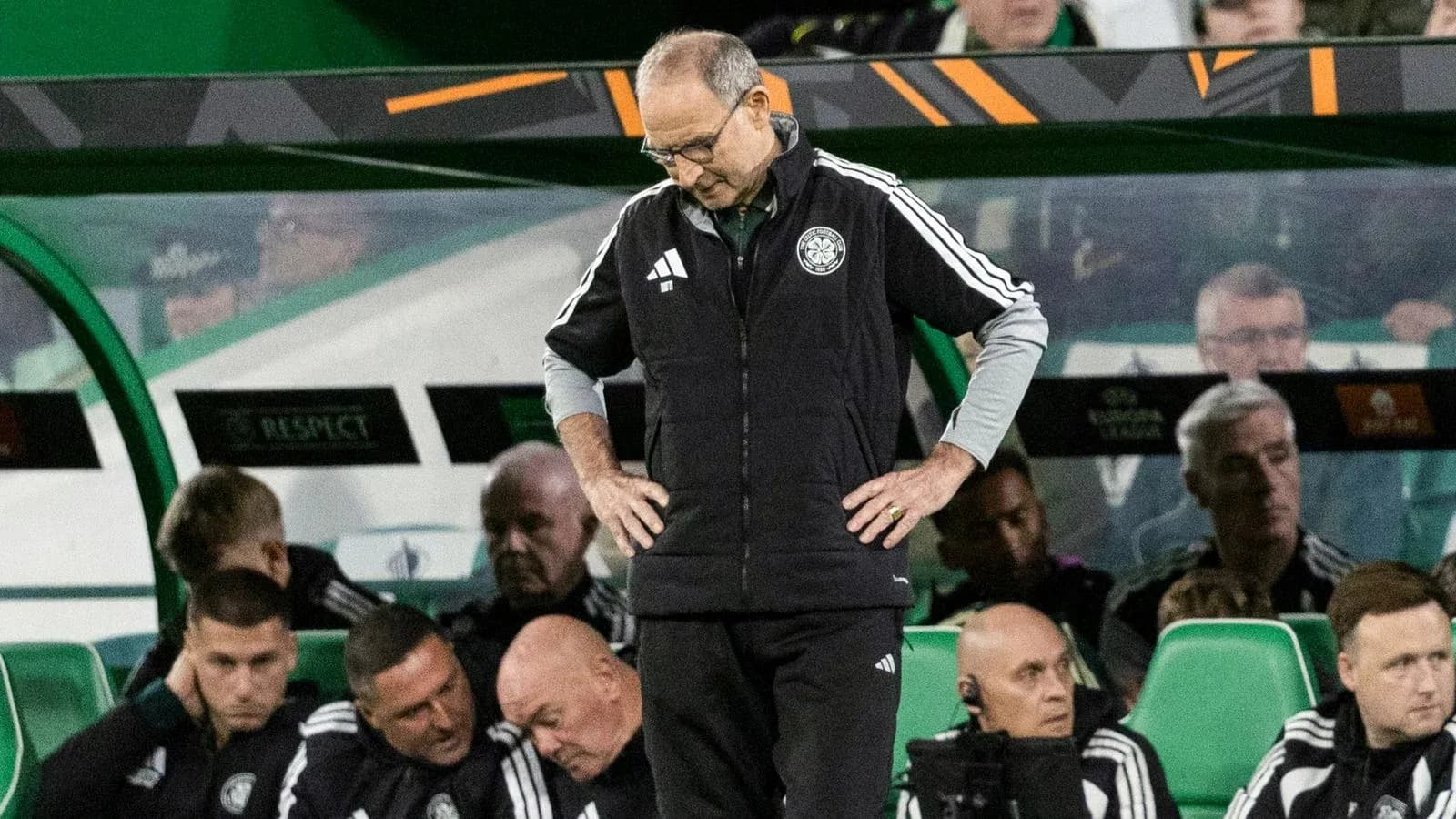
To many of their supporters, questioning Martin O'Neill still feels close to heresy. This is the manager who steadied a listing ship last season, who dragged a fractured club back towards something resembling itself. But faith gets tested when the evidence keeps piling up in the other direction.
A hammering at Ibrox. Another heavy loss to Ferencvaros. Three more goals shipped. The pattern is starting to look less like a blip and more like a theme.
A pale imitation of their former selves
The latest defeat was a grim echo of Sunday’s capitulation. Celtic’s midfield drifted through the night, absent-minded and slack. The back line wobbled and then crumbled. On the ball, they were tentative, negative, imprecise. The basics – pass, move, offer, press – seemed beyond them for long stretches.
At 3-1 down to Ferencvaros, there were brief surges, hopeful long-range efforts that suggested a desire to respond but not a plan to do it. No coordinated press. No real tempo. No sense that they could turn pressure into panic in the Hungarian defence.
It all felt a world away from the Ange Postecoglou era, when Celtic played like a storm front: aggressive, inventive, relentless. Back then, they dragged defenders into places they hated, took risks, played on the edge and thrived on it.
This is the tribute act. And not a convincing one.
Scottish football can flip in an instant, of course. One performance, one Old Firm result, can change the mood music overnight. That’s the hope Celtic cling to ahead of Sunday’s return meeting with Rangers at Celtic Park. Home advantage, wounded pride, the old notion of a backlash.
But their fans have seen too much this season to be reassured by clichés. Five goals conceded against LASK. A chastening afternoon at Ibrox. Now this.
Old scars reopened
There were moments on Thursday that dragged Celtic supporters back to some of the club’s bleakest European nights of recent years. Cluj and Copenhagen in 2019 and 2020. Sparta Prague in 2020. The years when Bayo and Bolingoli, Klimala and Ajeti, Duffy and Laxalt came to symbolise drift and decline.
Ferencvaros had that same grim familiarity. The energy was flat, the atmosphere turned sour, the booing loud and sustained. On the pitch, Celtic looked like a team with no answers and, worse, no conviction that answers even existed.
O’Neill emerged afterwards and spoke about frustration, failure, psychological damage. He talked about how nights like this can hit a group, how they test resolve. He promised Celtic would “get ourselves together” for Rangers, but the words lacked bite. His tone was subdued, bordering on weary.
He listed the problems: the softness, the sloppiness, the lack of edge. But he didn’t sound like a man brimming with solutions. In truth, his interview felt like an extension of what had just played out on the pitch – heavy, flat, dispiriting.
This is the same manager whose personality once injected defiance into a fragile dressing room. Last season, he restored order and belief. Celtic became awkward, obstinate, a team that refused to lose when it mattered most. They were not always pretty, but they were hard as nails down the title run-in.
That resilience feels distant now.
Soft goals, softer underbelly
Celtic actually started reasonably against Ferencvaros. Then they conceded a soft goal. They responded with a flash of quality to level, only to slide straight back into their bad habits: safe passes, timid choices, little drive, only the faintest trace of fire.
The second goal, just before half-time, was the sort that poor teams concede. Hesitation over a loose ball. Weakness in the duel to stop the cross. Confusion and disarray in the box when it mattered most.
The numbers made it worse. Celtic had 62.5% possession in the first half yet trailed 2-1. They moved the ball, but without menace. Camilo Duran, starting through the middle ahead of Kasper Hogh, managed just eight touches in that opening period.
Duran, who arrived in Glasgow full of enthusiasm and spark only weeks ago, now looks drained of both. The same goes for Hogh. The striker who scored freely for Bodo Glimt against the likes of Man City, Atletico Madrid, Inter Milan, Sporting, Porto, Jagiellonia and Olympiacos has turned into an awkward, isolated figure in green and white.
His first touch has deserted him. His service is non-existent. He has found the net in only one of his eight Celtic appearances so far, a meagre return for an £11m signing. O’Neill has not yet found a way to unlock the forward he was bought to be.
Even Callum McGregor, the on-field compass and emotional anchor, looks adrift. When McGregor starts to wander, Celtic usually follow.
O’Neill has the experience and tactical intelligence to fix this. His career says he does. But he needs to show it now. And right now, he doesn’t look or sound particularly convincing.
Arzani’s strike, Celtic’s embarrassment
The script almost wrote itself. Daniel Arzani, the former Celtic player whose time at the club passed in a blur of frustration and anonymity, stepping up to score.
Of course he did.
The goal that twisted the knife was a devastating counter-attack, a move that exposed Celtic’s shape in the most humiliating fashion. There was more structure in a slapstick chase scene than in their defensive transition.
Arzani found himself in acres of space on the left, with Colby Donovan desperately trying to recover after over-committing in attack. The Ferencvaros winger took his time, picked his spot, and whipped a superb finish into the top corner.
Easy. Too easy.
The bigger picture is brutal. Celtic look short of ideas, conviction, composure, physical strength, mental toughness, creativity, ruthlessness and sheer appetite for the fight. The checklist of what’s missing is long. The list of positives is short.
And the manager, the man they usually turn to in these moments, looks like he’s searching too.
A season’s fault line
O’Neill has bounced back from trouble before. His career is built on it. You almost grow accustomed to the notion that he’ll find a way again, that this is just another storm he’ll ride out.
But this feels more complex than a tactical tweak or a change of personnel. McGregor has already admitted the team is “a little bit broken”. That’s not a phrase you throw around lightly.
Across the city, Rangers will be licking their lips at the thought of facing this version of Celtic. A wounded rival, a fragile defence, a support on edge. It looks like an opportunity to land another heavy blow.
Then again, Old Firm games don’t always follow logic. Beware the backlash, the old saying goes. Celtic owe their supporters a response. They owe themselves one.
Sunday at Celtic Park will not decide the season. But it will tell us a lot about where the power really lies in Glasgow – and whether Martin O’Neill still has the force to drag this Celtic side back from the brink.