.svg&w=384&q=75 "logo")
British Tennis Faces Questions After US Open Exit
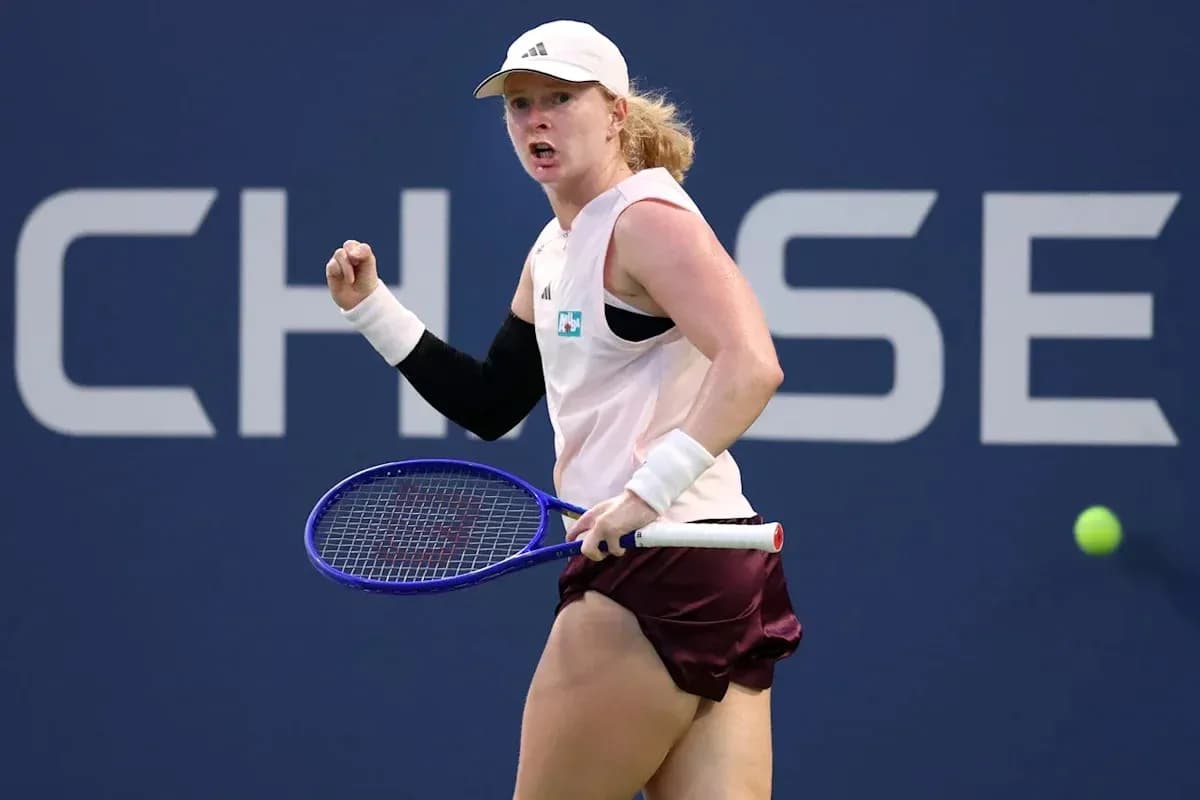
British tennis will have to watch the business end of the US Open from the outside again. Fran Jones thinks that should not pass without serious questions.
Jones, the last British player standing in New York, went out to 14th seed Iva Jovic on Thursday night, closing the door on a campaign in which none of the nine British players who reached the main draw made it beyond the second round. For a nation that still trades heavily on its Wimbledon heritage, it was a stark return.
This was supposed to be different. Arthur Fery, fresh from his Wimbledon semi-final run and billed as Britain’s best hope, ran straight into a wall in the first round in the shape of 13th seed Lorenzo Musetti. Cameron Norrie, Jan Choinski and Henry Wendelken also departed at the first hurdle, leaving the British challenge looking flimsy before the tournament had even settled into its rhythm.
There were small sparks. Jacob Fearnley and Toby Samuel battled through qualifying, with Samuel backing that up by winning his first main-draw match at a slam. Katie Boulter, Harriet Dart and Jones all reached the second round. On paper, most of them did what the rankings said they should do.
That, Jones argued, is exactly the problem.
“You want to see people get to the back end of tournaments,” she said. “It was good to see everyone win the matches they probably should be winning, but you've got to be able to beat the seeds.”
The brutal truth of grand slam tennis is that the draw offers no hiding place. Tough luck can explain only so much.
“A couple of tough draws, I'd say,” Jones admitted. “But you'd have to play a seed in the second round. You have to beat the best to be the best.”
Jones did not shy away from the wider issue. With Britain’s two standard-bearers, Jack Draper and Emma Raducanu, both absent through injury, the frailty of the supporting cast was laid bare.
“Do I think there could be an inquest? I always think there's things that British tennis could do better. So yes, definitely,” she said. “Do I think it's something that's concerning? No, not at all. Things happen. The level is getting better and everyone is dangerous on their day. People might lose in the second round but you might see someone reach semis, like Arthur.”
Draper’s story has become a cautionary tale. Once projected as a future top-10 player and already a former world No 4, he has spent much of the last 18 months on the treatment table. A recurring bone bruising problem has wrecked multiple comeback attempts and dragged his ranking down, leaving British tennis without its most reliable male force at the majors.
Raducanu’s journey since her astonishing 2021 US Open triumph has been no smoother. The teenager who lit up New York as a qualifier has been repeatedly derailed by physical issues. This time, a stress fracture in her leg kept her out of both Wimbledon and the US Open, stripping the tournament of one of its most compelling storylines and depriving Britain of its most explosive talent.
Across the net from her in that 2021 final was Leylah Fernandez, now seeded 31st. The Canadian knows the pull of the big stage and the impatience that comes with enforced absences. Her message to Raducanu was clear: do not rush.
“It's hard. You are sidelined and there is always that internal battle of ‘ah, let me get back earlier than expected’,” Fernandez said. “But that doesn't help in the long run. You always have to see the short-term gains and long-term gains. It's that continuous battle.”
While Fernandez fights her own way through this year’s draw, British tennis is left to reflect. The injuries to Draper and Raducanu offer mitigation, but they also expose a deeper reliance on too few players to carry too much weight.
Jones has called for an inquest. The question now is whether British tennis is prepared to stomach what the answers might reveal.