.svg&w=384&q=75 "logo")
British Basketball's Competitive Surge Ahead of New Season
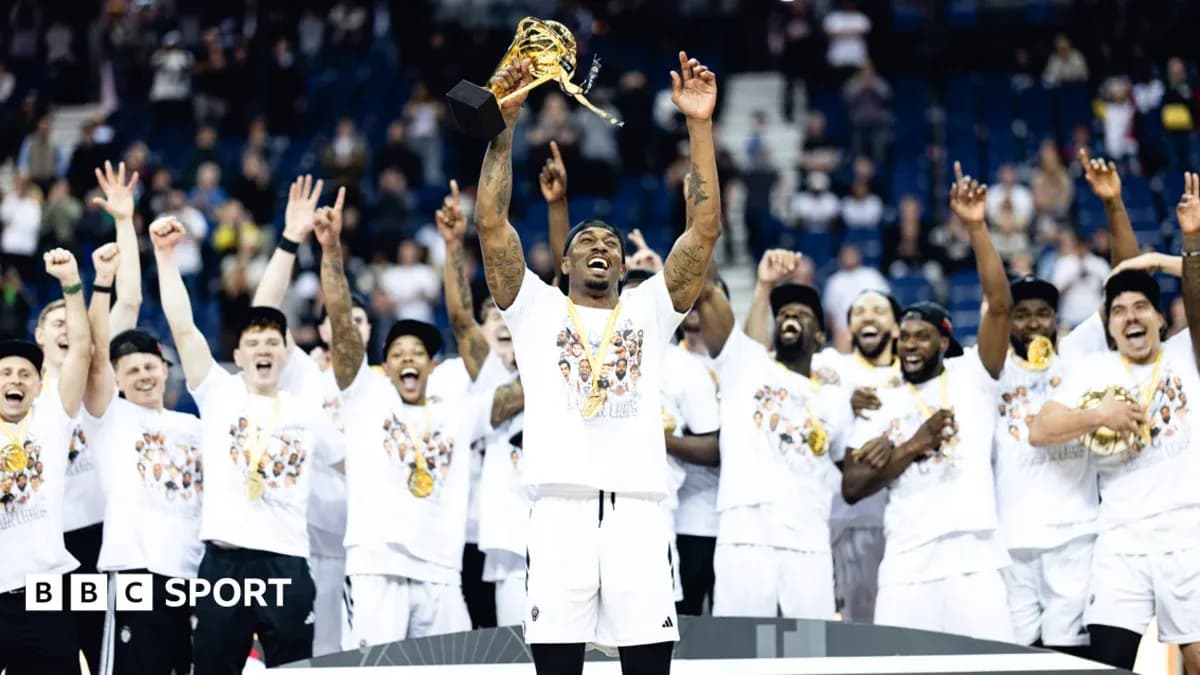
Paul Blake has seen British basketball in just about every guise over the past three decades. Boom, bust, reinvention. Yet as the new season looms, the Newcastle Eagles owner is adamant: this is as fierce as it has ever been.
"I've been involved for 30 years now and it's definitely the most competitive it's been," he says. You can hear the relish in that word. Competitive.
Because this time, British basketball is not just talking about growth. It’s living it.
Lions chasing history at home and abroad
The men’s Super League Basketball season – the third since the BBL’s collapse and the birth of the SLB in 2024 – tips off on Friday, and it starts with a statement fixture. Champions London Lions, the league’s new superpower, travel to Bristol Flyers as they begin the defence of a domestic clean sweep.
Last year, the Lions didn’t just win. They hoarded silverware. SLB Championship, SLB Playoffs, SLB Cup, SLB Trophy – all parked in the same trophy cabinet. A quadruple that underlined their financial muscle and ambition, and painted a target on their backs.
They want all of it again. And more.
Because this season isn’t just about another run through the domestic calendar that ends in May. London are stretching their reach well beyond British borders. They’re back in the EuroCup, EuroLeague’s second-tier competition, for a second straight season, still smarting from an underwhelming finish last time out when they ended eighth in a 10-team group despite beating eventual runners-up Besiktas Gain.
They’ve responded the way ambitious clubs do: by upgrading. Lions CEO Lenz Balan points to summer signings such as the loan arrival of 2025-26 EuroLeague winner Keenan Evans as proof that London intend to belong on the European stage, not just visit it.
"We have ambitions to definitely outperform last year," Balan says. It’s not a throwaway line. The Lions have already sent a message, beating EuroLeague side Paris Basketball in pre-season earlier this month.
The scale of their ambition becomes crystal clear on 12 October. In Portland, Oregon, the Lions will walk into an NBA arena and face the Trail Blazers in a historic friendly – the first time a British club has ever played an NBA team.
"I've wanted to be in the NBA since I was six years old. This is the closest I've ever been," Balan admits. For him, and for the club, it is more than a glamour date. "It's a really important signal in the basketball world, in the sporting world. This is the ambition. We are absolutely trying to be one of the best clubs in the world."
The rhetoric is bold, but the context is changing around them too. British clubs are finally starting to make noise on the continent.
A league that no longer looks inward
The SLB launches this season with 10 teams, up from nine, thanks to the arrival of Liverpool Basketball. Expansion used to feel like a fantasy in this sport; now it’s a line on the fixture list.
Results are catching up with the optimism.
Manchester Basketball broke new ground this week, becoming the first British side to win a qualifying round game in Fiba's Basketball Champions League, knocking out German outfit Wurzburg Baskets. That kind of win matters. It changes how British clubs see themselves – and how others see them.
Bristol Flyers are back in the European North Basketball League, a competition where Manchester reached the final last season. British teams are no longer just filling slots; they are contending.
For Blake, who now also sits on the SLB board, the shift is clear.
"The league is just getting more and more competitive all the time, so we know we'll be in for a fight again this season," he says. "The quality of players that are now in the league across the teams top to bottom is, for me, pretty much the highest level it's been. It's extremely competitive."
The Lions might be the headline act, chasing a domestic repeat and a deeper EuroCup run, but they’re no longer operating in a vacuum. Clubs around them are better resourced, better coached, and more ambitious than at any point in those 30 years Blake talks about.
Balan knows it. "We're just really focused on executing that vision, getting better and if we keep doing that, I think we're going to get some good results." The message is clear: London want to drag the rest of British basketball with them, even as they try to sprint ahead.
Women’s game steps into the spotlight
Fifteen days after the men’s league tips off, the women take the floor.
SLBW, the women’s Super League, starts on Saturday, 3 October, with Cardiff Met Archers hosting B Braun Sheffield Hatters, the defending champions and play-off winners. It’s a fixture that captures the breadth of the women’s game in Britain: a powerhouse club visiting a programme built inside a university.
At Cardiff, four players are salaried while studying for masters degrees. Around them, the roster is stitched together from scholarship athletes, postgraduate and undergraduate students, and others juggling full-time jobs with elite basketball. It’s a model that looks fragile on paper, but it’s also rich with storylines.
Archers head coach Stef Collins, a Great Britain Olympian from London 2012, sees the opportunity.
"I think there's an opportunity to build something that people genuinely want to watch and follow," she says. She points to the growth of the WNBA and NCAA women’s basketball as proof that, when given a platform, the women’s game can explode.
The recent Women’s World Cup in Berlin underlined that potential. The United States lifted a fifth straight title after beating France in the final, but the real headline came in the stands: more than 230,000 fans through the doors, the most-attended World Cup in the modern era.
For Collins, that tournament offers a blueprint. "For me, it's also about telling the stories of the players. They're not just basketball players - they're students, they're professionals, they're international athletes, they're role models. If we can showcase that properly, I think there's an exciting future for the Super league."
The WNBA has already shown what happens when those stories are pushed into the mainstream. In 2025, WNBA clips racked up more than one billion views on Instagram, making it the most-followed women’s sports league on the platform. Collins believes SLBW can ride that wave if it dares to be bold.
"The WNBA is a really good example of what happens when you give women's basketball a platform and make the players and their stories visible," she says. "But I think there's also a lesson beyond the basketball itself. Women's sport has shown that fans want to connect with the athletes, their personalities and their stories.
"We shouldn't be afraid to market women's basketball differently and allow our players to be themselves."
From London’s audacious tilt at global relevance to Manchester’s European breakthrough, from a new club in Liverpool to a women’s league leaning into personality and narrative, British basketball enters this season with something it has often lacked: momentum.
Now comes the real test. Can a sport that has flirted with potential for decades finally turn this surge of ambition into a permanent shift in its place on the British sporting map?