.svg&w=384&q=75 "logo")
Brad Friedel Supports American Bid to Transform Shrewsbury Town
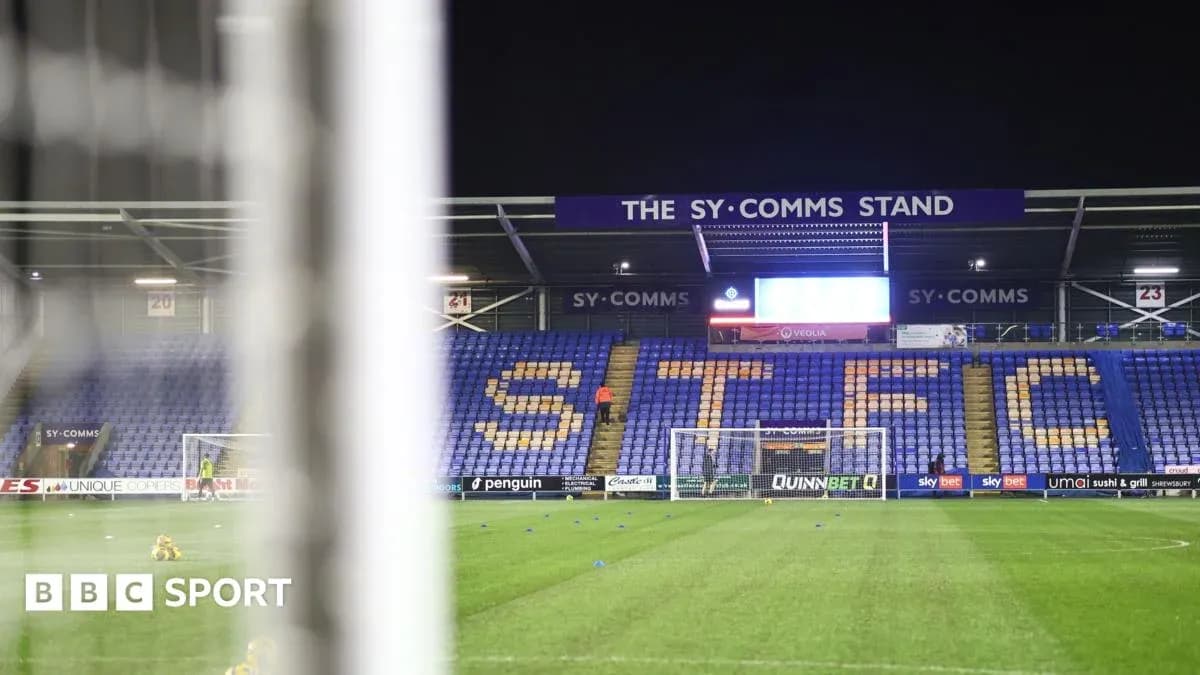
Shrewsbury Town, marooned in the lower reaches of the English pyramid and bracing for life in League Two, are on the verge of a seismic change in the boardroom – and a very familiar face is helping drive it.
Brad Friedel, the former USA international and long-time Premier League goalkeeper, has emerged as a key figure in an American consortium led by Miami-based businessman Scott Davidson, which is lining up to take control of the club.
A new era after three decades
On Monday, Davidson cleared the most important hurdle. The English Football League and the Independent Football Regulator signed off his suitability, with the 58-year-old passing the owners’ and directors’ test and receiving the green light to proceed.
Talks between Davidson’s group and the current regime are ongoing, but the expectation is clear: the deal, which would see both Davidson and Friedel join the Shrewsbury board, is anticipated to be completed within weeks.
When it lands, it will close an extraordinary chapter. Chairman Roland Wycherley, now 85, has been at the helm for around 30 years. His tenure has spanned promotions, relegations, stadium moves and constant financial firefighting. The next set of decisions about Shrewsbury’s direction will belong to a very different profile of owner.
The businessman behind the bid
Supporters have already begun the inevitable search: who exactly is Scott Davidson?
He does not carry Friedel’s name recognition on these shores, but his CV is not short of heavyweight credentials. A self-made multi-millionaire, Davidson built his fortune in commercial real estate after studying at the Yale School of Management. He then spent 12 years as a managing director at New York banking giant JPMorganChase, operating at the sharp end of global finance.
Once that phase of his career was secured, his focus drifted steadily towards football. Not as a hobbyist, but as an operator.
Since July 2021, Davidson has been a director at The Spartans, the ambitious Edinburgh club climbing through the Scottish system. He is now the majority shareholder, and the impact of his arrival has been stark. Spartans have surged from the Lowland League into the SPFL structure and are now brushing up against League One, a rapid ascent that has been hailed as one of Scottish football’s standout success stories in recent seasons.
His influence has not been confined to the first team. Davidson has also been involved in developing Spartans’ football foundation, now regarded as one of the largest and most active community operations of its kind in the UK. It is the sort of footprint that gets noticed in boardrooms and dressing rooms alike.
A hands-on owner with a coach’s eye
Davidson is not content to operate only from the directors’ box. He holds a UEFA A licence – a rare qualification for a prospective owner and a deliberate choice on his part.
The reasoning is straightforward: he wants to understand, in detail, what a manager and coaching staff require to build a functioning, competitive side. Training demands, tactical preparation, player development, the rhythm of a season – he has chosen to study it rather than guess at it.
That level of preparation marks him out in a landscape where many owners arrive with money but little feel for the sport’s inner workings. At Shrewsbury, a club that has had to live within its means and punch above its weight, that nuance could matter.
Friedel’s role and Shrewsbury’s opportunity
If Davidson is the architect of the bid, Friedel is the most recognisable standard-bearer. The former Liverpool, Blackburn, Aston Villa and Tottenham goalkeeper has played a key supportive role throughout the takeover process, lending his experience and profile to a project that aims to stabilise and then elevate a club in danger of drifting.
Friedel has spoken of Davidson in glowing terms, describing him as one of the most talented and humble people he has met in the game. For Shrewsbury fans wary of outside ownership, that endorsement from a figure steeped in British football culture carries weight.
The potential prize is clear. Shrewsbury, long accustomed to making do, could soon be backed by a majority shareholder with a proven track record of rapid, structured progress at Spartans, a serious business background, and a willingness to immerse himself in the technical side of the sport. Alongside him, a former top-level goalkeeper who knows exactly what a well-run club looks like.
The final paperwork is not yet signed. But if the deal lands as expected, the next chapter at Shrewsbury Town will be written by an American partnership determined to show that their success in Edinburgh can be replicated – and perhaps surpassed – in Shropshire.