.svg&w=384&q=75 "logo")
Borussia Mönchengladbach's Urgent Search for a New Head Coach
Borussia Mönchengladbach are staring at the table from the wrong end, and the clock is already ticking on their hunt for a new head coach.
Sporting director Rouven Schröder has been handed a clear brief and a clear figure: four million euros to solve a problem that already feels urgent after just three Bundesliga matchdays. According to Bild, that budget covers not only salary but also any compensation fee required to prise a coach from an existing contract. Gladbach know they cannot afford to shop only in the bargain aisle.
Priske tops a crowded shortlist
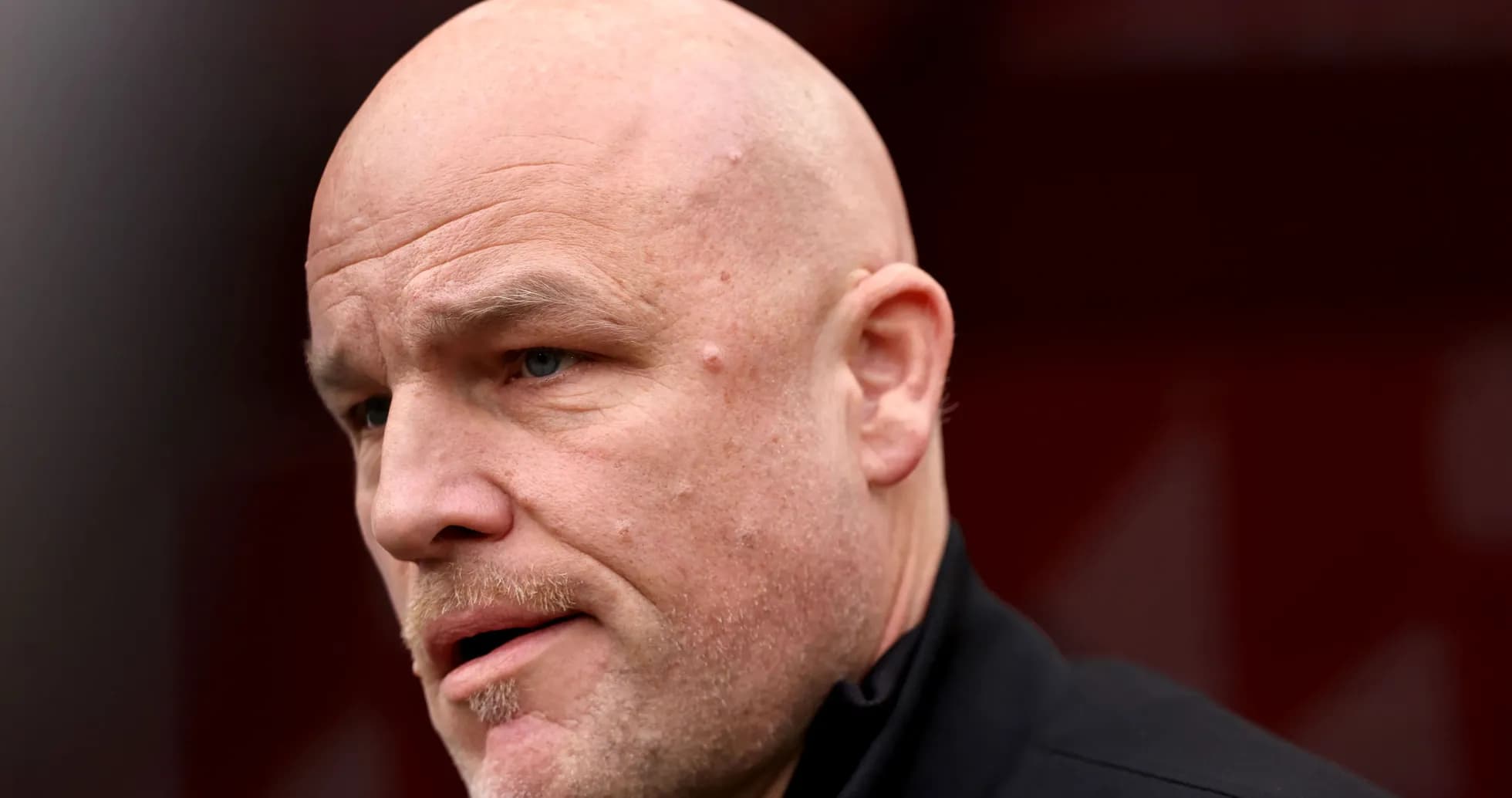
One name stands out. Brian Priske, the 49-year-old Dane currently in charge of Sparta Prague, sits high on Gladbach’s list, as reported by Danish outlet Tipsbladet. The exact length of his contract in the Czech capital is not publicly known, but that hardly seems to deter the Foals. With money set aside for compensation, Sparta’s resistance would not automatically close the door.
Priske is not alone in the frame. Bild lists Alexander Blessin (most recently at St. Pauli), Horst Steffen (currently on the staff at SV Werder Bremen), Christian Eichner (Karlsruher SC) and Steffen Baumgart (Union Berlin) as further candidates under consideration. It is a mix of profiles: from tactically progressive coaches to touchline motivators with a strong personality.
The search is being driven not just by Schröder. His predecessor, Roland Virkus, is also heavily involved. After stepping aside as sporting director, Virkus moved into the Scouting & Recruitment directorate in July, focusing specifically on “coach scouting.” Now, that somewhat abstract job title has become very concrete. Together, Schröder and Virkus are working through the shortlist, weighing character, style and experience against the urgency of the current situation.
Baumgart: Köln past, Gladbach edge
Among the names, one carries a particular edge: Steffen Baumgart. The 54-year-old is currently at Union Berlin, but his recent past is painted in Köln red and white. Before his spells in Berlin and at HSV, he coached Gladbach’s fierce rivals 1. FC Köln and, of all things, turned them into one of the league’s surprise packages.
In his first season at Köln, Baumgart drove the “Billy Goats” to a remarkable seventh-place finish, earning a spot in the Conference League and reviving a club that had been drifting. His intense, emotional style on the touchline made him hugely popular, until a sporting downturn brought that chapter to a close. In December 2023, after 98 matches together, Köln and Baumgart parted ways.
That history would normally be a red flag in the Rhineland. This time, it might be a selling point. Despite his Köln past, Baumgart fits the profile Gladbach are said to be targeting: a coach with Bundesliga experience, hardened by setbacks, who can walk into a crisis and command the room.
Decision-makers in Mönchengladbach also value something else about him. He has already studied Gladbach closely in recent years and is regarded as someone who understands the squad and the club’s dynamics. He would not arrive needing weeks of video sessions just to get up to speed. In a season that has started like this one, time is a luxury Gladbach do not have.
A table that tells a brutal story
The numbers are stark. After three matchdays, Gladbach sit 17th in the Bundesliga, on zero points with a goal difference of 3:12. Only HSV, still goalless at 0:12, are worse off. The 0:5 collapse at SC Freiburg last weekend did more than damage the goal difference. It ended Eugen Polanski’s tenure.
Polanski, 40, had originally stepped in on an interim basis last season following the dismissal of Gerardo Seoane. Even then, doubts lingered about whether he was the long-term solution. Those doubts never really went away. Promoted to head coach, he collected just 1.10 points per game over 29 matches. Respectable in isolation, but not enough to convince a club that sees itself as more than a relegation candidate.
The Freiburg defeat felt like a tipping point. Alarm bells had been ringing; this result ripped them off the wall. The performance lacked structure, resilience, and any sign that the team could dig itself out of trouble under the current leadership. The consequence was swift. Polanski’s time was up.
A precarious moment
The situation at Borussia-Park is now precarious, and everyone inside the club knows it. Three games is a tiny sample, but the manner of the defeats and the defensive chaos have forced Gladbach to act early. Waiting for the table to “settle” is not an option when you are already staring at 17th place.
Schröder’s four-million-euro budget underlines the seriousness of the moment. Gladbach are prepared to pay for the right coach, not just the available one. Whether that means negotiating with Sparta Prague for Priske, testing Union Berlin’s resolve over Baumgart, or turning to Blessin, Steffen or Eichner, the next move will define their season.
The shortlist is drawn. The money is there. The table is unforgiving. Now the question is simple: who dares to take on this version of Borussia Mönchengladbach—and how quickly can they stop the slide?