.svg&w=384&q=75 "logo")
Barcelona's Shift: Why Gordon Over Rashford and the Bernardo Silva Decision
Barcelona did not just change left wingers this summer. It changed direction.
Marcus Rashford delivered 14 goals, a LaLiga title and a Spanish Supercopa. On paper, keeping him for €30 million looked like one of the easier decisions of the window.
Barcelona walked away.
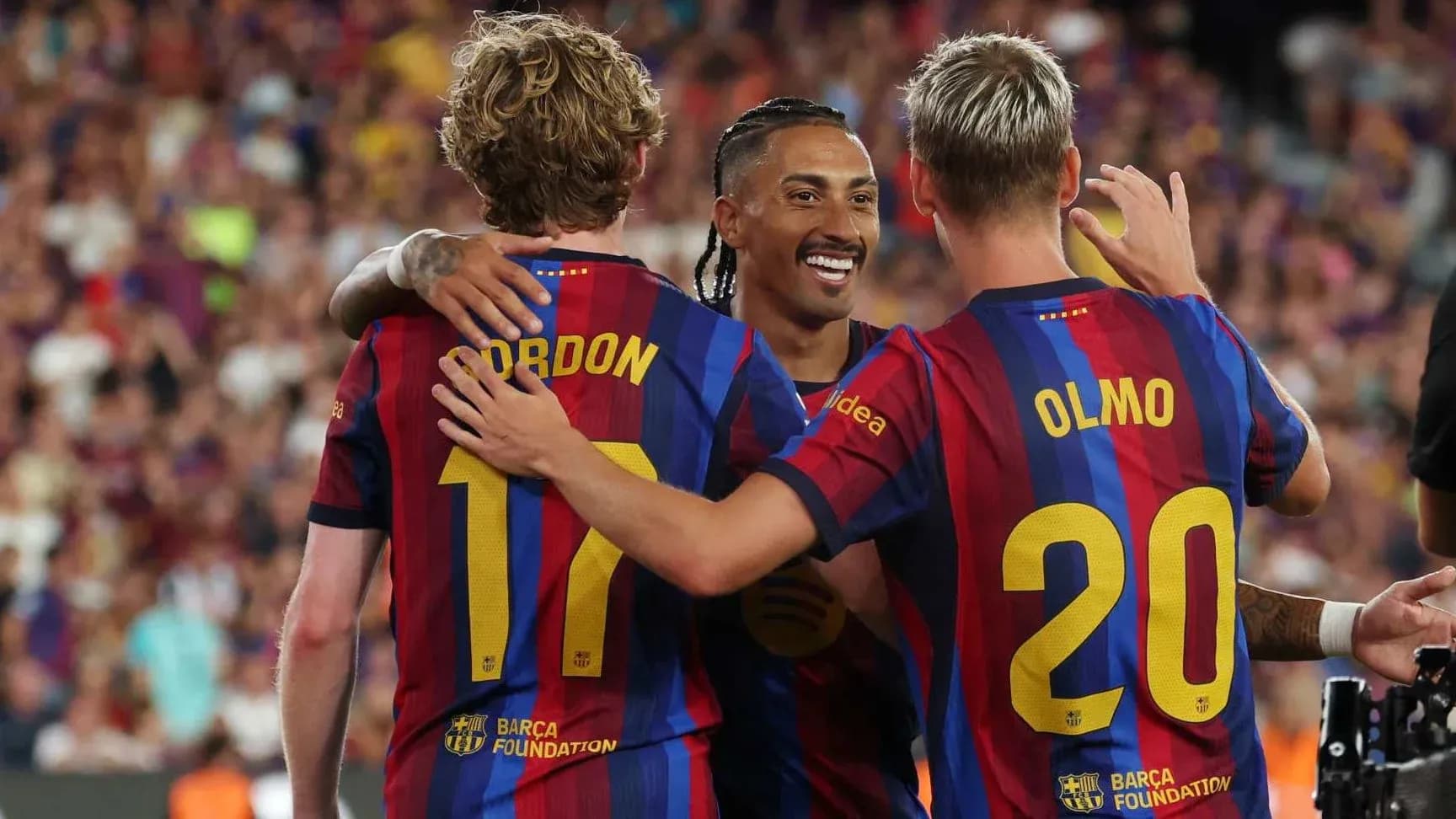
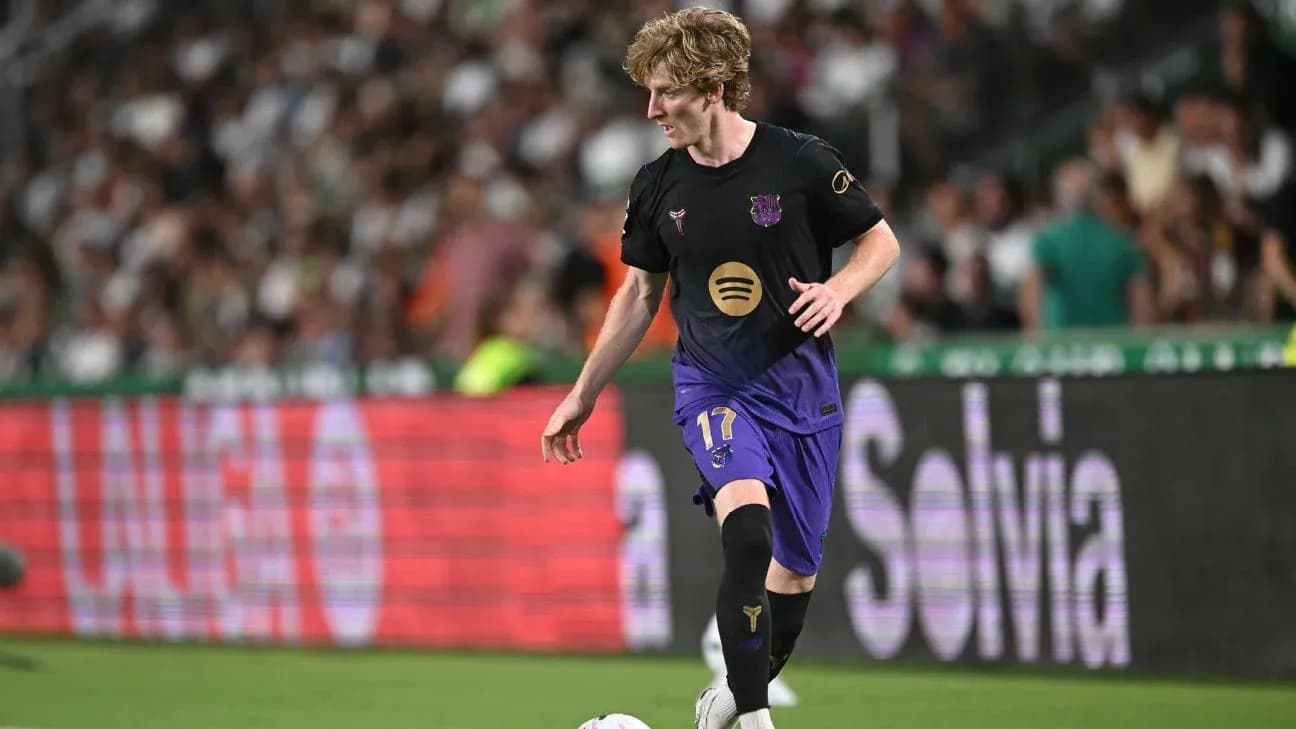
Instead, they pushed €70m across the table to Newcastle United for Anthony Gordon, a player yet to score for the club but already central to how Hansi Flick wants his team to breathe, run and bite.
For Deco, the choice was clear.
“We are extremely grateful to Rashford,” the sporting director told RAC1. “He contributed a lot last season, but our idea of play is much more linked to Anthony. His style fits with what the coach [Hansi Flick] is looking for.”
That is the line that really matters. Not sentiment. Not price. Style.
Gordon over Rashford: a bet on intensity
Rashford’s numbers were strong, his impact obvious. He arrived, scored, lifted trophies and left with credit in the bank. Barcelona still declined the option to sign him permanently.
Gordon, 25, came in as the more expensive, less proven Barça player. No goals yet, but five assists in his first five games have sketched out the role Deco and Flick had in mind. He stretches the pitch, he presses, he runs. And the crowd has felt it.
During a 5-2 win over Rayo Vallecano, the Camp Nou roared his name. Not out of nostalgia or reputation, but because of what they were seeing: a winger who plays like every minute matters.
Deco made it clear this was no impulse buy.
“We see every training session and analyse the team,” he said. “We have a clear idea what we’re looking for. One of the areas we struggled last season, without Raphinha, was that the team’s energy dropped. It was lost.
“We needed more intensity. We analysed a lot of wingers. Signing someone from the Premier League is almost impossible, but [Flick] was clear with what he wanted and we worked on a deal from there.”
That last sentence is telling. Barcelona knew the Premier League market is a financial minefield. They still forced a path to Gordon because he ticked the one box they refused to compromise on: energy.
Six signings, one missing piece
Gordon arrived as part of a sweeping rebuild. Rodri, João Cancelo, Karim Adeyemi, Gabriel Jesus and Dominik Livaković also came through the door, each aimed at sharpening a specific area of the squad.
One name never made it past the threshold.
Bernardo Silva chose the other side of the Clásico divide, joining Real Madrid after prolonged links with Barça. Deco insists the breakdown had less to do with money and more to do with minutes.
“He wasn’t what we were looking for in the end,” Deco said. “I love him. He’s one of the best in the world in his position.
“He wanted to come to Barça, but things didn’t move forward because we have certain parameters. It wasn’t just a financial issue, it was also about playing time.
“It’s not up to me to say if he is going to play or not, that’s the coach’s decision. But he had a different perception to us after playing [regularly] at City. He wanted to play.”
That is the new reality at Barcelona. Even a world-class midfielder, eager to come, does not get guaranteed status. Flick’s rotation, Deco’s “parameters” and the club’s long-term plan trump individual standing.
Julián Álvarez pursuit hits a wall
Deco also moved to clarify the club’s attempt to sign Julián Álvarez. The Argentine forward stayed at Atlético Madrid, and Deco was keen to stress Barcelona’s conduct during the chase.
He revealed Barça had offered €100m, payable in three instalments, but said Atlético never showed any real willingness to sit down at the table. Crucially, he denied any suggestion the club had pushed Álvarez to publicly force a move or declare his desire to leave.
The message was blunt: Barcelona tried, they structured a serious bid, and then they hit a brick wall.
Lamine, Ballon d’Or and a “scandal” list
Away from transfers, Deco’s tone shifted from pragmatic to emphatic when the topic turned to awards. In his eyes, the Ballon d’Or already has a clear favourite: Lamine Yamal.
“I think [Lamine’s the favourite], no doubt,” he said. “Not just for what he’s done with Barcelona, but he’s won a World Cup with Spain as an important player, too.
“Let’s not forget he went into the World Cup with an injury as well. He was the best player in LaLiga last season. It’s not because it’s Lamine, our player, it’s because I like football.”
Then came the sting. Deco did not hide his anger at seeing Raphinha and Pedri omitted from the 30-man shortlist.
“For me, it’s a huge scandal [that Raphinha and Pedri aren’t also nominated],” he said. “I don’t understand these lists. Seeing that Pedri’s not there, with the talent he has ... I don’t get it.”
In a few sentences, Deco laid out Barcelona’s internal hierarchy of belief: Lamine as a future – and perhaps imminent – Ballon d’Or winner, Pedri and Raphinha as players whose value the club feels the wider game is underestimating.
A club defined by choices
Strip away the emotion and the picture is clear. Barcelona are drawing hard lines.
They let a 14-goal title-winner leave rather than bend their game model. They walked away from Bernardo Silva rather than promise him a role they could not guarantee. They pushed for Julián Álvarez up to a point, then refused to turn it into a public soap opera.
And they paid big to land Anthony Gordon, a winger whose numbers are still being written but whose profile, in Deco’s words, is “much more linked” to how Hansi Flick wants this team to play.
The season will judge those calls. For now, Barcelona have nailed their colours to the mast: intensity over sentiment, structure over star power, and a belief that the next Ballon d’Or might already be in their dressing room.