.svg&w=384&q=75 "logo")
Barcelona Names Five Captains for 2026-27 Season
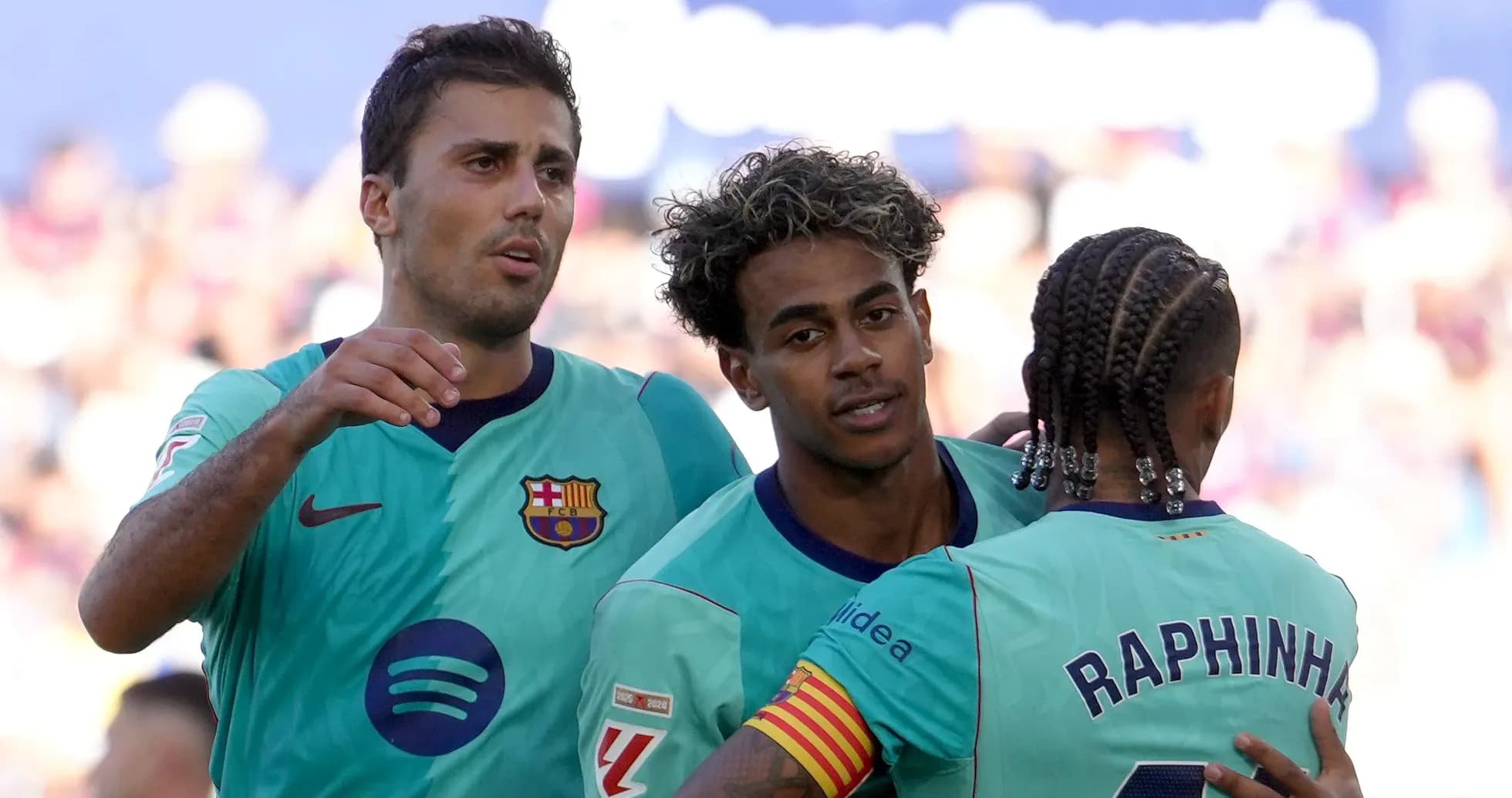
Barcelona have named their five captains for the 2026-27 season, and the list says as much about the club’s soul as it does about its dressing room politics.
Flick rips up the script
Tradition at Camp Nou usually dictates that the armband trickles down by seniority, a quiet handover from one generation to the next. Hansi Flick has not bothered with that script.
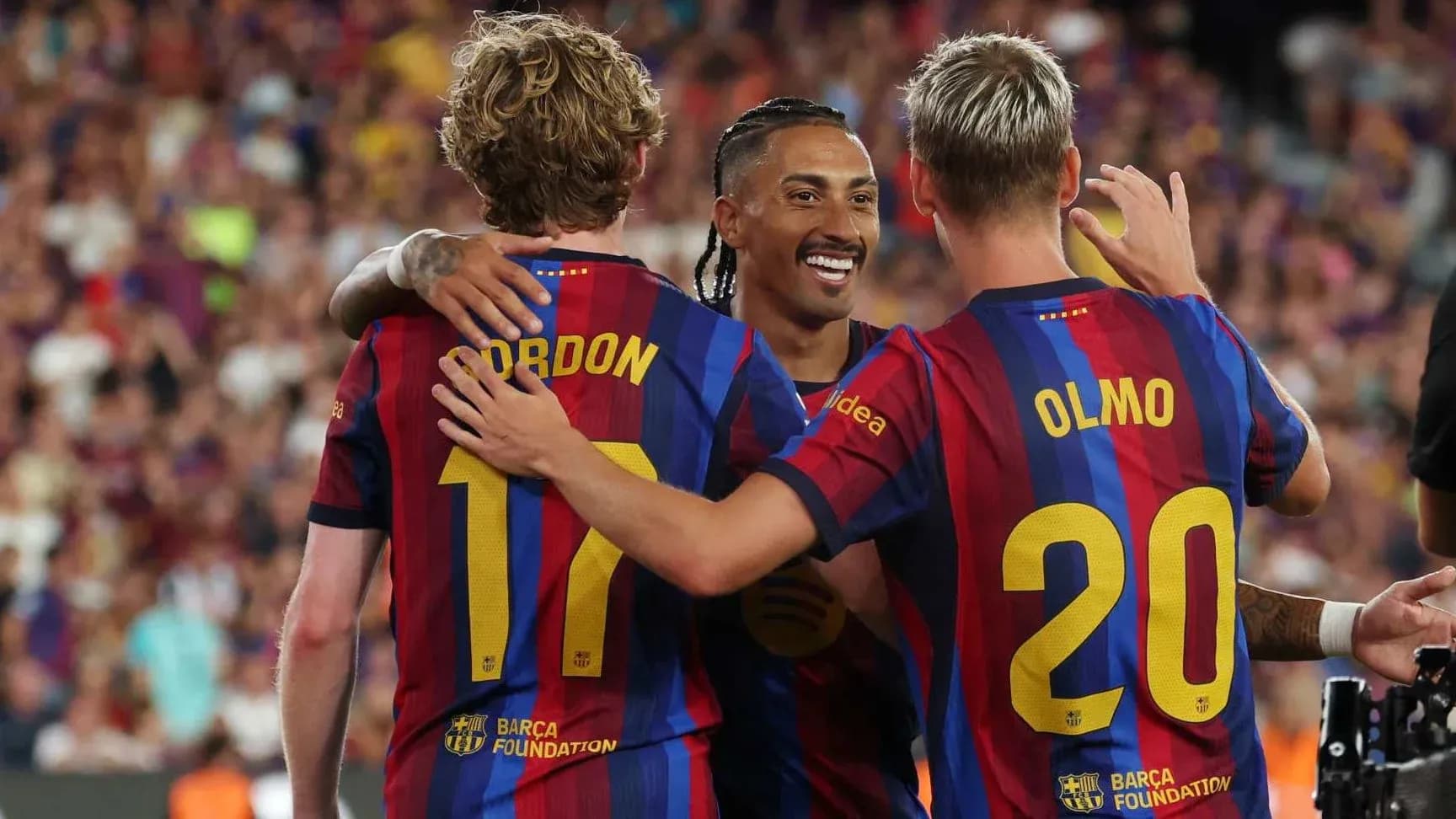
The German coach personally installed Raphinha and Pedri as his two main captains, a clear, top-down decision. The remaining three places went to a dressing-room vote, with Eric Garcia, Frenkie de Jong and Lamine Yamal completing the leadership group.
On paper, it looks like a neat blend: experience, technical authority, and homegrown talent. In reality, one name missing from that list tells the real story.
Yamal in, Rodri out
Lamine Yamal is 19. He now wears the status of captain at one of the biggest clubs in the world. His inclusion raised eyebrows across Spain, not because of his talent, but because of who was overlooked.
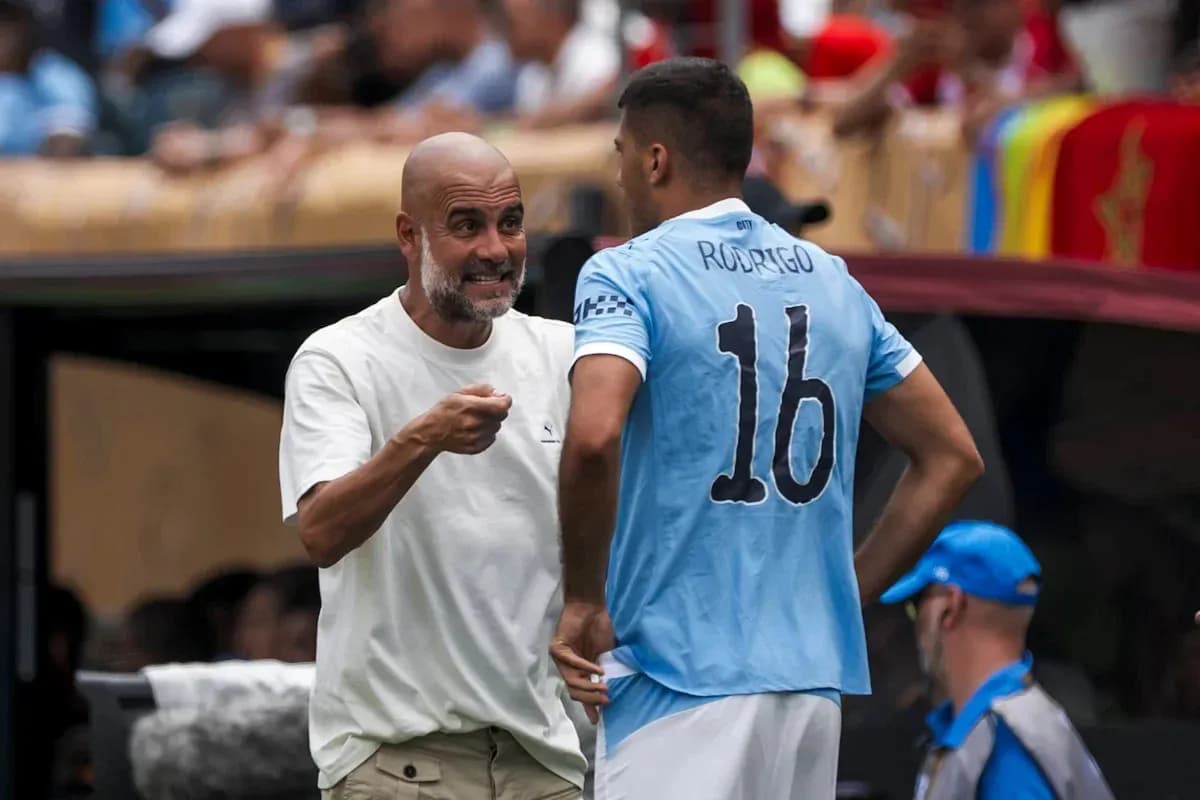
Rodri, Barcelona’s €76.5m signing from Manchester City and fresh from lifting the World Cup as Spain’s captain, did not make the cut.
For most clubs, that would be unthinkable. A World Cup-winning skipper, a Champions League mainstay, one of the most commanding midfielders of his generation – and not even among the five official captains?
Inside Barcelona, the logic is different. As reported by The Athletic, the players’ vote leans heavily on club seniority, not overall career mileage. Yamal has been part of the first-team set-up for three seasons. Rodri walked through the door in mid-August.
The armband, at this club, is not just about who shouts loudest or who has lifted the most trophies. It is about who has lived the place.
Leadership without the armband
Rodri, though, has never needed fabric on his bicep to run a game or a dressing room.
Flick wasted no time underlining his importance after the midfielder’s first start against Valencia. The coach’s assessment was simple and pointed: Barcelona are better structured with Rodri on the pitch, with and without the ball. He gives them order. He gives them control.
You can see it in the way the team breathe around him. Passes arrive cleaner. Distances between lines shrink. Attacks build with purpose instead of panic.
You can also hear it.
During the 5-0 demolition of Valencia, television cameras picked up Rodri on the bench, leaning over to Pau Cubarsi with a blunt assessment: “They’re really weak, they haven’t got past the halfway line.”
It was the kind of unfiltered, ruthless read you expect from a player who has spent years at the sharp end of elite football. Once he realised those words had gone public, another side of his leadership appeared.
Rodri picked up the phone himself to call Valencia captain Jose Gaya and apologise. He then addressed the incident publicly after Barcelona’s Champions League win over Feyenoord. No media department spin. No hiding behind statements. Just a senior pro cleaning up his own mess.
That is how you win a new dressing room quickly.
Mentor in a young squad
Inside the club, nobody is confusing “not a captain” with “not a leader”.
Rodri has already become a reference point for 19-year-old Marc Bernal, the defensive midfielder tipped to anchor Barcelona’s future. The two have shared the pitch in recent games, with Bernal coming on to sit alongside the former City man in wins over Feyenoord and Levante.
For a teenager learning one of the most demanding roles in world football, there are few better guides than a World Cup-winning pivot who lives off positional detail and tactical discipline.
This is where Barcelona’s decision on the armband becomes clearer. The captaincy group reflects institutional memory. The real hierarchy, the one that matters in tense away games and high-pressure nights, is already bending towards Rodri.
History takes time. Fixtures don’t.
The reality is simple: the armband at Barcelona is earned over years, not weeks. It is tied to La Masia, to shared battles, to scars accumulated in Clásicos and European collapses. Rodri has not had time to collect those yet.
What he does have is something Flick will lean on relentlessly over the next month: big-game experience and a calm head in chaos.
Barcelona’s upcoming schedule is brutal. Across 12 days, they must travel to Galatasaray, Real Betis and Paris Saint-Germain. Hostile atmospheres, high stakes, little margin for error. The run ends with an El Clasico at Camp Nou against Real Madrid on October 25.
Those are the kind of games where a team naturally turns to players like Rodri, armband or not. When the press is suffocating in Istanbul, when the tempo spikes in Paris, when Real Madrid start to tilt the pitch their way, it will be the World Cup-winning midfielder dropping between centre-backs, dictating tempo, barking instructions, slowing pulses.
And that Clasico carries a personal edge. Rodri chose Barcelona after strong interest from Jose Mourinho’s Madrid. He walked away from the Bernabeu to wear Blaugrana. The first meeting with Real in his new colours will not feel like just another league fixture.
Barcelona have made their choice on captains. The institution has spoken. But as the season hardens and the calendar tightens, one question will hang over this young squad:
When the pressure peaks, whose voice will they follow – the ones with the armband, or the one who already plays like he was born to wear it?