.svg&w=384&q=75 "logo")
Babar Azam's Struggle: The Century That Won't Come
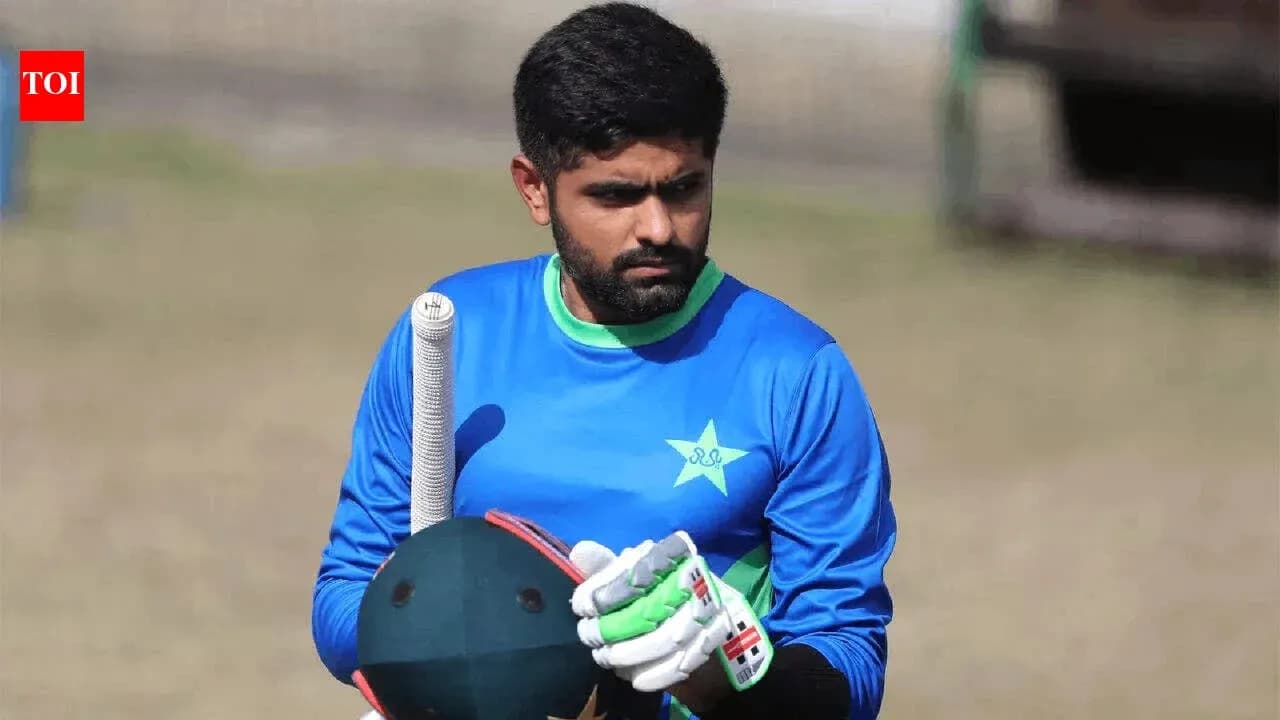
There was a time when Babar Azam walked out in whites and a hundred felt inevitable. The only question was how pretty it would look, not whether it would arrive. That version of Babar feels distant now.
His last Test century came on December 26, 2022, a commanding 161 against New Zealand in Karachi. It was his ninth Test hundred, the crown on a magnificent 2022 in which he piled up 1,184 runs and four centuries. He looked like a man who had solved the format.
Since then, the numbers have turned on him with a cold, unforgiving clarity. Seventeen Tests. Thirty-six innings. No hundreds.
The wait has outlived home series and away tours, a change of captaincy, and more than a few promising starts that hinted at something big before fading away. Each new series has carried the same question: is this the one that breaks the drought?
So far, the answer has been no.
From 161 to freefall
The strange thing is how quickly the slide began. The drought effectively started in the very next innings after that 161. Babar made just 14 in the second dig against New Zealand, then 24 and 27 in the second Test in Karachi. Nothing alarming yet, just a cluster of scores that suggested he was still in touch, just not going on.
The 2023 tour of Sri Lanka brought 13, 24 and 39. Then came Australia: 21, 14, 1, 41, 26 and 23 across three brutal Tests. The 41 at Melbourne briefly stood as his best score of this barren stretch, a reminder of his class but also of the ceiling he kept hitting. Starts, strokes, and then the door slamming shut before anything substantial could form.
2024: From drought to crisis
By 2024, the pattern hardened into something more troubling.
Against Bangladesh, Babar’s returns read 0, 22, 31 and 11. Not just a lack of centuries now, but a struggle to even occupy the crease. Then came England at home, and with it a fresh layer of scrutiny.
On a Multan pitch where Shan Masood and Abdullah Shafique both raised hundreds, Babar managed only 30 in the first Test. Chris Woakes trapped him lbw, and the dismissal extended a run of innings without even a fifty. For a player once considered one of the format’s most reliable run-makers, this was no longer a blip. It was a trend.
The shift came in South Africa at the end of the year. At Centurion, he finally reached a half-century — 50 — his first Test fifty since that 161 against New Zealand. It felt like a small but significant crack in the wall.
In Cape Town, he pushed harder. A composed 58 in the first innings, then 81 in the second. For the first time in a long time, a hundred felt genuinely within reach. He finished 19 short. The 10th Test century stayed stubbornly out of sight.
2025: Better numbers, same story
He carried that 81 into 2025 as one of the touchstones of his recent Test life. Across the two-Test series in South Africa, he collected 193 runs with three fifties and that best of 81. On paper, those are respectable numbers. For Babar, they carried a sting.
The year as a whole did show improvement compared to 2023 and 2024. More runs, more time at the crease, more signs that the old rhythm might be returning. But every innings seemed to stop just short of redemption. His highest score in 2025 remained that 81.
For a batter of his pedigree, “good” was no longer good enough. Not when the gap between 99 and 100 felt like a chasm.
2026: Run out at 88, the cruelest cut
Then came West Indies in 2026, and with it the most agonising miss of all.
In the second Test at Port of Spain, Babar crafted 88. He had done the hard work, passed the early threats, and put himself just 12 runs away from ending a wait that by then had stretched close to four years.
He did not fall to a snorter or a moment of genius. He was run out.
A mix-up, a sharp piece of fielding from Brandon King, and Babar’s bat stopped short of the milestone once more. Another promising innings, another entry in a growing catalogue of what-ifs.
The series still showed his value. In the first Test, he made an unbeaten 58 in a chase that ultimately ended in a 90-run defeat for Pakistan. Across the two Tests, he scored 193 runs, including the 88 and an unbeaten 24. That return nudged him back into the ICC Test top 10, a reminder that, even without hundreds, his class still counted.
But the statistic that mattered most refused to budge.
Openings missed, chances lost
Before Pakistan headed to England, Bangladesh again offered Babar a platform. He responded with 68 and 47 in the two-Test series. Both were useful, both steadied Pakistan, both hinted at the old assurance.
Neither became the innings that rewrote the narrative.
The 68, like so many of his recent scores, sat in that frustrating middle ground: too good to dismiss, not good enough to silence the questions.
England: injury, return, and more frustration
The latest chapter in this saga has unfolded in England, and it has been as unforgiving as the rest.
Babar missed the first Test at Headingley with a finger injury, forced to watch as Pakistan crumbled to defeat by an innings and 103 runs. His absence only heightened the sense of responsibility on his return.
Declared 90 per cent fit, he walked back in for the second Test at Lord’s, the sort of stage where great players often reset their stories. It did not happen.
In Pakistan’s first innings, he fell for 8, edging to Jordan Cox off Josh Tongue as Pakistan folded for 110. No time to settle, no platform to build on, just another low score on a ground where so many batters have carved their names into the honours board.
The second innings brought a different bowler but the same outcome. Chasing 389, Pakistan needed their captain to anchor the resistance. Jofra Archer’s pace and bounce forced an awkward shot, the ball looping to Cox again at third slip. Babar gone for 6.
Two innings. Two failures. The drought stretches on.
For now, the numbers define the story: almost four years without a Test hundred, a trail of 50s and 80s, and a player who once made centuries feel routine now trapped in a search for just one. The question is no longer whether Babar Azam can score another Test hundred.
It is how long Pakistan can afford to wait for it.