.svg&w=384&q=75 "logo")
Aryna Sabalenka's US Open Journey Amidst Controversy
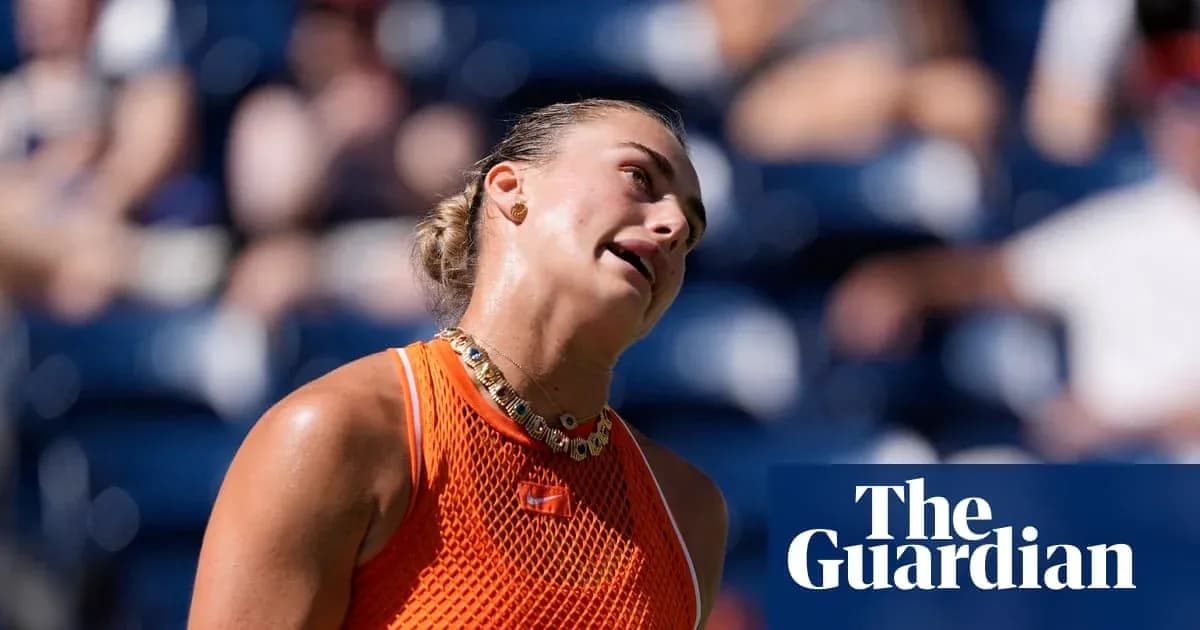
Aryna Sabalenka has dealt with plenty of noise in New York over the years. On Saturday, it was literal.
Midway through a routine-looking march into the US Open fourth round, the two-time defending champion paused at 3-0 up against Kamilla Rakhimova, walked towards chair umpire Eva Asderaki-Moore and, smiling, delivered an unusual complaint.
“Someone is smoking weed, do you mind … because it’s so strong,” she said, gesturing towards the stands.
In a city where cannabis is legal and its smell hangs permanently in the late-summer air, the incident was hardly unprecedented. But Sabalenka made it clear this was on another level. After closing out a 6-3, 6-4 win, she laughed as she relived the moment, but the message was sharp enough.
“I was, like, Guys, you can do whatever, you can smoke whatever, you can relax as much as you can, but please, do not do it around the tennis courts. It’s a bit tricky to handle that smell while you’re trying to compete at your best.”
She later admitted she had no idea where the smell was coming from – the stands, the grounds outside, the wind dragging it in – only that it was stronger than anything she had experienced in her years at Flushing Meadows.
“That strong, yeah,” she said. “Also, because it was a bit windy. I don’t know if it was, like, coming from the crowd or was from the outside because the wind blows it into the stadium. I don’t know. I just hope they’re going to be a bit more aware of that stuff.”
Weed talk aside, Sabalenka walked off with exactly what she came for: a clean, straight-sets passage into the last 16, and a sense that her game is finally tightening after a difficult stretch.
She did not face a single break point. Her serve, which has wandered badly at times this season, became a weapon again as she cracked 10 aces and controlled the tempo of the match from the baseline. Rakhimova pushed, asked questions, forced Sabalenka to play the extra ball. The Belarusian answered with power and precision, not panic.
It matters. Sabalenka arrived in New York with her most fragile form in years, having not reached a final since she ripped through Indian Wells and Miami back-to-back in March. The No 1 ranking she has held for 97 weeks is also hanging by a thread. To keep it, she must complete a hat-trick of US Open titles and hope Elena Rybakina, the world No 2, falls before the semi-finals.
So far, the response has been defiant. She has not dropped a set. She has looked sharper with each round. But the strain around the edges is starting to show.
After her dominant second-round win over Polina Iatcenko, Sabalenka’s patience snapped in the interview room. A reporter framed her build-up to the tournament as “parties and fun” – a reference to her pre-Open commercial and media commitments – and she bristled.
“You guys are, like, a joke,” she fired back. “‘Parties, fun …’ like, why would you even say that? Why would you even think about that? What kind of question is that? Just because I posted, like, some activities with brands, and you think that I’ve been partying, not training?”
It was the second time in the tournament someone had pushed that narrative. This time she pushed back hard, eventually ending the long, heated exchange with a pointed sign-off.
“Think before you say stuff.”
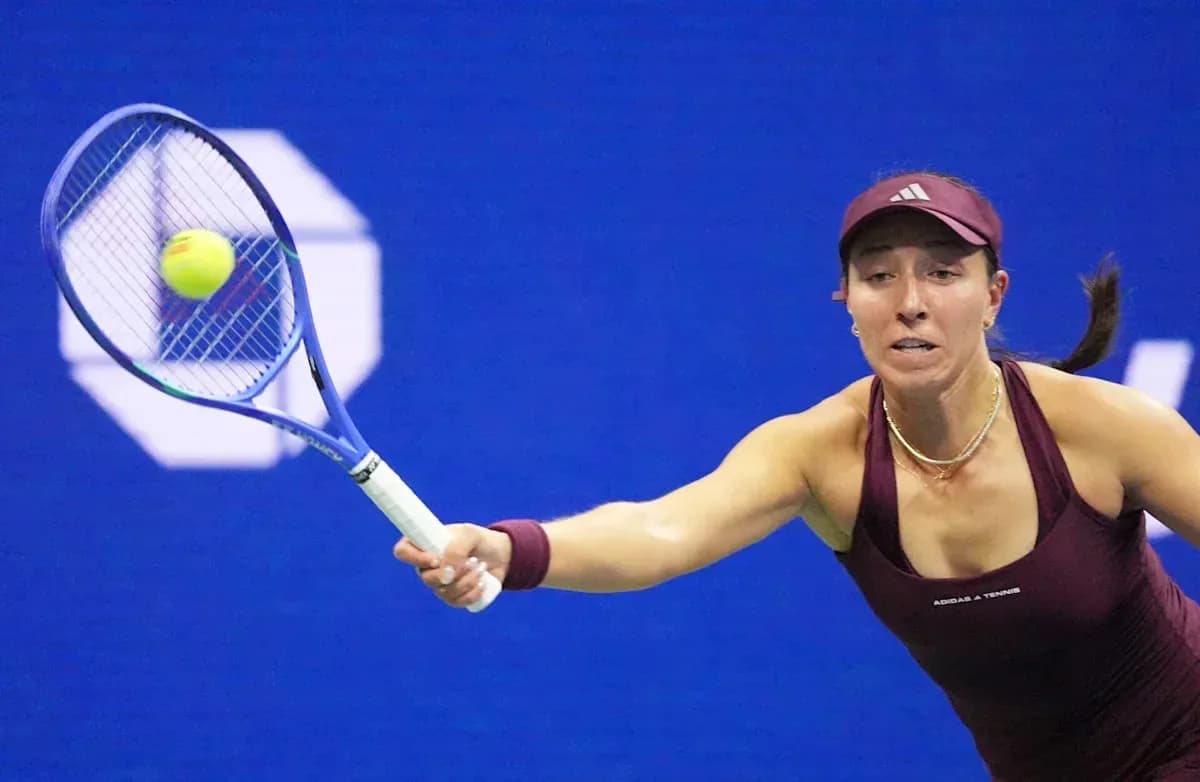
On court, though, the focus has been ruthless. Her next assignment is a far more serious test: Taylor Townsend, the home favourite, who is building her own Flushing Meadows story.
Townsend, who reached the fourth round here last year, is back at the same stage after a 6-2, 6-7 (3), 6-3 win over 15th seed Diana Shnaider. The American’s mix of left-handed spin, net rushes and crowd-fuelled momentum is exactly the kind of chaos that can rattle even the most established champions in New York. Sabalenka will walk into a partisan arena and a very different atmosphere from the relative calm of the early rounds – cannabis clouds or not.
On the men’s side, two champions also moved with purpose.
Daniil Medvedev, the 2021 US Open winner, put together the kind of no-fuss performance that has long defined his hard-court dominance. He dispatched 29th seed Arthur Rinderknech 6-4, 6-4, 6-4, a straight-sets scoreline that reflected his control more than any fireworks. Medvedev probed, absorbed, redirected, and never allowed the Frenchman a foothold.
Carlos Alcaraz, the defending champion, brought more drama, but the end result looked just as emphatic on the scoreboard: 6-3, 6-4, 6-1 over Wu Yibing of China.
Alcaraz is only just back from a four-and-a-half month layoff after injuring his right wrist in early April. That kind of absence can hollow out even the most precocious of talents. The early rounds, then, were always going to be a test of how quickly he could rediscover his timing and trust his body.
Wu made him work for it. The first two sets were tight, full of small puzzles and pressure points. Alcaraz had to steady his nerve, improvise, and solve them on the fly. When the moments came, he rose. Once he broke clear, the match flipped. The third set turned into a statement, Alcaraz racing through it as if he had never been away.
“To be honest, I’m better than I thought,” he said afterwards. “Physically, I thought I was going to be bad after the first match but I’m recovering really well, I’m doing great things off the court out be in a good shape and right now I think my level is good. I’ve got the rhythm of the competition. Every time I step on to the court, I give it my all.”
Next for him is 20th seed Tommy Paul, an American who survived a five-set scrap with 15th seed Alexander Bublik, 6-4, 3-6, 6-7 (4), 6-1, 6-3. Paul brings pace, variety and a home crowd eager for a deep run from one of their own. Alcaraz brings the aura of a champion who already looks ahead of schedule in his comeback.
New York, then, has its storylines lined up: Sabalenka fighting for form, respect and her ranking; Medvedev quietly assembling a challenge; Alcaraz accelerating faster than expected.
And somewhere in the middle of it all, a stadium that smells like the city around it, while its champions try to breathe, block it out, and keep their grip on the biggest stage of their season.