.svg&w=384&q=75 "logo")
Aneurin Donald's England Debut in Cardiff: A Personal Journey
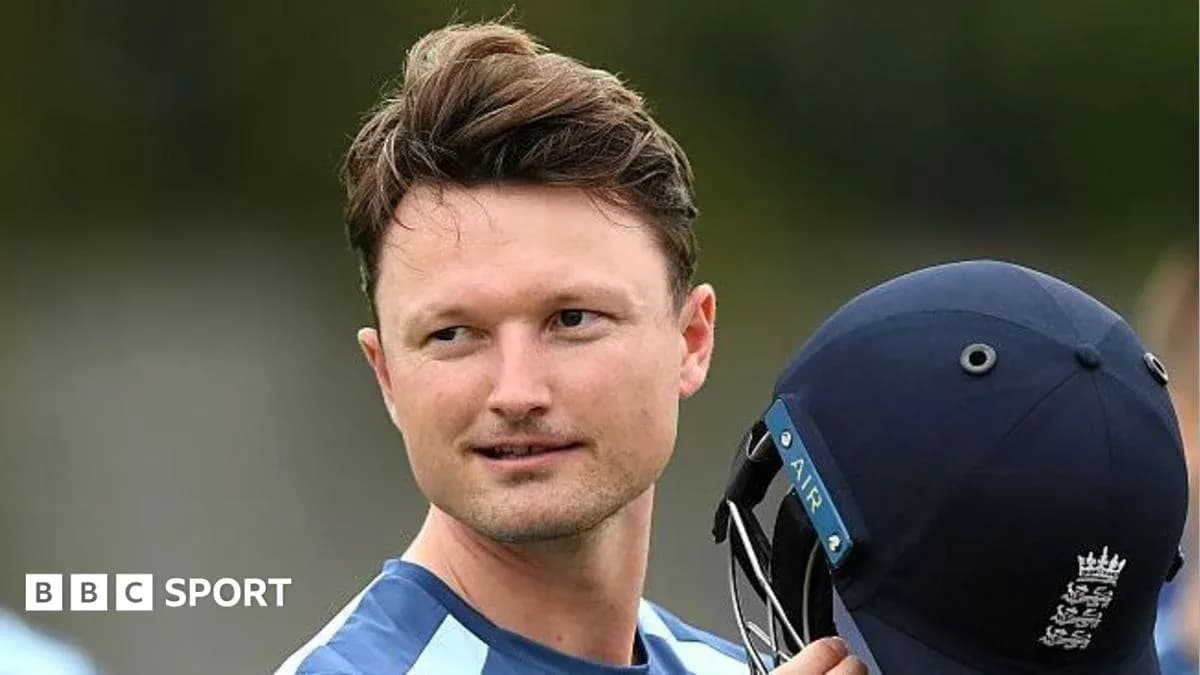
Aneurin Donald’s journey comes home on Thursday, not in a quiet way, but with a new-ball in hand and an England cap on his head in the city that shaped him.
The 29-year-old Welshman will stride out to open for England in Cardiff, two days after finally breaking through on the international stage in Southampton. There, under lights at the Ageas Bowl, he faced just five balls in his debut against Sri Lanka, thumping 12 runs while Harry Brook tore the game apart with a ruthless 114 not out from 49 and Jos Buttler added 80 in a 119‑run hammering.
It was a cameo, not a centrepiece. Cardiff feels different. This one is personal.
From Gorseinon to England colours
Donald is the first man with Glamorgan on his CV to play for England since Simon Jones in 2005. For Welsh cricket, that matters. For Donald, opening in Cardiff feels like the closing of a circle that began at Gorseinon Cricket Club, tucked away in a Swansea suburb where cold, wet winter nights were spent in a “little one indoor lane shed”.
Those nights now have a payoff.
“Getting an international cap on Welsh soil would be one of the most special moments in my career,” he said, knowing his parents Andrew and Jocelyn, brother Gafyn and partner Heather will be somewhere in the stands, swallowed up by a larger, louder Gorseinon family.
He knows who he is representing. Not just the people who drove him to nets and threw him balls in that cramped indoor lane, but the wider Welsh game that often lives in England’s shadow. He calls it an “added responsibility”. He also calls it a flag he is determined to fly.
Expect a noisy corner at Sophia Gardens. He is half‑joking when he says his family have “probably bought a stand”. The sentiment is real enough.
A career that almost went
Donald’s route to this moment has not been a smooth climb. A decade ago he captained England Under‑19s and looked like a coming force. Then came the knees. Serious ACL injuries in 2019 and 2020 shredded more than ligaments; they shredded momentum, confidence and, at times, belief.
“Without a doubt,” he admits when asked if he feared this day would never arrive. The dream of England faded into the background. Survival came first.
At one stage, the thought of an international cap “would have been the furthest thing” on his list. The aim shrank to something more basic: just get back on the park, just make sure the professional career isn’t over. When you are rehabbing the same knee twice, England feels like a different sport.
He thought it had probably “got away”. He didn’t stop. That is why he can now say, simply: “Suddenly here I am.”
Derbyshire, the Blast and a striking point of difference
The last two seasons have been Donald’s answer to doubt. Now at Derbyshire and captaining them in the Vitality Blast, he has carved out a clear identity: a top-order hitter with no interest in gentle sighters.
This year he piled up 489 runs in 12 Blast matches and cleared the ropes more than anyone else in the competition, launching 37 sixes. That output earned him a spot with Trent Rockets in The Hundred, where he helped fire them to the final and kept his strike rate above 200 in both competitions.
He has not been padding his numbers against soft bowling, either. For England Lions at Chelmsford, he smashed 31 from eight balls against Sri Lanka A. The pattern is obvious: he doesn’t just score, he detonates.
“I’ve always had an attacking mindset and ability to hit the ball,” he says. In the modern white-ball game, that is currency. He has “doubled down” on it, drilling into what makes him different rather than trying to become a more rounded, safer option. Derbyshire, he says, have backed that version of him, not tried to smooth the edges.
It is that version England want.
McCullum’s nod and an England opening
The final nudge came at Lord’s. Under the gaze of England’s white-ball coach Brendon McCullum in The Hundred final, Donald cracked 38 from 19 balls, the kind of innings that doesn’t just show up on a scorecard but sticks in a selector’s mind.
He calls it the “final tick in the box” – runs under pressure, on a big stage, with the man in charge of England’s white-ball future watching from the stands. McCullum likes players who commit fully to their method. Donald fits the brief.
“International coaches want to see it with their own eyes and confirm the numbers I’ve been putting up,” he says. He knows the brand England want to play. He believes he can play it.
An injury to fellow Welshman Phil Salt opened the door. Donald has walked straight into the top of the order alongside Buttler, for a team that officially represents England and Wales but rarely feels as Welsh as it will on Thursday night.
He still sounds slightly dazed by how quickly it has happened. “If you spoke to me a month ago, I’m not sure I would have had this on my radar,” he admits. The last few weeks have been “a whirlwind”, but the right kind.
A role built on risk
Donald is not coming into this side to rotate the strike and bat through. He knows his job. England know it too.
“I have been given an opportunity to play a specific role,” he says. That role is simple to describe and brutal to execute: break games open, get ahead of the rate, stretch the powerplay, leave the middle order with a chase already half‑won.
He feels he is “right up there with anyone in the country” at doing exactly that. Look at the players behind him in this England line-up – established world‑class hitters stacked through the order – and the logic sharpens. There is “no point in messing around and wasting balls”.
He does not expect to be told to rein it in this week. England picked the hitter, not the survivor.
Not just a passenger
Donald arrives late to international cricket by T20 standards – the oldest England batting debutant in the format for nine years – but he has no intention of treating this as a ceremonial lap of honour.
He does not want to “just make up the numbers”. He wants to prove he can compete at this level, not as a bit-part player, but as someone who wins matches. The ambition is clear. So is the perspective.
He talks about soaking it all in, about enjoying every moment because nothing is guaranteed. He hopes this is the start of something. He also knows it might not be. If this is all he gets, he wants to remember it properly, not let it blur into the chaos of travel, training and expectation.
The last few weeks have already changed his life. Cardiff could change the way the rest of the country sees him.
On Thursday night, as he walks out to open for England on Welsh soil, the noise from that “loud corner” in the stands will tell him exactly how far he has come – and hint at how far he might yet go.