.svg&w=384&q=75 "logo")
2026 Ballon d'Or Race: Spanish Coaches Shine
The Ballon d’Or stage is usually reserved for the game’s great soloists. But this year, as football’s elite gather in London, the spotlight swings sharply toward the touchline.
Ten coaches. One trophy. And a list that says as much about where the sport is headed as it does about who ruled 2026.
A men’s shortlist painted in red and yellow
Look at the men’s nominees and one thing jumps off the page: Spain owns this conversation.
Mikel Arteta (Arsenal), Luis de la Fuente (Spain), Unai Emery (Aston Villa), Luis Enrique (Paris Saint-Germain), and Vincent Kompany (Bayern Munich) make up the five-man field. Four Spaniards and one Belgian. It’s not a trend anymore. It’s a statement.
Spain is setting the tempo of modern football. On the pitch, with its national sides. On the bench, with its coaches exporting a brand of high-control, high-intensity football that keeps delivering silverware.
Arteta finally dragged Arsenal over the line in the Premier League and carried them all the way to a Champions League final. That alone would usually be enough to make him a frontrunner. His Arsenal side didn’t just win; they imposed themselves, a project years in the making crystallising into a title and a European run that reestablished the club among the continent’s elite.
Luis Enrique went one better in Europe. Again. A repeat Champions League triumph with Paris Saint-Germain – a club long haunted by its failures in that competition – changes the tone of his candidacy. This is no longer a superclub stumbling toward its dream; under Enrique, PSG look like a machine that understands exactly how to win on the biggest nights.
Emery, the master of European knockout football, added another chapter to his remarkable continental résumé. Delivering the UEFA Europa League with Aston Villa is not just another trophy. It’s a landmark moment for a club that spent years trying to claw its way back into relevance. Emery’s ability to turn Villa into a ruthless cup side underlines why his name keeps circling these awards.
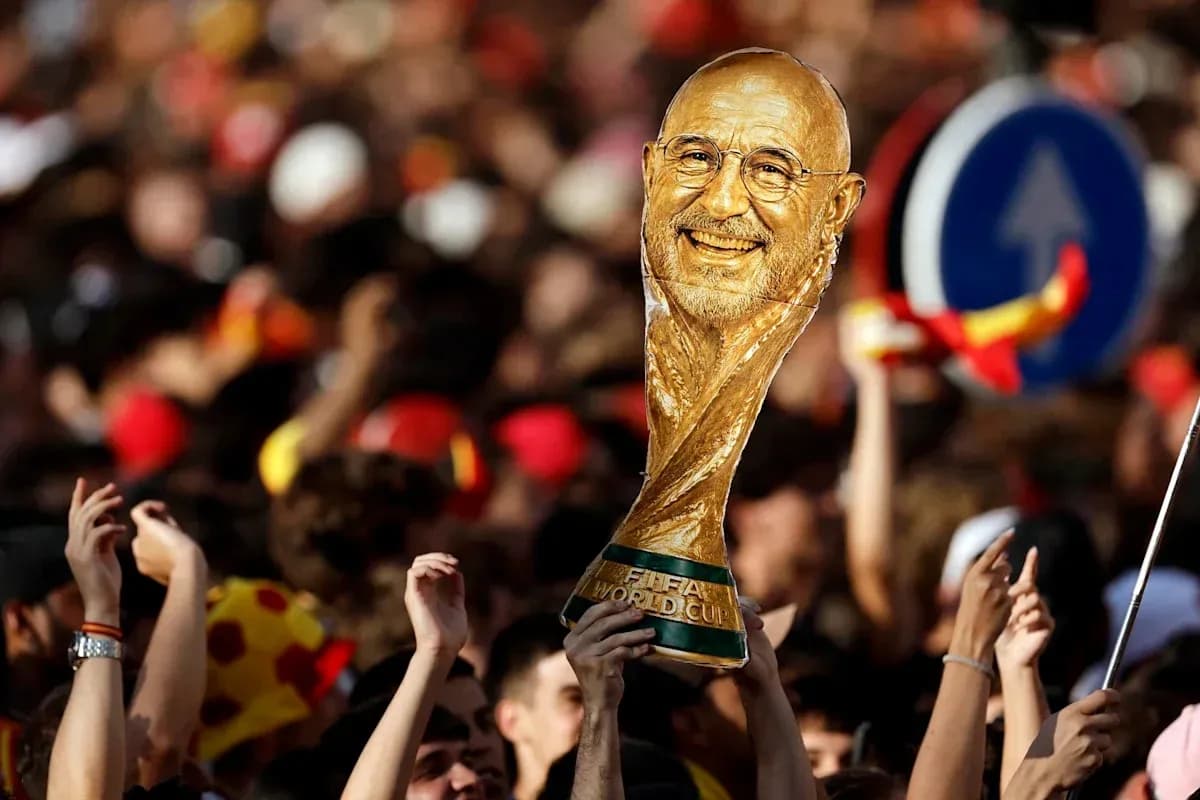
Then there is Luis de la Fuente. The international coach in the room, and the man with the biggest prize of all on his CV. When you win the sport’s ultimate tournament, your candidacy almost writes itself. His Spain side didn’t just lift a trophy; they reinforced the idea that Spanish football, at its best, still offers the clearest blueprint for dominance.
Kompany breaks the pattern by nationality, but not by philosophy. The Belgian’s Bayern Munich swept to the Bundesliga title and the DFB Pokal, and did it with a style that lit up Germany’s usually predictable title race. His football carries a clear imprint: positional play, aggressive pressing, brave build-up. The Guardiola influence is obvious, and in that sense, even the supposed outlier feels like part of the same Spanish-led revolution.
Four Spaniards. One Guardiola disciple. Everyone else, watching and wondering the same thing: how did Spain manage to take such a grip on the modern game?
A women’s field where history is guaranteed
On the women’s side, the script flips. No previous winners. No defending champion. Whoever walks away with the trophy this year will see their name etched on the coach’s Ballon d’Or for the first time.
The nominees: Jonatan Giráldez Costas (OL Lyonnes), Andrée Jeglertz (Manchester City), Nils Nielsen (Japanese national team), Pere Romeu (FC Barcelona), and Elena Sadiku (BK Häcken).
If this is a contest about trophies, nobody arrives empty-handed.
Giráldez’s season with OL Lyonnes reads like a domestic clean sweep. French Championship, French Cup, French League Cup. Three competitions, three titles. Lyon have long been a superpower in the women’s game, but maintaining that standard, let alone stacking trophies in a single campaign, still demands elite coaching.
Jeglertz did something just as demanding in England: wrestle control of the WSL and pair it with the FA Cup for Manchester City. In a league that has grown more competitive year on year, turning City into a double-winning side underlines a coach who can manage pressure, rotation, and expectation across a brutal calendar.
Nils Nielsen took a different route. No club, no weekly grind, but the unforgiving spotlight of international football. Guiding Japan to the Asian Cup title is a major achievement in a region where the margins are shrinking and the tactical level keeps rising. Doing it while currently unattached to any club makes his presence on this list stand out even more.
Elena Sadiku’s work with BK Häcken delivered the Europa Cup, a statement for both coach and club. For a side outside the traditional European giants to climb that high, everything has to be right: structure, game plans, mentality. Sadiku provided it.
And then there is Pere Romeu at FC Barcelona. A trophy haul that borders on outrageous: UEFA Women’s Champions League, Spanish Cup, La Liga, Spanish Super Cup. Four major titles, one season, and a team that often looks unstoppable. Barcelona’s women have become a juggernaut, and Romeu is the architect currently steering that dominance.
Every candidate can point to a defining success. Every candidate can argue their case. The only certainty is that the women’s coach’s Ballon d’Or will belong to a new name, a new benchmark, a new standard-bearer for the modern game.
The players will always command the loudest headlines. But in London, for one night, the spotlight shifts to the people who draw the arrows, make the calls, and shape the identities of the world’s best teams.
In a year so heavy with Spanish influence and stacked trophy cabinets, the real question isn’t just who wins.
It’s whose idea of football the rest of the world will spend the next decade trying to catch.