.svg&w=384&q=75 "logo")
Alexander Zverev Reaches US Open Semis After Tough Matches
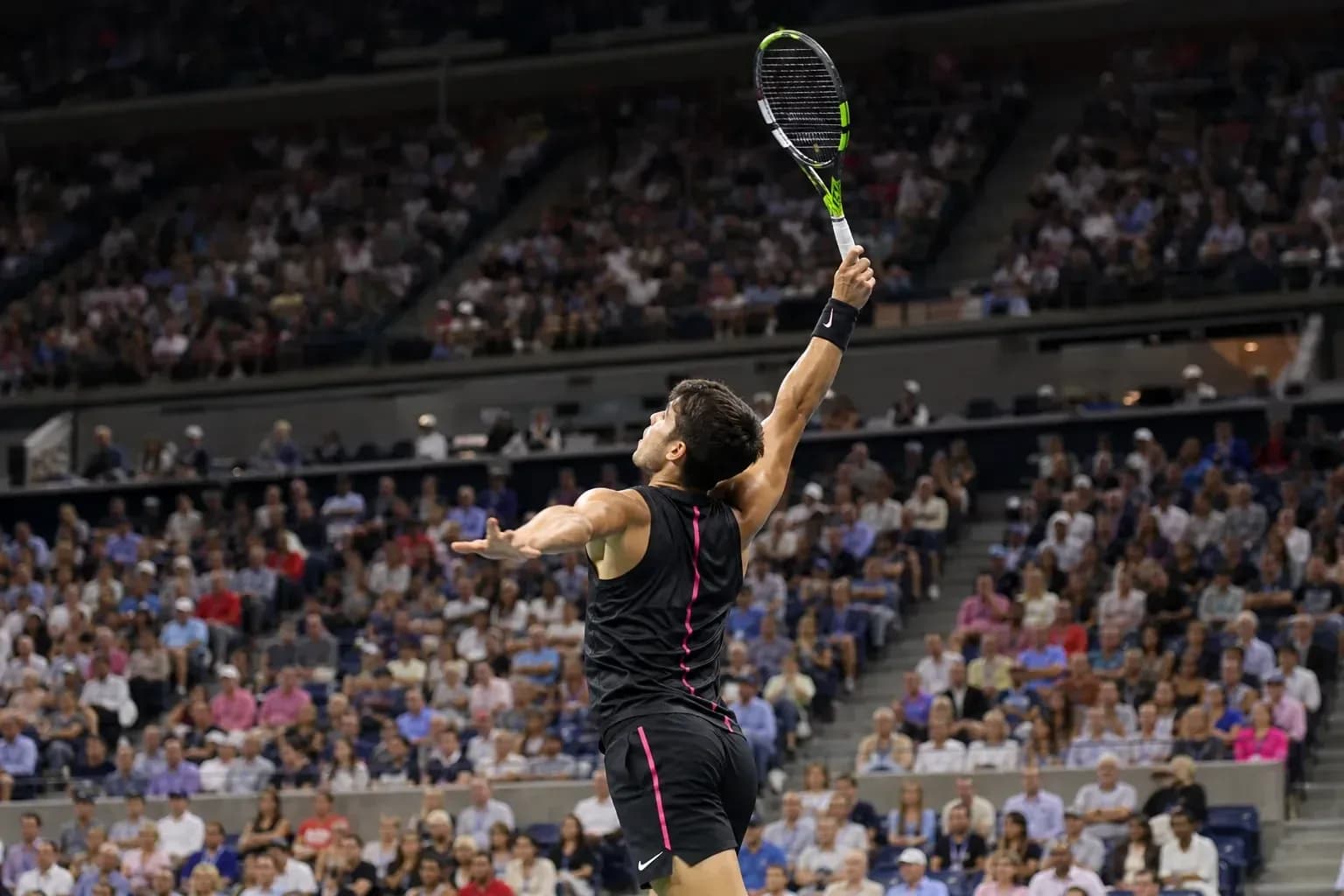
Alexander Zverev is back in the deep waters of New York, and he’s earned every step of it.
The German powered into the US Open semi-finals with a 6–2, 7–5, 6–1 win over Botic van de Zandschulp, a straight-sets scoreline that hides just how hard this tournament has pushed him. His reward: a last-four showdown with Karen Khachanov.
Zverev’s New York habit
This is familiar territory for Zverev. A finalist here in 2020, he has now reached the US Open semi-finals for the third time and moves into his 13th Grand Slam semi-final overall. Few players on tour can match that level of sustained presence at the business end of majors.
This season, he has gone one better than everyone else. Zverev is the only player to reach the semi-finals at all four Grand Slams this year. Hard court, clay, grass – he has found a way through each draw.
The cost has been heavy. By the time he walked off court against van de Zandschulp, Zverev had logged 16 hours and 40 minutes on court in New York, the most by any men’s semi-finalist at the US Open since 1991. His first two matches went the distance in five sets; the last three, including this quarter-final, he has slammed the door in three.
The legs are tired. The results are ruthless.
Shaky start, sharp finish
Against van de Zandschulp, the opening games hinted at trouble. Zverev sprayed five double faults early, gifting the Dutchman looks at his serve and a route into the match.
Then the switch flipped.
He broke in the fifth game, settled his delivery, and ran away with the first set 6–2. The forehand started to bite, the serve found its range, and the errors that plagued the opening minutes faded into the background.
The second set carried more tension. Van de Zandschulp pushed harder, stayed with Zverev in the rallies, and edged close to levelling the match. Just when the contest seemed to tilt, Zverev clamped down. From the closing stretch, he reeled off three games in a row, snatching the set 7–5 and with it most of the Dutchman’s belief.
The third set felt like an inevitability. Zverev broke early, locked in from the baseline, and never offered a route back. A 6–1 close-out underlined the gulf once he found his rhythm.
It was not flawless. It did not need to be. It was the performance of a player who now knows how to suffer through a fortnight and still look dangerous in week two.
Khachanov advances as Bloxs breaks down
Waiting for Zverev is Karen Khachanov, who reached the semi-finals after a brutal, truncated quarter-final against Belgian Alexander Bloxs.
Khachanov led 6–2, 7–5, 3–2 when Bloxs retired, his body finally refusing to cooperate. The Belgian entered the match carrying a rib injury and looked patched together from the start: a brace on his right ankle, a bandage on his thigh, and repeated calls for medical attention as the match wore on.
The Russian did his job. He served with authority, controlled the baseline exchanges, and built a two-set lead while Bloxs tried to manage pain from all angles. When the retirement came, it felt less like a twist and more like the inevitable end of a physical ordeal.
For Khachanov, this is a significant step back to the sharp end of the sport. He returns to the US Open semi-finals for the first time since 2022 and reaches a Grand Slam semi-final for the first time since the 2023 Australian Open.
A semi-final loaded with miles and meaning
So the stage is set: Zverev, the man who has spent more time on court than any semi-finalist here in more than three decades, against Khachanov, who has navigated his way back to the final weekend of a major after an uneven spell.
One has been running a marathon all year, touching every Grand Slam semi-final. The other has been fighting to reassert his presence on this stage.
In a tournament that has already pushed bodies to the limit, which will matter more on semi-final day in New York – Zverev’s relentless volume of matches, or Khachanov’s fresher legs and renewed shot at a major breakthrough?