.svg&w=384&q=75 "logo")
US Open Faces Criticism Over Late Match Finishes
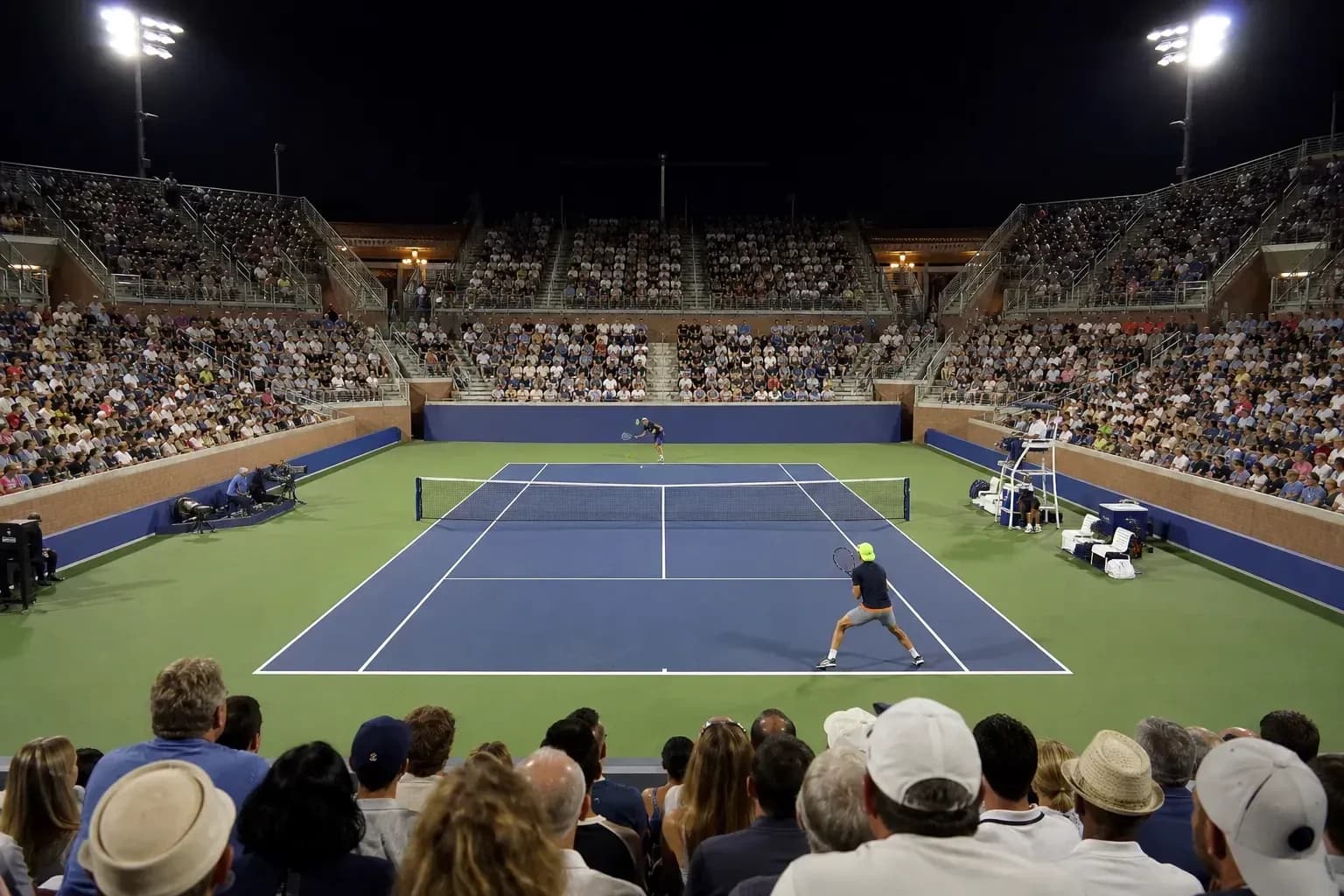
The US Open has always sold itself as tennis’ great night show. This year, the lights stayed on so long that the tournament walked straight into a storm.
Ben Shelton’s stunning quarterfinal win over defending champion Carlos Alcaraz should have been remembered purely as a breakout moment for the 21-year-old American. Instead, the match ended at 3:33 a.m. in New York — the latest finish in US Open history — and poured fuel on a debate that has been simmering for years: how late is too late?
That marathon was no one-off anomaly. During the first week alone, three matches pushed beyond 2:00 a.m., with two others drifting well past midnight. The latest-starting match featured Venus Williams, whose first-round encounter with Sofia Kenin did not begin until 12:13 a.m.
For a 46-year-old legend, that was a step too far.
Venus Williams: ‘Room for Improvement’
Williams, beaten by Kenin, did not dress up her verdict. A midnight start, she said, was “less than ideal,” and she pointed out that she was not aware of any other major sport asking its athletes to start competing at such an hour. The implication was clear: tennis, and specifically the US Open, is pushing the limits of what can reasonably be asked of players.
Her criticism cut to the heart of the issue. Late nights have always been part of the New York package, but this is something different. These are not just atmospheric night sessions; they are matches spilling into a time of day usually reserved for empty streets and subway workers.
Pegula: It’s Bigger Than Just the Players
World No. 3 Jessica Pegula took the argument a step further. For her, the problem isn’t confined to player recovery or notions of sporting fairness.
She pointed out that tennis after midnight hits everyone: fans who have to find their way home in the early hours, broadcasters trying to hold audiences, tournament staff working marathon shifts, media attempting to file copy as dawn approaches. Pegula openly questioned the logic of finishing at 2:00 a.m. or later and floated a straightforward adjustment — start the evening session an hour earlier.
On paper, it sounds simple. In practice, New York complicates everything.
Organizers Caught Between Tradition and Transit
A US Open representative described Tuesday — the day of that 3:33 a.m. finish — as one of the most unusual in the tournament’s history and accepted that the schedule needs a hard look.
The problem sits at the junction of spectacle and logistics. The night session currently begins at 7:00 p.m., a slot designed for fans leaving offices across the city and battling their way out to Flushing Meadows. Move that start time forward, and you risk empty seats at the beginning and congestion between day and night crowds. Keep it where it is, and you invite exactly the kind of late finishes that have drawn such sharp criticism.
The tournament, the representative suggested, must “assess all options” for future schedules. That phrase covers everything from minor tweaks to more radical surgery.
One of those radical ideas is already on the table.
The Best-of-Five Question
Among the proposals being discussed: cutting men’s early-round matches from best-of-five sets to best-of-three. Fewer sets would mean shorter matches, a tighter schedule, and a lower chance of play bleeding into the early hours.
But that would strike at one of the sport’s sacred cows.
American Frances Tiafoe made his position clear. He wants the traditional best-of-five format to stay, stressing that some of tennis’ greatest epics were born from the long, punishing arc of five-set battles. To him, those matches define the majors.
That leaves the US Open facing an uncomfortable choice. Protect the integrity and history of the format, or bend to the realities of a modern, broadcast-driven, big-city event that currently asks players to walk onto court when most of New York is thinking about bed.
For now, the lights at Flushing Meadows still burn deep into the night. The question is how many more 3:33 a.m. finishes it will take before someone finally flips the switch.