.svg&w=384&q=75 "logo")
US Open 2023 Semi-Finals: A Historic Line-Up
Coco Gauff needed just two words.
“Oh, wow.”
The 22-year-old had barely come down from another three-set scrap when she learned the scale of what she had walked into: a US Open semi-final line-up straight out of tennis history. For the first time since 1975, the top four seeds in the women’s draw have all punched their ticket to the last four in New York.
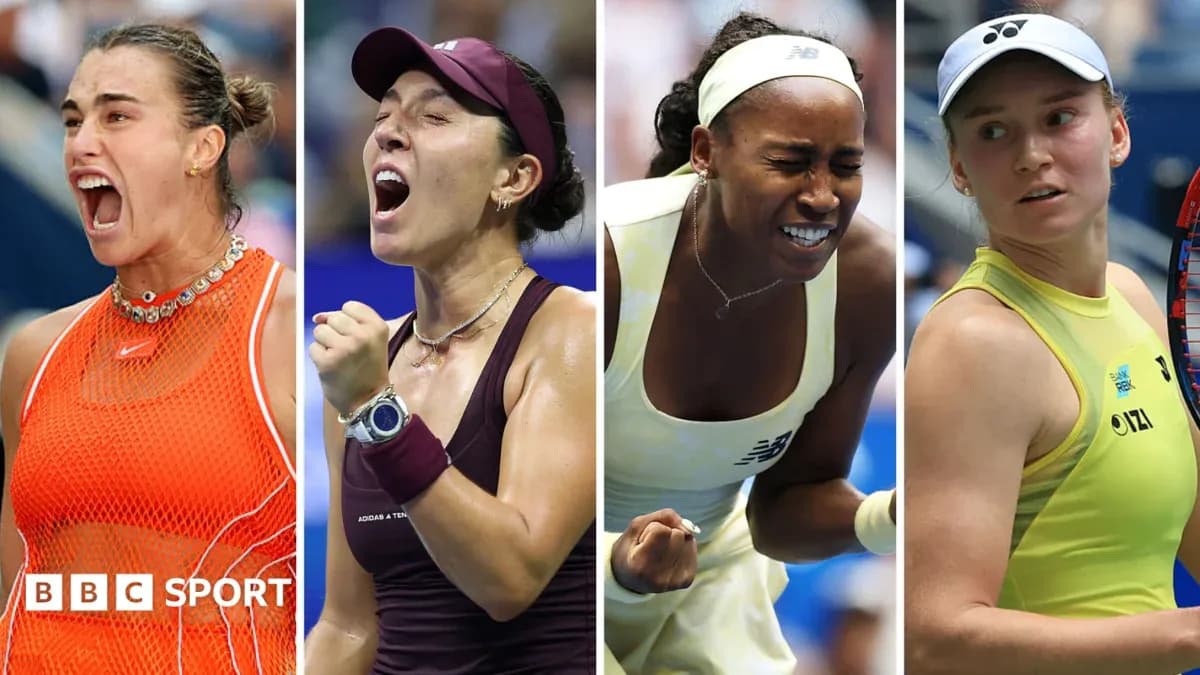
Aryna Sabalenka. Elena Rybakina. Jessica Pegula. Coco Gauff.
Four survivors of four separate three-set thrillers. Four heavyweights in a sport that, for years, has thrived on chaos more than continuity.
“It has felt fantastic the whole tournament,” former British number one Annabel Croft told BBC Radio 5 Live. “I just feel like I've been more enthused about looking forward to the match-ups this Grand Slam than any I can remember.”
She’s not alone. For a decade, the women’s game has been defined by its revolving door of champions. Since the start of 2020, 13 different women have lifted Grand Slam singles trophies. On the men’s side over the same period? Seven. The contrast has been stark.
Now, for the first time at any major since Wimbledon 2009, the top four ranked players have all held their nerve and their seedings to reach the semi-finals. The draw board no longer looks like a crime scene. It looks like a statement.
Big names. Big personalities. Big matches.
“You're seeing these warriors out on court,” Croft said. “We've been blessed with the amount of intriguing matches we've had.”
Sabalenka vs Pegula: a rivalry with history and a three-peat on the line
On Thursday night in New York (00:00 BST, Friday), the defending champion steps back into the spotlight.
Top seed Aryna Sabalenka, chasing a slice of Serena Williams territory as she aims to become the first woman since 2014 to win three straight US Open titles, faces American Jessica Pegula in a semi-final loaded with subplots.
They know each other inside out. Thirteen meetings so far. Two of them brutally fresh in the memory at Flushing Meadows.
Last year, Sabalenka clawed back from the brink to beat Pegula in the semi-finals. This year, she denied the American her first Grand Slam title in the 2024 final. Same stage, same court, same opponent. Different stakes, perhaps, but the same scar tissue.
Pegula embraces it.
“It's fun to look at it like a rivalry. I think that's what motivates me,” she said. “I know that she's definitely pushed me to become a better player, so I always respect and appreciate that aspect of our rivalry.”
Pegula has beaten Sabalenka four times on the WTA Tour. She knows how to hurt the world number one. What she hasn’t done is beat her when it matters most: deep in a Slam.
She called that leap a “hurdle” she still has to clear. It’s a fair word. Grand Slam tennis is littered with players who could beat the best on a random Wednesday in Doha but never quite on a Saturday in New York.
Sabalenka, for her part, sounds energised by the challenge, not weighed down by the chase for history.
“I'm loving playing against her because it's a battle, because it's a fight, and I love being under pressure and going through tough challenges,” she said.
Pegula arrived in New York with sharper recent results, after reaching the finals in both Washington and Cincinnati. Sabalenka, though, has found her gear at the right time, and this is her first semi-final since she lost to Pegula at the Berlin Open in June.
Pegula knows exactly what stands across the net: a four-time major winner going for a three-peat in a stadium where she has built a fortress.
“I know that she hasn't maybe had the best results this summer, but I know that she has a lot of confidence playing here at this tournament, and she's going for a three-peat,” Pegula said.
One woman chasing a first Slam. One woman chasing a dynasty. Same court, same rivalry, new chapter.
Rybakina’s new number, Gauff’s new mindset
If the first semi-final is about history and revenge, the second is about status and evolution.
By simply reaching the semi-finals, Elena Rybakina has already guaranteed herself the world number one ranking on Monday, ending Sabalenka’s 99-week stay at the top. That’s nearly two years of dominance, gone with a single run in New York.
Rybakina, though, has brushed aside the symbolism.
For her, the ranking is “just a number”. The target is not the computer screen on Monday. It’s the trophy on Sunday. This is a player who already owns two Grand Slam titles and knows how hollow it can feel to climb to the top without the hardware to match.
As BBC Radio 5 Live tennis correspondent Russell Fuller put it: “It's never quite the same if you become world number one having lost a Grand Slam final or semi-final just beforehand, so she will be trying to cap off an absolutely perfect couple of weeks by winning the title.”
Standing in her path is Coco Gauff, the defending US Open champion, with Arthur Ashe Stadium firmly in her corner.
Gauff won this title in 2023, then stumbled in the fourth round in each of the next two years. That kind of trajectory can twist a young player’s mind. This time, she insists, the lens is different.
“Sometimes you're just so focused on the now, now, now, because you want it now, and obviously you want to take advantage of your opportunities,” she said.
“In the grand scheme of things, [I'm] definitely sitting here in a different mindset and perspective than I was last year.
“It inspires me a little bit more to keep working, as I see how much I have improved in a year.”
The numbers between them are tight. Gauff leads their head-to-head 2-1, but the last word belongs to Rybakina. In last month’s Canadian Open semi-finals, the Australian Open champion stormed back from a set down to beat Gauff, leaning on that booming serve and first-strike power that can make even elite defenders look helpless.
Gauff knows exactly what’s coming.
“I'm going to have some aces hit on me and some winners hit on me, but I'm going to keep fighting and give it my all. That's all I can do,” she said.
World number one in waiting versus home champion. A power server against one of the game’s great athletes. The calm of Rybakina against the crackling energy of Gauff in front of her own crowd.
For years, women’s tennis has been defined by its unpredictability. This fortnight, the sport has delivered something different: order at the top, chaos in the rallies, and a semi-final line-up that feels like a glimpse of a new era.
If this is what stability looks like, nobody will be in a hurry to change it.