United Salvage Draw but Face Intensity Questions
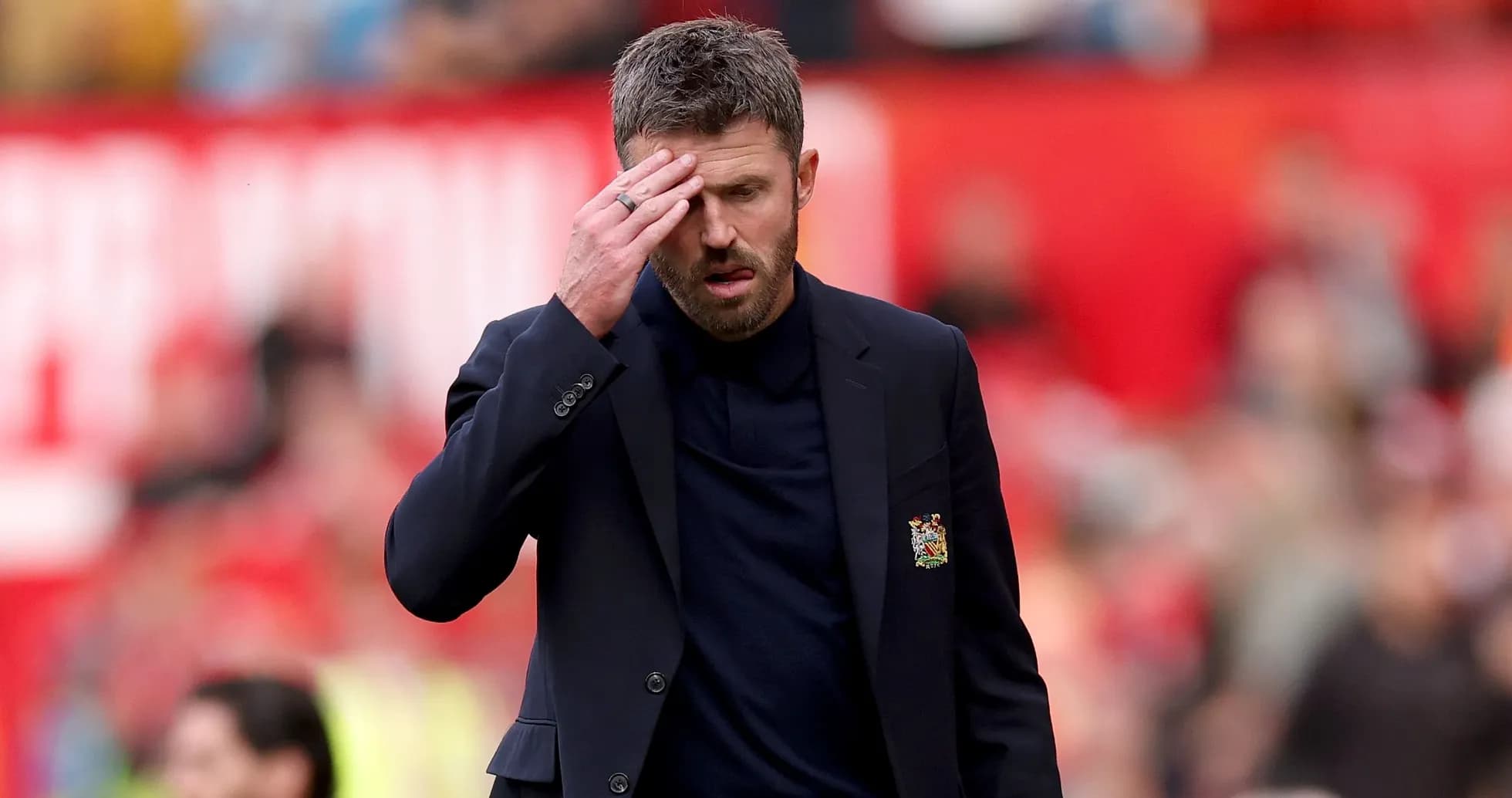
United escape with a point. They do not escape with their pride.
At Craven Cottage, a late, deflected hit from Matheus Cunha spared them from a third straight league defeat, salvaging a 1-1 draw after Lisandro Martinez’s early own goal had plunged them into yet another crisis of their own making. On the scoreboard, it was a rescue act. On the pitch, it was something closer to an indictment.
Because this was not about tactics or shape or fine margins. It was about effort. Or, as Gary Neville saw it, the glaring lack of it.
Neville turns the spotlight on Carrick’s loyalty
On Sky Sports co-commentary, Neville’s disbelief grew with every lethargic jog and every half-hearted press. He has seen bad United teams. He has seen fragile United teams. What he watched in west London, though, crossed a line for him.
"Michael has got to stop defending them," he said, cutting straight through the usual post-match politeness. In Neville’s view, Carrick’s loyalty to his dressing room has tipped into something more dangerous: protection without justification.
"I get why he's defending them; he's loyal, he wants his players to work for him, and obviously there's a long way to go in the season," Neville admitted. But that understanding came with a warning. Carrick, he insisted, cannot keep publicly shielding a group that offers so little intensity in return.
Neville was clear that the manager’s tone in the media and his message behind closed doors are not the same. "Michael is of course saying something different to us than he is saying privately. That would've really worried me." The concern is not about a single bad day. It is about what this kind of performance says about standards.
"People will ask questions about him, but he knew that when he took the job," Neville added. "But there's no panic in that sense - no one is putting pressure on Carrick - but if those types of performances continue, he will find himself in a lot of trouble. They've got to work harder than that for him."
The draw may have eased the league table damage. It did nothing to ease the scrutiny.
A pattern of surrender out of possession
This was not an isolated off-day. United arrived at Fulham off the back of consecutive defeats: outclassed by Manchester City in the league, then folded in the Carabao Cup against Brighton. The theme, Neville argued, is now unmistakable.
"I've never seen a Man Utd team walk out of possession as much as that," he said, his voice sharpening as he dissected the off-the-ball work. For a club built on relentless running and aggressive pressing, the sight of red shirts strolling while Fulham happily dominated the ball was damning.
Carrick, in his post-match comments, rejected the idea that energy levels were the issue. Neville could not believe what he was hearing. "Michael has just said there was nothing wrong with the team's energy. Both teams were the same. I called them mannequins."
Mannequins. Static, lifeless, decorative. It was as brutal a description as any he has offered about a United side.
"I've never seen a United team walk around as much as that. No alertness, no aliveness. No 'on your toes'. You should always be on your toes."
The period that truly enraged him came straight after half-time, when United should have been chasing the game with urgency. Instead, they drifted.
"I'm always very careful to say that," Neville insisted, conscious of the weight of his words, "but in those first 15 minutes of that second half, Man Utd and generally for the first 60 minutes, were a genuine disgrace. Nowhere near good enough without the ball."
A point gained, authority lost
Cunha’s late goal changes the narrative on paper. It stops the run of league defeats. It offers Carrick a sliver of breathing space in a season already fraying at the edges.
But it does not erase the image of United players "walking out of possession," as Neville put it. It does not quiet the questions about whether this group is prepared to match the work-rate demanded at the top level, or whether their manager is willing to call them out publicly when they fall short.
The table will show a draw. The footage will show something far more troubling: a team that needed a deflection to save them, and a club legend wondering, out loud, how long a manager can keep defending performances like this.