.svg&w=384&q=75 "logo")
Tuchel Reflects on England's World Cup Journey
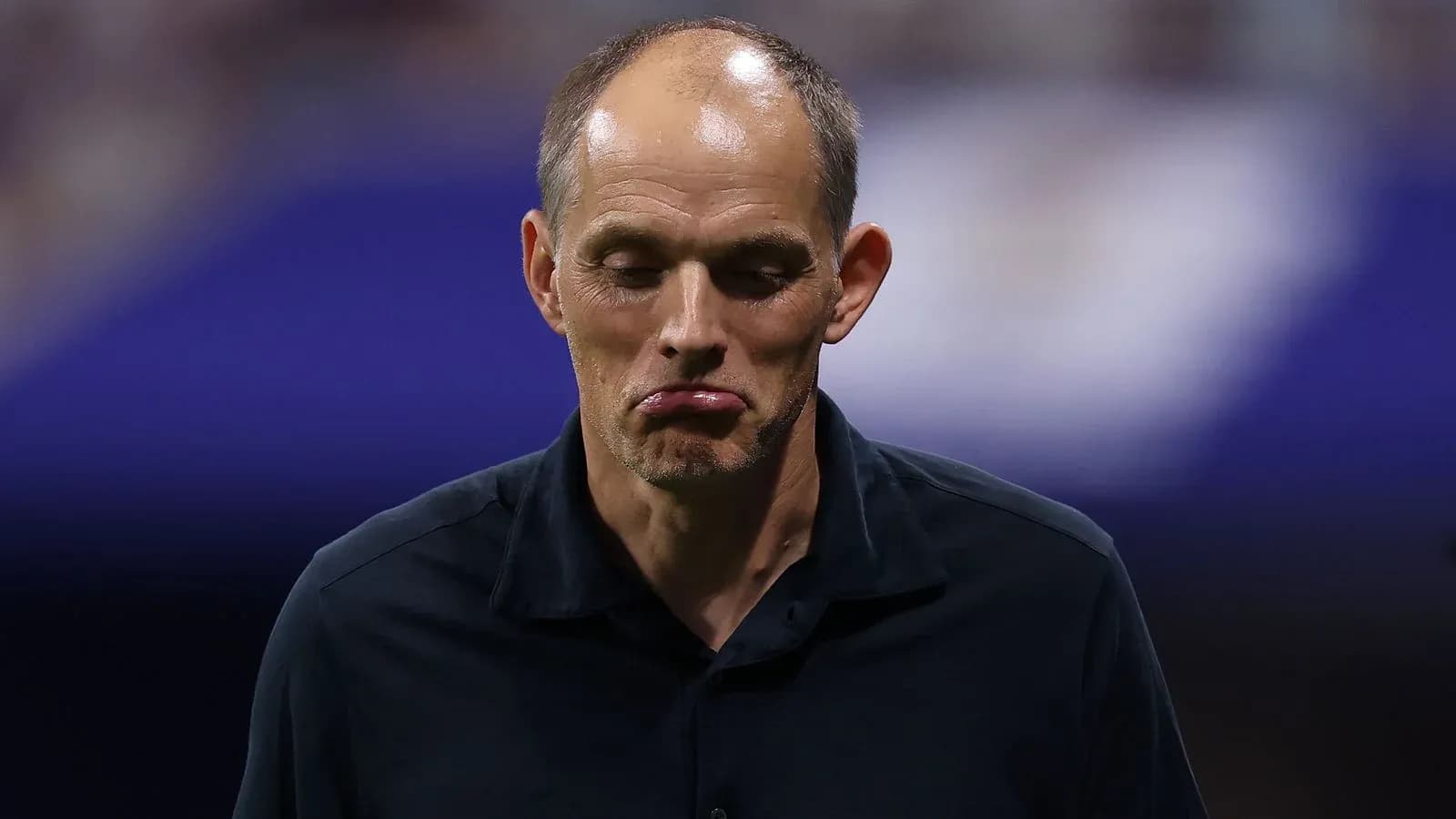
Thomas Tuchel insists that when England supporters look back on their World Cup run, they are not obsessing over his substitutions or tactical switches.
“99.9 per cent of the fans don't talk about substitutions, tactical tweaks or tactical details,” the England head coach told reporters, still standing firmly behind his decisions in that agonising 2-1 semi-final defeat to Argentina.
For many, that is precisely the problem.
Tuchel’s version of the World Cup story
England were 1-0 up and within touching distance of a first World Cup final since 1966 when Anthony Gordon struck in the second half. The game was under control, the mood among the travelling support buoyant. Then came the shift.
Tuchel chose to reinforce his back line, sending on three defenders as England looked to lock down the lead. Instead, the move dragged the team deeper and deeper, inviting Argentina to attack in waves.
The pressure finally told. Enzo Fernandez levelled late on, and Lautaro Martinez completed the comeback, flipping a historic opportunity into another chapter of English heartbreak.
Tuchel, though, prefers to frame the tournament through a different lens.
“They speak about where they watched the Mexico game, and they speak about the second-half energy of the Croatia match,” he said. “They speak about how nerve-racking it was to watch our match against Congo and where they celebrated. This is the feedback I get. This is what we created, and how it should be.
“This is what a World Cup is for: to connect with people and give them experiences they do not forget.
“It makes me proud, it makes me happy. Even if it's just in a cab, at a coffee shop or in the supermarket, you share these little moments and understand that it actually meant something.
“It showed that what the players built was transmitted, and it's what we want to build on.”
For Tuchel, the legacy lies in emotion and connection. For a large section of the fanbase, the legacy still lies in that final half-hour against Argentina.
Beautiful moments – but a jarring assessment
Inside the FA’s World Cup review, Tuchel has talked about “beautiful” moments, about the brotherhood in the squad, about the quality of England’s performance in the bronze-medal match against France – a side he described as “maybe the strongest squad in the world”.
That third-place play-off, though, was effectively a dead rubber. The real judgement, in the eyes of many, sits with the semi-final and those defensive substitutions that drew Lionel Messi and company onto England rather than pushing them away.
Yes, the numbers matter: third place, England’s best World Cup finish since 1966. Tuchel is determined that this sits in the conversation. He wants perspective, and he wants the progress recognised.
But perspective cuts both ways. He was hired on a lucrative deal to do what Gareth Southgate could not quite do – turn near misses into trophies. Southgate reached a World Cup semi-final and a European Championship final. Tuchel’s brief was simple: go one step further.
Instead, the defining image of this World Cup campaign is once again England retreating, clinging on, and ultimately letting a lead slip in the biggest moments. The similarities with past failures are hard to ignore, and the question lingers: will anything be different next time?
Backed before Mexico, trusted through Argentina
Tuchel also revealed that his future had been settled long before the semi-final drama unfolded.
“I felt the full support from all my bosses through the whole tournament,” he said. “Before the Mexico game they told me we know anything can happen in a football match but don't worry, we can see what's going on.
“I felt this kind of freedom to take my choices and coach freely. There was never a doubt in my mind we'd continue together and there was clearly never a doubt in their mind. Reflection is sometimes necessary to get better and experience is a crucial part.”
That backing extended to the most controversial calls of the campaign – including the defensive reshuffle against Argentina that turned a controlled lead into a desperate rearguard.
The FA have made their choice. They believe in the project, in the “experiences” Tuchel talks about, in the idea that this World Cup can be a foundation rather than a missed peak.
The debate now belongs to the stands and living rooms across England: are memories of Mexico, Croatia and DR Congo enough, when the central question remains brutally simple – can Tuchel actually take this team over the line?