.svg&w=384&q=75 "logo")
Tuchel's England: Balancing Control and Chaos
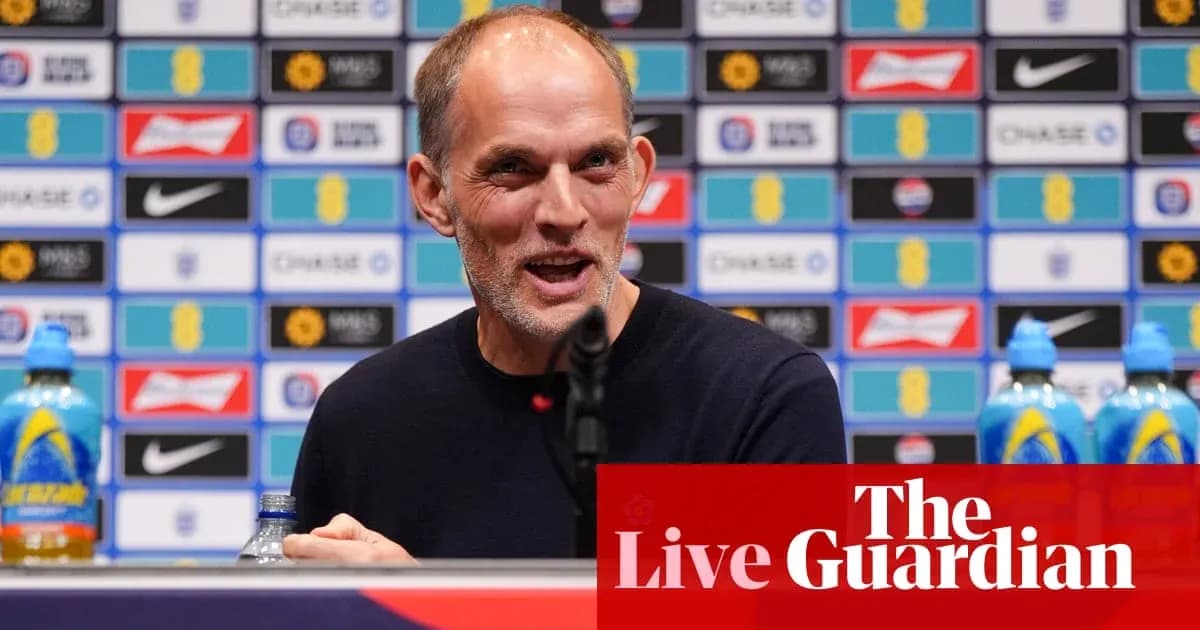
Thomas Tuchel left the United States in July demanding control. Two months on, he’s talking about “embracing the chaos”. Somewhere between those two poles lies England’s next identity.
The World Cup in the US delivered England’s best finish since 1966. Third place, a wild 6-4 against France in the bronze-medal match, and a semi-final that still stings. Argentina turned a 1-0 deficit, after Anthony Gordon’s opener, into heartbreak. Tuchel’s verdict that night was blunt: his team lost control and paid the price.
Now the language has shifted.
“Football is about adapting to situations,” he said on Friday, at his first squad announcement since that World Cup run. He referenced that 6-4 thriller against France, a coach’s tactical nightmare but a neutral’s dream. People loved it, he admitted. So maybe the control freak has to compromise. Maybe he has to “embrace the chaos”.
This isn’t a manager tearing up his playbook. It’s a manager trying to weaponise the parts of his team that scared even him.
Talk of Chaos, Squad Built for Control
For all the rhetoric about unpredictability, the squad list for the Nations League games against Spain, the Czech Republic and Croatia tells its own story.
Trent Alexander-Arnold is back. So is Cole Palmer. Two of the most technically assured English players of their generation, both of them magnets for the ball, both of them natural organisers in possession. Their inclusion screams structure, not anarchy.
The same goes for Bournemouth midfielder Alex Scott and Newcastle left-back Lewis Hall. Both are secure on the ball, both calm under pressure. These are players you pick if you want to manage the tempo, not surrender it.
Tuchel still wants balance. He always will. But this is his version of compromise: control as the base, with chaos as the accelerant.
And that’s where Rio Ngumoha comes in.
A Dash of Unpredictability
Ngumoha’s first senior call-up gives Tuchel something he cannot coach: raw, live-wire unpredictability. The 18-year-old Liverpool winger has burst into the season with invention and trickery down both flanks for Andoni Iraola’s side, playing without fear, driving at defenders, turning settled games into broken ones.
Tuchel name-checking Fulham attacker Josh King as “close” to a first call-up underlines the direction of travel. He wants to refresh the forward line, to add more players who can break a game open on their own, not just follow patterns.
But no, he is not about to send out a Premier League tribute act that runs itself into the ground every international window.
Asked whether England could play with Premier League speed but greater control, Tuchel’s answer was revealing. Yes, that’s the wish. Short spells where they look “a little bit more like Spain”. Longer spells where they lean into their own strengths: the second half against Croatia, the first half against France. High tempo, high emotion, high connection with the fans.
“We are maybe not the most economical team to play football,” he admitted, before tying that to the league his players come from. The Premier League is not economical. You “have to play”, you have to “max out every single match”. That relentlessness, he believes, is part of England’s identity now.
So he sits in an “ambiguous” space, his word, between control and chaos. But the ambiguity is philosophical, not practical. When it comes to personnel, Tuchel knows exactly who he trusts.
No Regrets Over World Cup Calls
The recall of Palmer and Alexander-Arnold could easily be read as a quiet admission that he misjudged his World Cup squad. Tuchel batted that away.
He insisted this group would look “vastly similar” to his World Cup selection if injuries had not bitten so hard. Reece James, Dan Burn, Dean Henderson, John Stones, Jordan Henderson, Djed Spence – all missing. All, in his eyes, central figures in the culture he built in the US.
“These players were crucial for us in building the brotherhood,” he said. They set the standards, they carried the mentality that pushed England deep into the tournament. That part, he stressed, is non-negotiable.
So the message to the newcomers is clear: you are not just here to show tricks. You are here to step into a defined environment and uphold it.
“My mindset at the moment is not to change too much within the formations,” Tuchel added. The shape will look familiar. The faces around the edges are shifting.
Spain, Czechs, Croatia – and a Live Experiment
The schedule offers no gentle easing-in. Spain, the world champions, come to Wembley on Saturday, 26 September. England then head to the Czech Republic on Tuesday, 29 September, travel to Croatia on Saturday, 3 October, and finish with the Czechs’ visit on Tuesday, 6 October.
It is a demanding run, but also a perfect laboratory.
Spain will test England’s ability to live without the ball, to suffer, to choose their moments rather than chase every one. The Czechs and Croatia will expose any fragility in that balance between Premier League-style intensity and the control Tuchel craves.
Somewhere across those four games, we will see how far he is prepared to go. How much chaos he can really live with. And whether this version of England can turn ambiguity into an edge, not a weakness.