.svg&w=384&q=75 "logo")
Sophie Cunningham Defends Sydney Sweeney's Gambling Ad
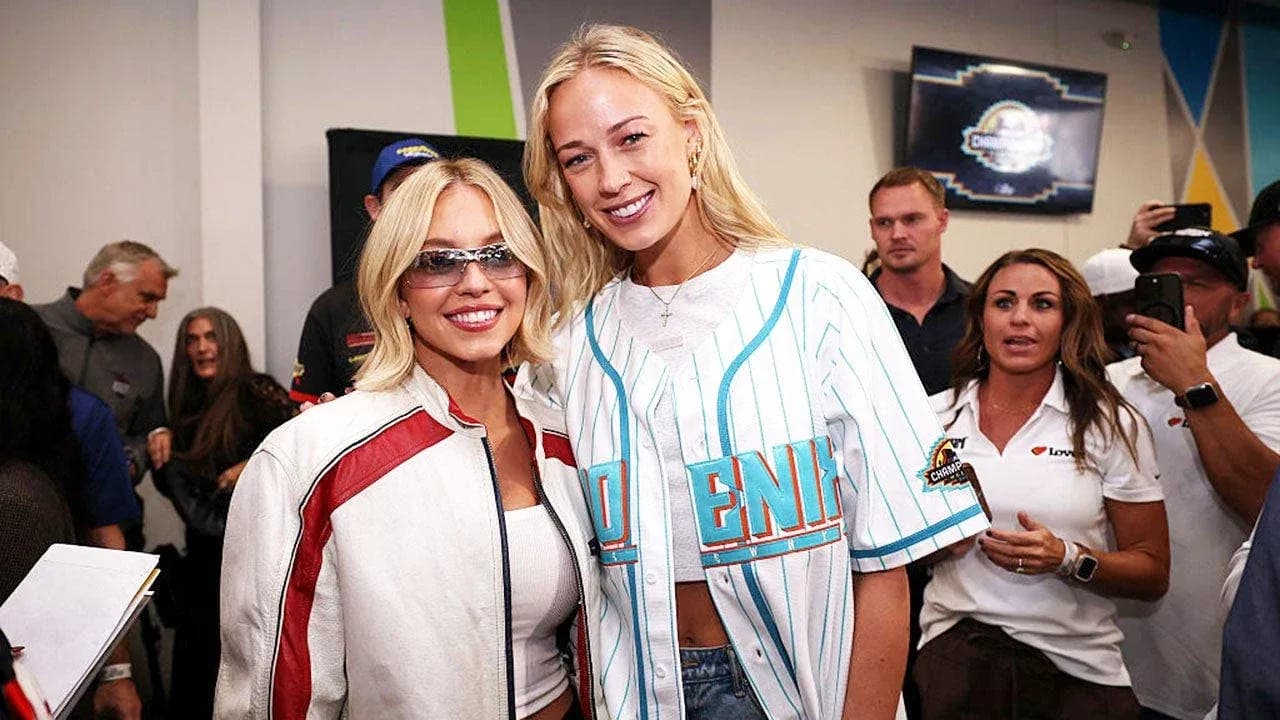
Sophie Cunningham didn’t tiptoe into the debate. She walked straight through the middle of it.
After a week of outrage swirling around Sydney Sweeney’s provocative gambling commercial — accused in some corners of “setting women’s sports back decades” — the Phoenix Mercury guard used her revamped “No Hesitation” podcast to do exactly what the title promises: cut through the noise.
“Why are girls mad?” Cunningham asked. “That is literally what she does. Why is anyone mad? It is a gambling ad: men, sports, naked women. Of course, that’s going to draw attention.”
No preamble. No hedging. Just a blunt assessment of a storm that had grown wildly outsized.
Cunningham backs Sweeney’s right to choose
Cunningham didn’t pretend the ad sat neatly with her own values.
“Do I agree with it? Morally, I think it’s kind of weird, but each to their own. Go do your thing, sis,” she said.
That line summed up her stance: personal discomfort, but a firm defense of Sweeney’s right to make the choices she wants in a space that has always leaned on sex appeal to sell gambling and sport. To Cunningham, the commercial wasn’t a referendum on women’s progress in athletics. It was a business decision in a market that knows exactly who it’s targeting.
Novig CEO Jacob Fortinsky backed that up during a panel earlier in the week, explaining that Sweeney didn’t just star in the ad — she shaped it.
“It really was Sydney who was driving a lot of the visuals and the messaging,” he said, adding that the company is “hugely supportive of women’s sports” and insisting they “never intended to portray female sports” in the spot.
The message from both sides was clear: this was a gambling ad, not a women’s sports campaign gone rogue.
‘This has nothing to do with us’
Cunningham acknowledged why some women might have bristled when the commercial first hit.
“I can understand when you first see that ad that like it could kind of deflate women, because it’s like we’ve worked so hard to get a little bit of respect around here,” she said.
That’s the tension at the heart of the debate — years of grinding for visibility and credibility, suddenly colliding with a high-profile, hyper-sexualized campaign that lives in the same sports ecosystem.
But Cunningham didn’t stay in that space for long.
“When you really think about it, it’s like, screw it, let that girl do her thing. This has nothing to do with us,” she added.
For her, the line is simple: women in sport shouldn’t be carrying the weight of every decision made by women outside of it, especially in a completely different lane like gambling advertising.
Sweeney and her podcast partner Drew Hanlen also leaned into that reality, pointing out that the ad catered to a very specific demographic. Hanlen estimated around 75% of sports bettors are men. The actual figure might be even higher, but the point stands — the spot was built for a male-heavy audience that already expects this type of imagery from gambling brands.
And it worked.
Protecting the progress in women’s sports
Cunningham made it clear she doesn’t see Sweeney’s commercial as a threat to what women athletes have built.
“At the end of the day, I’m really loving seeing all these girls who are powerful, strong, showing young girls what it looks like to be an athlete,” she said. “I don’t think the ad was coming for women in sports.”
That’s the crux of her argument. The WNBA and women’s sports more broadly are carving out their own identity — physical, competitive, unapologetically ambitious. That image, in Cunningham’s eyes, isn’t undone by a Hollywood star choosing to front a racy gambling campaign.
It’s a separation of lanes. Athletes on one side, entertainers on the other, each operating by their own rules, each judged on their own terms.
In a week where the discourse around Sweeney’s ad spiraled into grand statements about “what it means” for women, Cunningham’s voice cut through as something rare in modern sports culture: direct, grounded, and unwilling to turn every controversy into a crisis.