.svg&w=384&q=75 "logo")
Republic of Ireland vs Israel: A Politically Charged Match
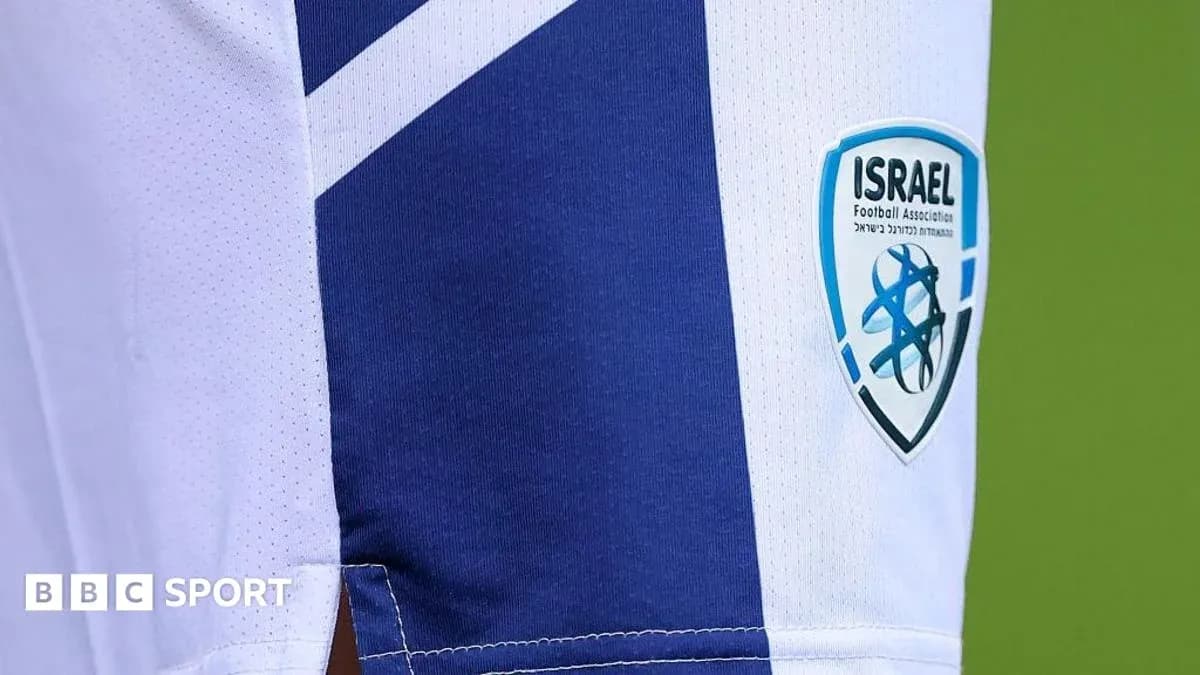
On Sunday, in a quiet corner of eastern Hungary, an international football match will take place that almost never was.
No away fans. A neutral ground. Stripped-back television coverage without commentary or studio debate. Yet Republic of Ireland’s Nations League trip to face Israel in Debrecen might be the most politically charged fixture of the European season.
This is football played under protest, in every direction.
A vote that split Irish football
The game survived only after a bruising internal battle. When Ireland were drawn with Israel, Austria and Kosovo in February’s Nations League draw, the Football Association of Ireland found itself dragged into a geopolitical storm.
Campaigners demanded a boycott over Israel’s military offensive in Gaza. The pressure came not just from terraces and social media, but from pundits and politicians. The FAI did what football bodies rarely do in such moments: it put the question to a vote.
In July, 75 delegates backed fulfilling the fixtures. Thirty-two wanted Ireland to refuse to play.
The stakes were stark. Walking away risked Uefa sanctions, possible bans, and the loss of millions of euros. Irish football, still rebuilding its finances and its national team, blinked. The games would go ahead.
But not as normal.
A match nobody will really “host”
Sunday’s fixture is officially an “away” game for Ireland, yet it will not be played in Israel. It will be staged in Debrecen, a Hungarian city that has become a recurring stand-in home for Israel’s national team.
There will be no Irish supporters. No tickets have been sold to them for this match or the return fixture. A small allocation has been set aside for Israeli fans, as has been the case at previous Israel home games moved to Hungary.
Hungary’s role is no accident. Budapest and Jerusalem maintain close diplomatic ties, and Hungarian authorities have repeatedly shown they are willing to provide the heavy policing and security apparatus required for such fixtures to pass without incident.
Ireland’s “home” match, on 4 October, will be even more detached from any sense of normality. It will take place in Backa Topola, a small town in northern Serbia, chosen by the FAI as neutral ground amid what it called “operational challenges” in staging the game in Dublin.
Those “challenges” were never formally spelled out, but the implication was clear: the association feared protests could disrupt, or even prevent, the match on Irish soil. By heading to a remote Serbian venue, the FAI has opted for distance and control over atmosphere and home advantage.
Serbia, too, has grown closer to Israel in recent years. Foreign minister Marko Duric described Israel as one of Serbia’s “closest friends and strategic partners” in 2025, and Belgrade has bought drones and missiles from Israeli suppliers. It is not just football that links these choices of venue.
Silence on screen, noise off it
Even the television pictures will feel different.
Irish public broadcaster RTE will show the games, but only because it must. It has pledged to do no more than “meet its contractual obligations”. That means no advertising, no sponsorship tied to the broadcasts, and no studio pundits or half-time analysis. Just the pictures and the sound of the stadium.
The silence on screen contrasts sharply with the noise around the fixtures.
Fans of several Irish clubs have staged protests at domestic matches in recent weeks, unfurling banners and voicing anger at the decision to play Israel. On Monday, more than 160 Irish athletes signed an open letter organised by Irish Sport for Palestine, urging a boycott. Among the signatories were boxer Tyrone McKenna and former European champion Ciara Mageean.
Inside Abbottstown, the discomfort is obvious. FAI CEO David Courrell revealed that Uefa had rejected Ireland’s request to keep the two nations apart in future draws. Director of football John Martin called the situation “very uncomfortable for everyone”.
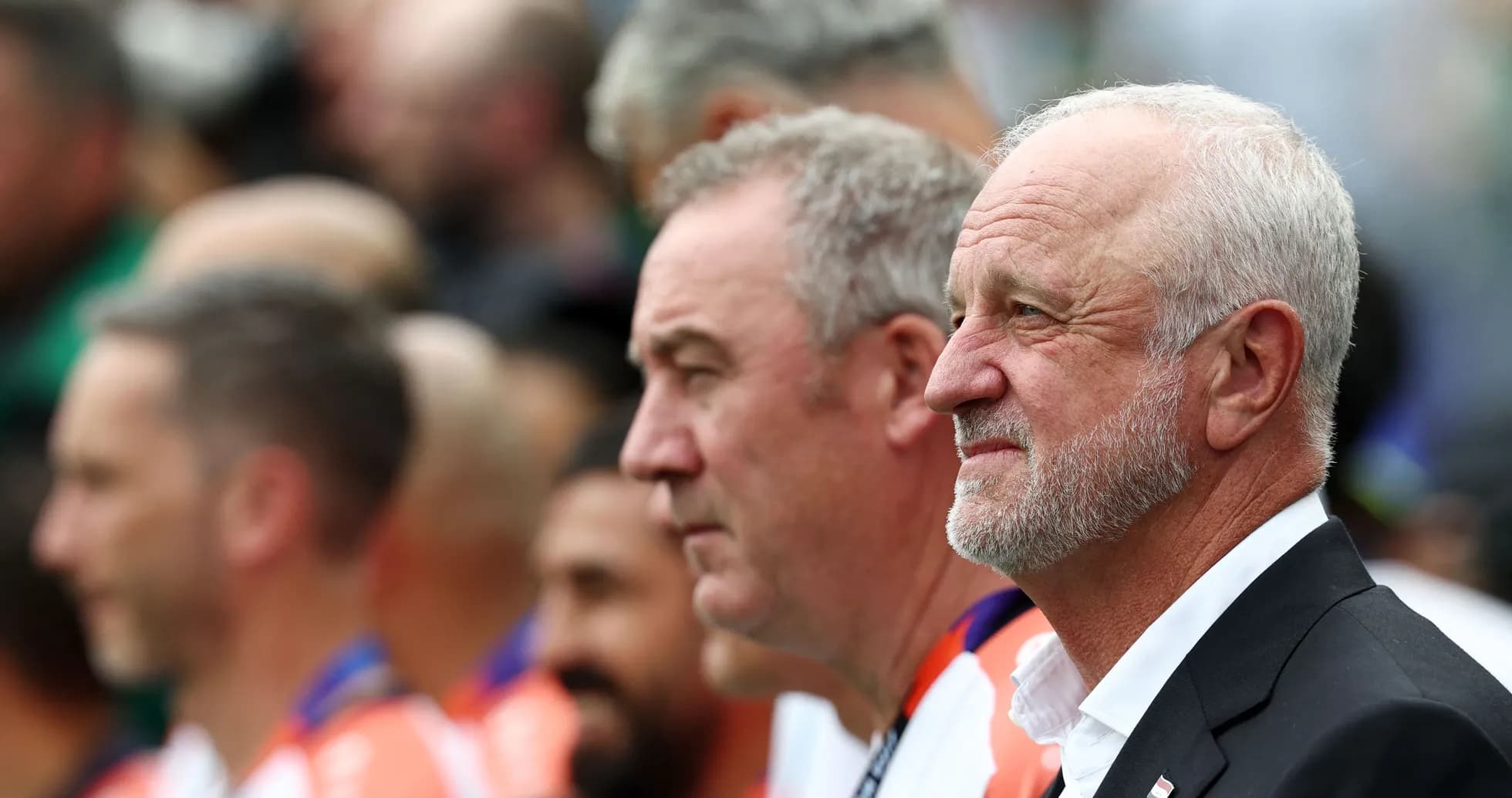
Manager Heimir Hallgrímsson went further. He insisted that fulfilling the fixture did not mean legitimising what he called Israel’s “genocide” in Gaza.
“We’re not playing with genocide, we’re playing against genocide,” he said. “We’re playing against Israel, we’re not playing with Israel.”
The Israel Football Association fired back, accusing Hallgrímsson of “ignorance, hypocrisy and stupidity”. The football has not even started and the rhetoric already feels incendiary.
A country that has chosen a side
Ireland’s stance on Gaza is not confined to football.
Since October 2023, when Hamas fighters attacked Israel, killing around 1,200 people and taking 251 hostages, the Irish government has been one of the most outspoken critics of Israel’s response. Israel insists its campaign is an act of self-defence. Ireland has framed it very differently.
According to the Hamas-run health ministry in Gaza, more than 73,000 people have been killed in Israeli attacks. The United Nations treats those figures as broadly reliable. For many in Ireland, those numbers alone made the idea of playing Israel intolerable.
In May 2024, Ireland joined Spain and Norway in formally recognising a Palestinian state. Later that year, it backed South Africa’s genocide case against Israel at the International Court of Justice.
The government has gone further still. Ireland has boycotted Eurovision since 2025 over Israel’s continued participation, became the first EU state to ban goods from illegal Israeli settlements in the West Bank, and has imposed travel bans on Israeli government ministers.
On Monday, foreign minister Helen McEntee did not soften the language.
“Ireland’s view is clear – international law is being breached. We are seeing an attempt to erase a population,” she said.
Israel has condemned that position and portrays Ireland as one-sided and hostile. The diplomatic relationship is strained. Into that tension steps a football team wearing green.
Football in the crossfire
This is not the first time Irish sport has had to confront the question of whether to play Israel. The Republic’s women’s basketball team faced Israel in EuroBasket qualifiers last autumn and again earlier this year, matches that went ahead only after what officials described as “extensive deliberations”.
Now it is the turn of the men’s national football side, carrying not just a badge and a flag, but the weight of a national mood that leans heavily towards the Palestinian cause.
On Sunday in Debrecen, there will be no choreographed tifos, no travelling Irish support belting out “The Fields of Athenry”. Just a Nations League fixture played in a borrowed stadium, in front of a limited crowd, beamed back to Irish living rooms under a self-imposed veil.
For Uefa, it is a game on a schedule. For the FAI, it is a compromise. For many Irish fans and athletes, it is a line that should never have been crossed.
For the players, it is something else again: 90 minutes in which every tackle, every anthem, every handshake will be read far beyond the touchline.
When the whistle blows in Debrecen, the scoreline will be the least contentious thing about it.