.svg&w=384&q=75 "logo")
Ralf Rangnick's Warnings on Manchester United's Left-Back Issue
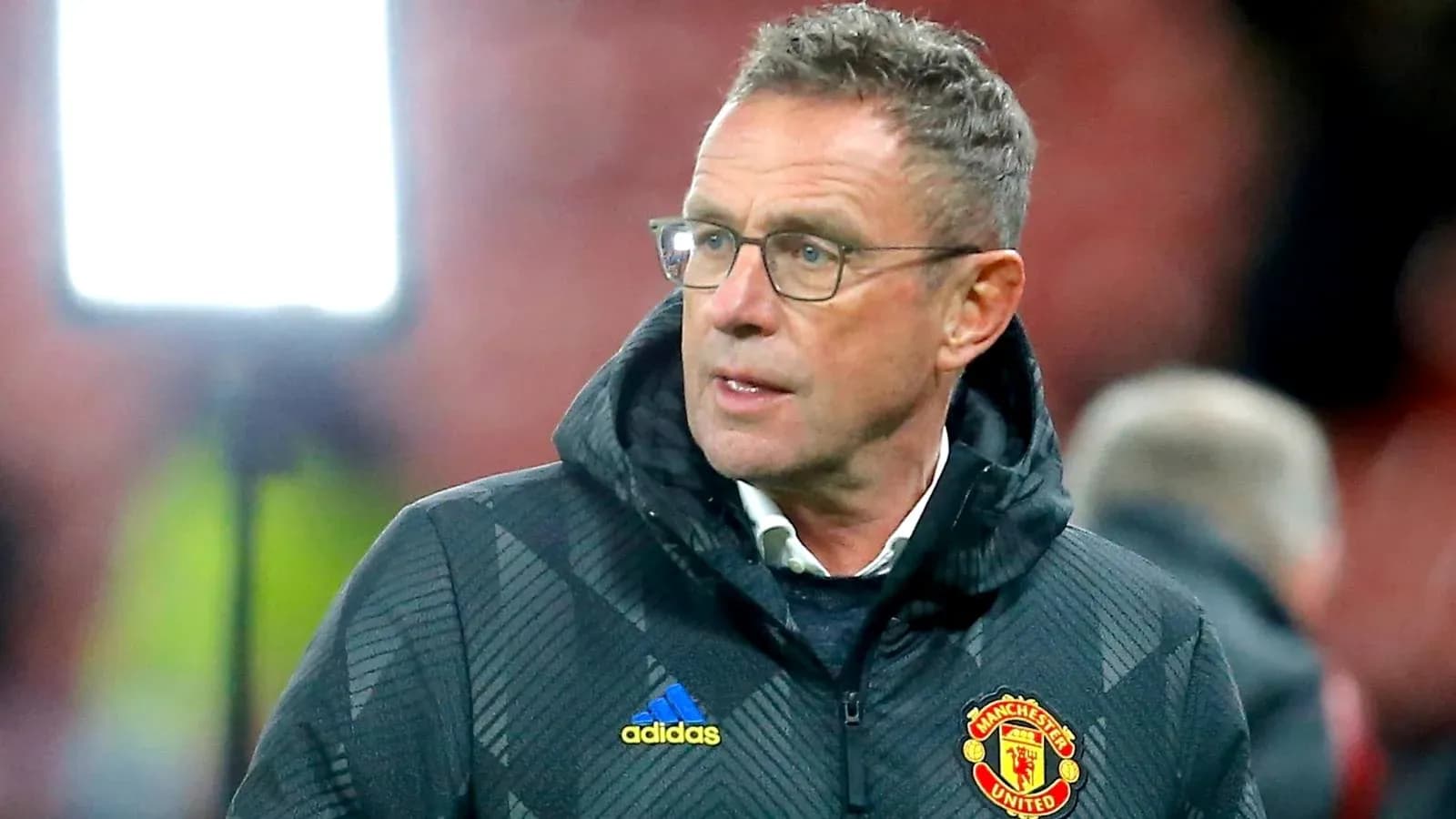
Ralf Rangnick’s Manchester United reign never really caught fire on the pitch, but the echoes of his warnings are getting louder with each passing window.
The German, parachuted in as interim manager for the second half of the 2021-22 season, left behind a muddled record: flat performances, blunt results, but a clear, unforgiving diagnosis of what was wrong at Old Trafford. He talked about “open-heart surgery” for the club. He pushed a list of nine targets that included Enzo Fernández, Julián Álvarez and Erling Haaland. United walked away from all of them.
Now, one of his most specific alarms has come back into focus: left-back.
Rangnick saw the problem early
A year before he ever sat in the Old Trafford dugout, Rangnick publicly questioned whether Luke Shaw was still at the level required for a club of United’s stature.
“I also think that they could do with a left-back,” he said back in 2020. “I know they have Luke Shaw, but I’m not so sure if he’s still on the same kind of level that you need to be for a club like Manchester United.”
At the time, it sounded harsh to some. Shaw was a survivor of multiple rebuilds, a player who had fought back from serious injury and fluctuating form. Yet Rangnick’s words, resurfaced and shared widely on social media this week, now feel uncomfortably prescient.
United have just closed another summer window without signing a new left-back. The club were linked with Newcastle’s Lewis Hall and Barcelona’s Alejandro Balde, but no deal materialised. No fresh competition. No obvious succession plan.
Shaw, at 31, remains first choice until at least January.
A weak point laid bare
The issue is no longer theoretical. It is playing out in real time.
Shaw started all 38 league games last season for the first time in his career, a testament to his fitness and importance, but also a reminder of how heavily United lean on him. This summer, he didn’t make Thomas Tuchel’s England squad for the 2026 World Cup. The questions over his level have not gone away.
Then came the start of the new Premier League campaign.
On the opening weekend, United slumped to a shock 2-0 defeat at home to promoted Hull City. Shaw’s display drew criticism from the club’s all-time leading scorer, Wayne Rooney, on Match of the Day. The former United captain did not disguise his concern over the left-back’s performance.
The pattern continued against another promoted side, Ipswich Town, on Sunday. United ran out 5-2 winners thanks to a Bruno Fernandes hat-trick, but the scoreline masked defensive frailty. Shaw was exposed again for Ipswich’s opener, beaten and outpaced by Abdul Fatawu.
This time, the defender didn’t look for excuses.
"I'm disappointed in myself," he told BBC Radio 5 Live afterwards. "With my experience, I must be doing much better for their first goal. That's not me."
It was a candid admission from a senior player who knows the standards expected of him. It also underlined the risk United have taken by entering another season without reinforcing his position.
A club that didn’t listen
Rangnick’s broader spell at United was underwhelming. His team averaged 1.54 points per game in the league, the worst return of any United manager after Sir Alex Ferguson, with the exception of Ruben Amorim’s short, ill-fated stint at 1.23 points per game. Results drained his authority in the eyes of some within the club.
Yet behind the scenes, he was relentless in his recommendations. He urged United to modernise their structure, to recruit aggressively and intelligently, to reshape a squad that he believed had gone stale. He stayed long enough to deliver the diagnosis, but not long enough to oversee the cure.
He was due to move into a consultancy role after Erik ten Hag’s arrival in the summer of 2022. That plan evaporated. Rangnick departed, and with him went much of his influence over the club’s direction.
The names he pushed – Fernández, Álvarez, Haaland – now look like a scouting wishlist any elite club would envy. United’s failure to act on those suggestions has been dissected at length. The failure to address left-back, though, is more specific, more targeted, and now more visible.
Carrick’s dilemma and Shaw’s response
Michael Carrick, now the man in the dugout, inherits the consequences of those decisions. He must coax more from Shaw while knowing there is no ready-made alternative of comparable pedigree waiting in the wings.
For all the criticism, Shaw is not finished. He remains United’s longest-serving player, a senior figure in the dressing room, and on his day, a defender capable of mixing aggression with quality on the ball. His willingness to front up after Ipswich, to take responsibility rather than deflect it, will count for something inside that dressing room.
But goodwill doesn’t close down wingers. Reputation doesn’t track runners. And history shows that form at the top level can turn quickly, especially in a position that demands constant physical and mental sharpness.
Carrick and the Old Trafford crowd will demand a reaction, starting with Everton this weekend. They need Shaw to rediscover his best version: sharper in the duels, cleaner in his positioning, braver in his attacking runs without leaving the back door wide open.
The irony is hard to miss. A club that once prided itself on staying a step ahead now finds itself scrambling to patch up a problem it was warned about six years ago.
Rangnick saw it coming. United chose another path. Now, with the window shut and the season already asking hard questions, Shaw has little choice but to answer them on the pitch.