.svg&w=384&q=75 "logo")
Pochettino's Vision for US Soccer Beyond 2030
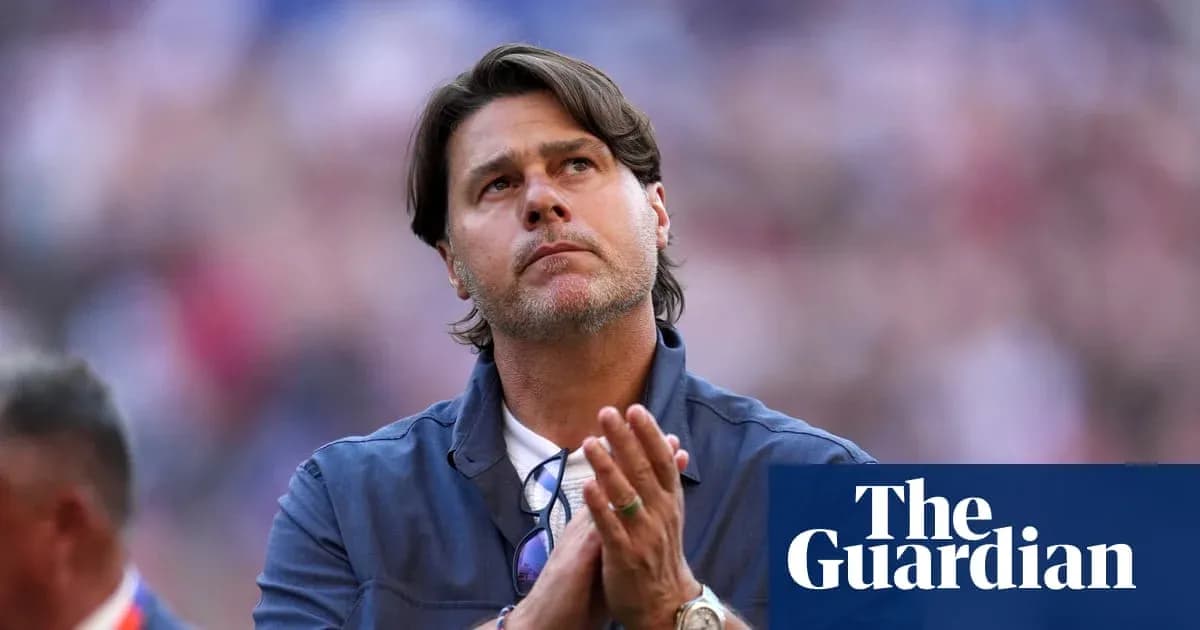
Two months after the World Cup exit that left a bruise on the US men’s national team, Mauricio Pochettino is not licking wounds. He is laying foundations.
The Argentinian, hired in 2024 as a supposed short-term specialist for a home World Cup, is now something very different. With a new contract signed in August, Pochettino has moved from “tournament coach” to architect-in-chief of a project that stretches well beyond 2030.
This is no longer just about the next qualifying campaign. It is about how the sport looks in the United States when he is gone.
From touchline to blueprint
US Soccer’s announcement of his extension came with a twist. Pochettino will not only coach the senior team; he will help shape the country’s entire soccer ecosystem.
He has been handed a louder voice in youth development, coaching education and collaboration with the professional leagues. No US men’s coach has previously been invited this far into the engine room.
The timing is not accidental. US Soccer is in the middle of a major restructuring, building out new director roles that will oversee both men’s and women’s senior and youth programs. Pochettino has already told the federation he is ready to be involved in those appointments – with one important caveat. As he joked to reporters, it cannot simply be “my guy” parachuted in to fit his preferences.
Underneath the humor sits a serious ambition.
“This is the future of the USA,” Pochettino said. “We want to try to perform in the World Cup and to create something special with the fans. And now it’s about being a part of the legacy that the federation wants to create – becoming one of the most powerful countries in soccer. That is a dream, no? It’s amazing. If we can be part of that, we are so excited and so happy.”
The dream is broad. The US will host the Los Angeles Olympics in 2028, and there is strong expectation the men’s side will feature in Copa América that same summer. Before that, there are four friendlies lined up in late September and early October against Peru, Chile, Mexico and Canada. On paper, those games look like routine dates on the calendar. For Pochettino, they are early test runs for a much larger vision.
World Cup qualification for 2030 is non-negotiable. The real question is what kind of team – and what kind of structure – the US will carry into that cycle.
Balogun’s missed move and a manager’s support
Not every storyline in this new era is strategic. Some are raw and personal.
Folarin Balogun entered the summer window as one of the breakout names of the World Cup, a Monaco forward seemingly destined for a major Premier League move. Everton pushed late. The deal collapsed even later.
The English club flagged a potential fitness concern. Monaco disputed it. So did Balogun’s camp. By the time the window shut, the 25-year-old was still in Ligue 1, his next step postponed by a medical red flag he and his club do not accept.
Pochettino has seen this movie before. For a player, there are few things more deflating than watching a career-changing transfer dissolve in the final hours, with no real control over the process.
“Yes, it’s difficult because you cannot influence that decision,” Pochettino said. “You need to support what they are doing with the people making the decisions. In some special cases, like Flo’s, I will call in the next few days. I wanted to give him a little bit of space after that situation in Everton. I want to know from him what happened. But we are always offering our support, and that’s it. I think he’s an important player for us, he was an important player in the World Cup and I hope that he can find being in Monaco, or in another place, his best place to perform in the best way.”
The message is clear: Balogun remains central to the national team picture. Where he plays his club football matters, but not as much as how he responds to this setback.
The tug-of-war for talent
If Pochettino’s job description now stretches into development and structure, one of the most delicate parts of it lives in the gray area of identity: dual nationals.
The 26-man roster for this month’s camp has not yet been announced. One name is already off the list. Augsburg center-back Noahkai Banks will not be involved.
The 19-year-old, eligible for both the US and Germany, is still weighing his options. He has said he wants to decide by the next international break, or the one after that at the latest. In Germany, reports have claimed that new national team coach Jürgen Klopp has even scouted Banks in person.
For the US, losing a player of that profile would sting. Pochettino, though, is taking a long view.
“We are in contact with all the potential dual nationals,” he said. “I think it’s important for us, of course, because that is the human connection that is so important. Even if they, like in that case, Noki, didn’t change his mind and is waiting still, no decision, and of course we cannot consider him for the next camp … But the organization is working with all the dual nationals and players with the possibility to make a decision. That human connection is important because if one day they feel that they can defend and they want to fight and to be part of our national team … Of course, if they deserve it, and we consider that they deserve to be involved, of course we are going to call [them up].”
It is a reminder that recruitment at this level is not just about minutes, tactics or rankings. It is about trust, contact, and timing.
The US cannot win every battle. Under Pochettino, they clearly intend to be in every conversation.
A coach tied to a country’s next chapter
The next few weeks will bring friendlies, squad debates and the usual arguments over selections. Those are the visible beats of international football.
The more significant work is happening underneath.
Pochettino has chosen to bind his reputation to a federation trying to reinvent itself, in a country that wants to move from “host” to heavyweight. The US has the 2026 World Cup on home soil, the 2028 Olympics in Los Angeles, and a likely Copa América cameo on the horizon.
The fixtures are fixed. The hierarchy of world football is not.
Pochettino has made his intentions plain: he does not just want to manage a team through tournaments. He wants to help build a nation that can stand among the sport’s powerhouses.
The question now is whether American soccer can move quickly – and bravely – enough to match the scale of its coach’s ambition.